The name Polywood sounds like it could be a type of plywood. It isn’t. There’s no wood in it at all.
You might be considering a Polywood purchase, comparing styles, or simply trying to put a name to a piece of furniture you already own.
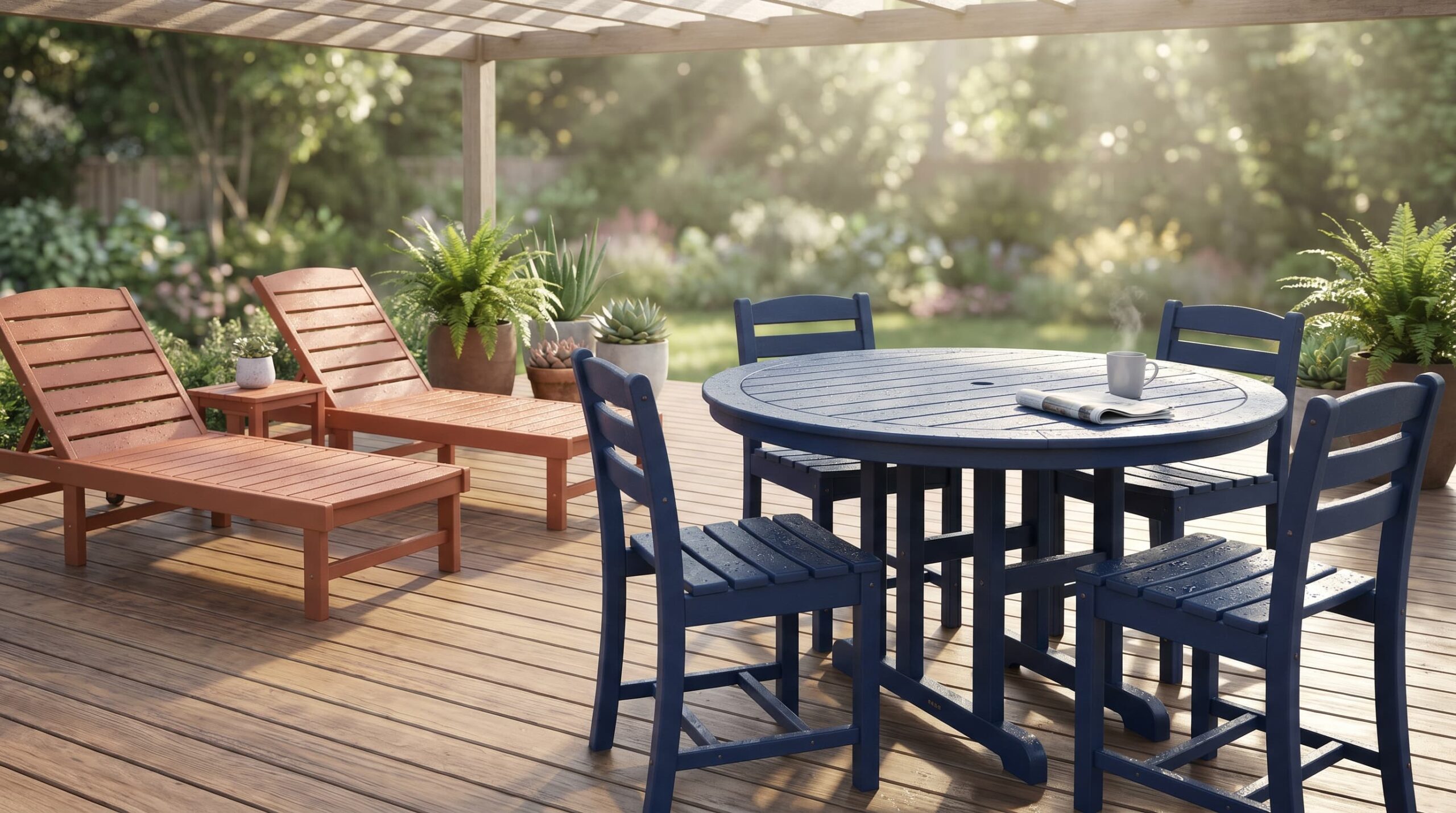
Polywood is made from recycled high-density polyethylene (HDPE), a durable plastic engineered to outperform traditional wood in outdoor environments.
According to the U.S. Environmental Protection Agency, HDPE, the core material in Polywood, is one of the most widely recycled plastics in the country, with a well-established reprocessing system.
That matters because Polywood is made from plastic that would otherwise end up in a landfill.
This blog explains what’s inside Polywood lumber and what each component does.
It also covers how the furniture is made and what that means for real-world outdoor performance.
What is Polywood Made of?
Polywood lumber is made from four ingredients: recycled high-density polyethylene (HDPE), UV inhibitors, colorfast pigments, and stabilizers. No wood, no composite filler, no surface veneer.
HDPE is a #2 plastic, the same category as milk jugs, laundry detergent bottles, and shampoo containers. Polywood sources its HDPE from those exact post-consumer items, as well as post-industrial plastic waste.
The finished lumber contains at least 90% recycled content by weight. According to Polywood’s materials page, the company processes roughly 400,000 recycled milk jugs per day at its facilities.
The Four Core Components:
- Recycled HDPE: The structural base, sourced from post-consumer milk jugs and detergent containers
- UV inhibitors: Blended into the material to block fading and surface breakdown under direct sun
- Colorfast pigments: Mixed throughout the entire plank, not applied as a surface coat
- Stabilizers and protective compounds: Added for resistance to temperature swings, corrosives, and salt spray
What HDPE is and Why Polywood Uses It
HDPE is the structural workhorse in every piece of Polywood furniture, and understanding it explains most of the product’s performance claims.
High-density polyethylene is a thermoplastic polymer. At room temperature, it is rigid and dense.
When heated, it becomes workable, and it can be extruded or molded into precise shapes. Once cooled, it holds that form for decades.
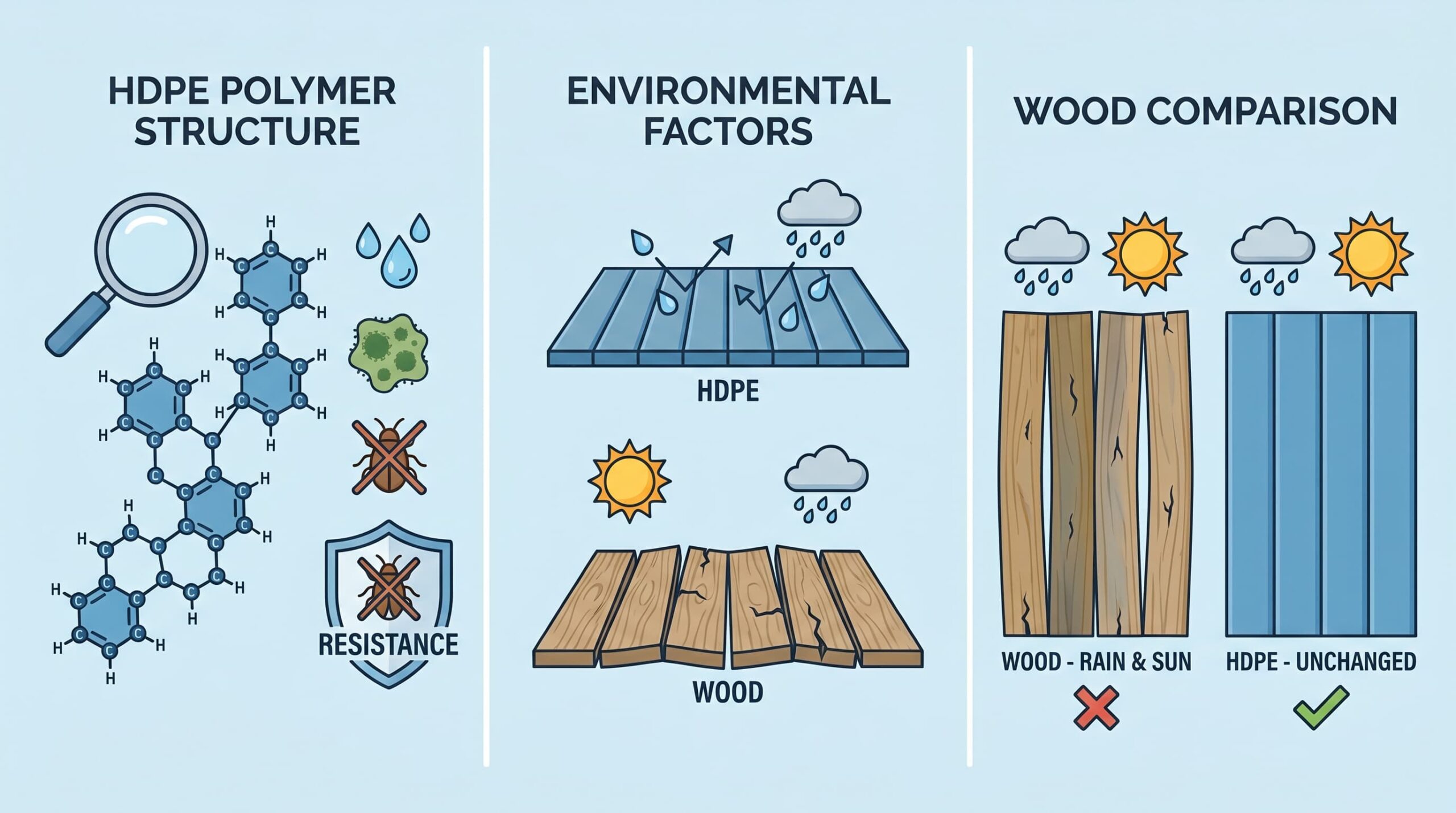
Why HDPE works for outdoor furniture:
- It has no pores, so it cannot absorb water, swell, warp, rot, or crack the way wood does after repeated exposure to rain and freeze-thaw cycles.
- It prevents mold, mildew, and insect growth because it contains no organic material.
- It is a chemically inert salt spray; pool chemicals, chlorine, and most cleaning agents do not degrade it.
- Its high strength-to-density ratio gives Polywood pieces enough mass to stay stable in the wind. Chairs weigh 30 to 50 pounds on average and support up to 350 lbs per seat per ASTM test.
- It is infinitely recyclable, which is relevant both at the sourcing stage and at the end of life.
HDPE’s #2 classification makes it one of the easiest plastics to collect and sort through standard municipal recycling. That’s why Polywood can source raw material from existing waste streams rather than manufacturing new plastic.
What Else Goes Inside Polywood Lumber
HDPE alone is not what makes Polywood lumber perform the way it does outdoors. Three additives are blended into the material before any plank is formed, and each one handles a specific job.
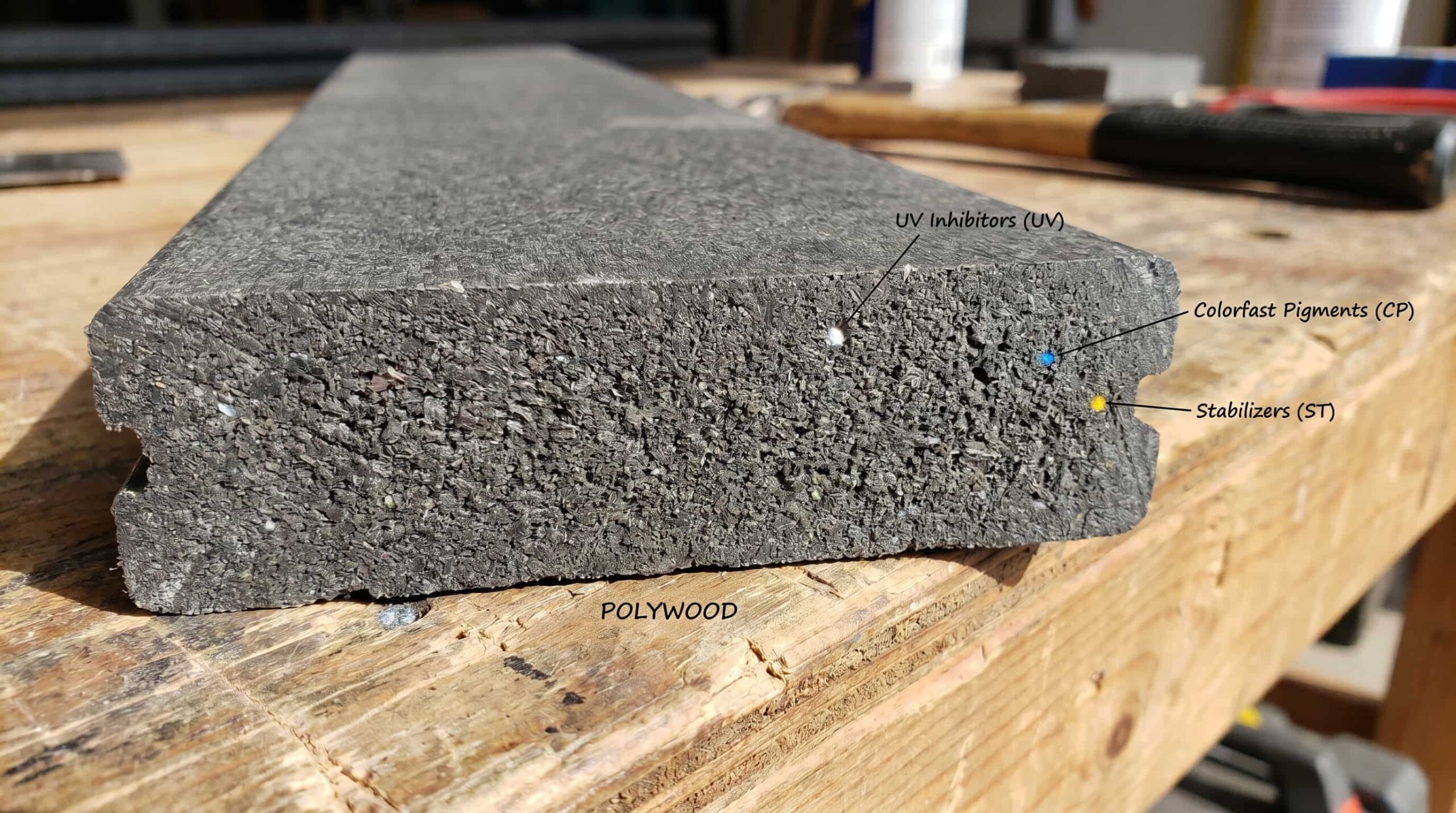
1. UV Inhibitors to Prevent Fading
UV inhibitors are mixed directly into the molten HDPE during manufacturing, before the material is extruded into planks.
UV radiation degrades polymer chains over time, resulting in surface fading, chalking, and brittleness in unprotected plastics.
UV inhibitors absorb and scatter that radiation before it can reach the polymer structure below.
The key is where they sit: throughout the entire plank, not on the surface. A surface coating like paint or varnish wears from the outside in.
An inhibitor blended into the material works from inside the plank outward and cannot peel, chip, or wash away. This is the structural reason Polywood carries a 20-year residential warranty.
2. Colorfast Pigments for Full-Plank Color
Pigments are also blended into the molten HDPE before extrusion, which means the color runs from the outer surface all the way through the core.
Scratch a Polywood board, and the same color appears underneath; there is no raw substrate to expose.
This differs from any furniture built on paint, stain, or laminate, where a scratch cuts through a thin surface layer. With Polywood, the color is the material itself.
Polywood offers three finish lines built on this same base. The Heritage line uses standard ColorStay pigmentation. The Vintage line adds a wirebrush texture for a weathered look.
The Select line adds Microcell technology for enhanced moisture impermeability and a GenuineGrain surface texture.
3. Stabilizers for Handling Temperature
All materials expand in heat and contract in cold. Repeated expansion and contraction cycles without stabilizing compounds can cause warping or micro-fractures over the years of outdoor use.
Polywood’s stabilizers manage this thermal behavior so the lumber holds its shape across summer heat and winter freezes.
Additional protective compounds provide resistance to salt spray, pool chemicals, and cleaning agents without requiring any protective coating from the owner.
This is why Polywood furniture needs no waterproofing, sealing, or painting at any point in its life.
One hardware note that matters here: marine-grade stainless steel fasteners are used throughout the assembly. Standard zinc-coated hardware corrodes outdoors.
Marine-grade stainless does not. This applies to every screw and bolt in the finished piece.
How is Polywood Manufactured?
Understanding the production sequence explains why Polywood lumber performs differently from generic recycled plastic furniture, even when both are made from HDPE.
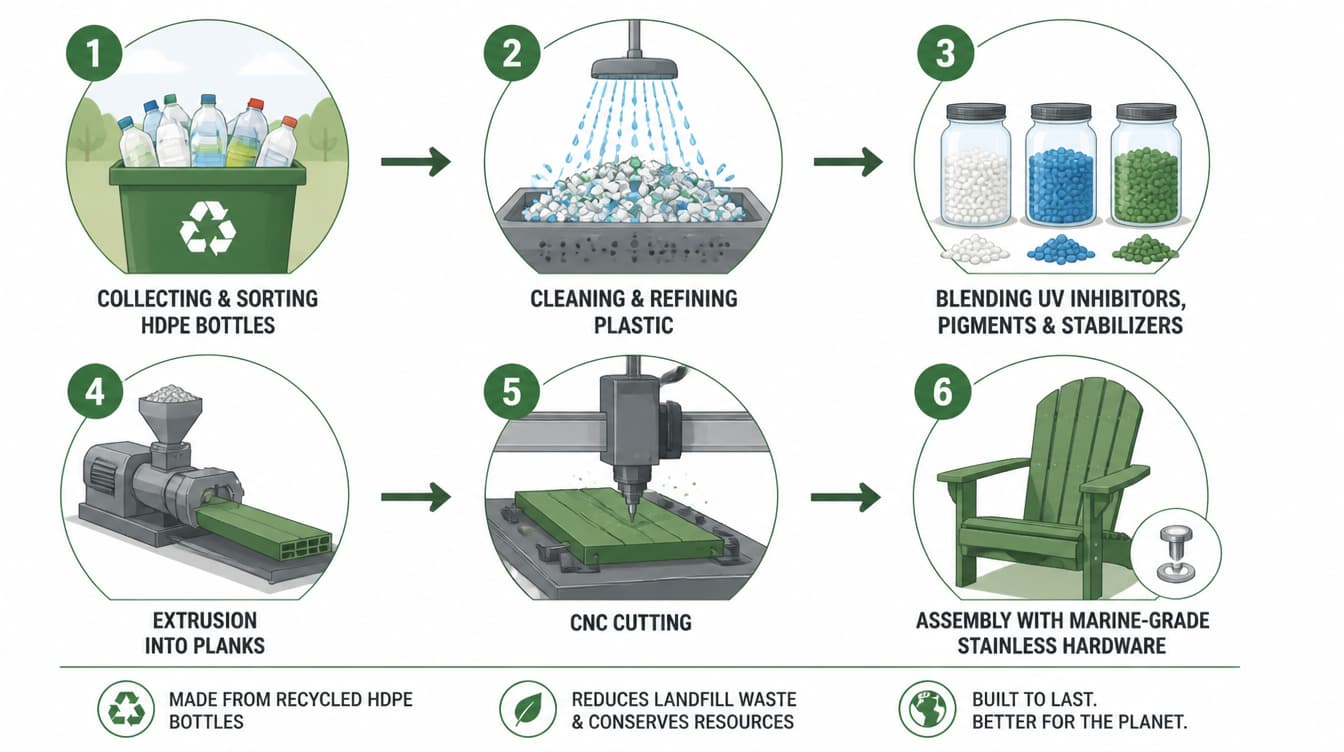
Step 1: Collecting and Sorting Post-Consumer HDPE
Raw material starts with post-consumer plastic: milk jugs, detergent bottles, shampoo containers, and bottle caps, all labeled #2 HDPE.
Polywood also uses post-industrial HDPE scraps from other manufacturing processes.
Incoming plastic is sorted by resin type before processing begins because mixing in non-HDPE materials or lower-grade plastics would compromise the density and consistency of the finished plank.
Step 2: Cleaning and Refining to Above 99% Pure HDPE
Sorted plastic is cleaned to remove residue from original contents, labels, adhesives, and non-plastic contaminants. The refined HDPE reaches a purity level above 99% before entering the extrusion process.
This purity level enables Polywood to produce planks with consistent dimensional stability and color uptake across every production run.
Step 3: Blending in All Additives Before Extrusion
Before the HDPE is shaped into planks, UV inhibitors, colorfast pigments, and stabilizers are blended into the molten material while it is still hot.
This full integration into the melt permanently locks the additives throughout the entire plank, unlike a post-production coating that sits on the surface.
Step 4: Extruding the Material Into Lumber Planks
The blended HDPE is fed through an extrusion die that forms it into dimensional planks matching the standard widths and thicknesses used in traditional lumber.
The extruded material is then cooled, cut to length, and ready for fabrication.
Polywood uses CNC fabrication to cut individual furniture components from these planks, ensuring each piece has consistent dimensions and fit.
Step 5: Assembling With Marine-Grade Stainless Hardware
Fabricated components are assembled into finished furniture using marine-grade stainless steel fasteners.
Every joint, screw, and bolt is specified for corrosion resistance in outdoor environments.
Step 6: Regrinding and Recycling 99% of Production Scraps
Material trimmed or removed during cutting is collected and reground.
Polywood routes 99% of all production scraps back to the beginning of the process, where they are blended into incoming raw material.
This closed-loop system means almost no manufacturing waste exists in the facility.
All Polywood furniture is made at facilities in Indiana and North Carolina and has been produced in the USA since the company’s founding in 1990.
Is Polywood Furniture Eco-Friendly?
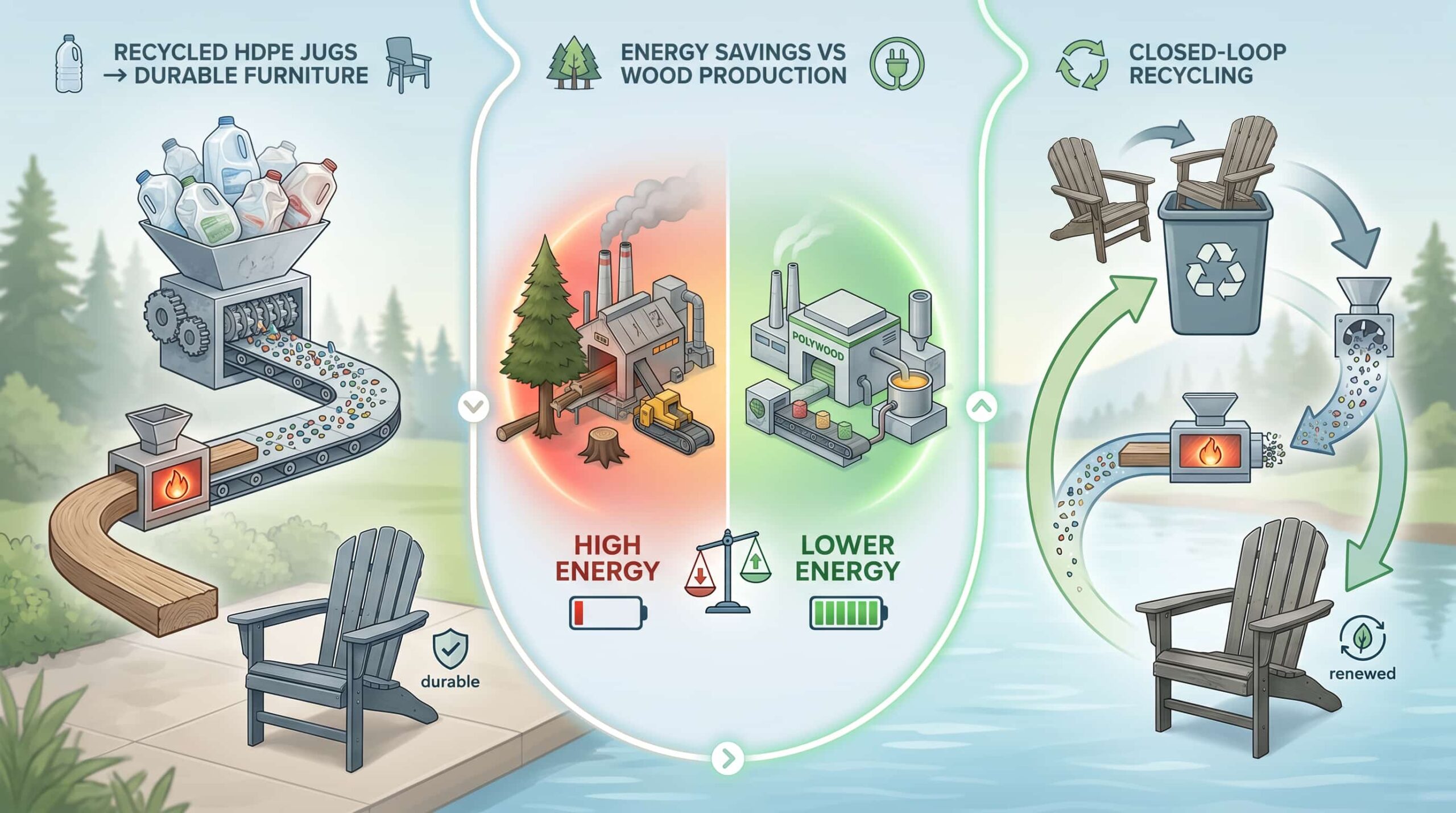
Polywood’s sustainability claims are worth examining directly rather than taking them at the face value.
Polywood does not create new plastic. Every plank starts with HDPE already in the post-consumer waste stream, milk jugs, detergent bottles, and, in some product lines, ocean-bound plastics.
Polywood furniture needs no chemical sealants, paints, or stains during its 20-year lifespan.
Wood furniture typically needs resealing every few years, with each cycle involving products that emit VOCs.
Furniture lasting 20+ years without replacement also reduces total resource consumption compared to wood that degrades and needs replacing every 5 to 10 years.
The reasonable pushback: it is still plastic. The practical answer is that the plastic already exists.
The choice is whether it becomes durable furniture with a 20-year lifespan or ends up in a landfill. HDPE is also infinitely recyclable, so Polywood can re-enter the materials cycle at the end of life.
Polywood vs. Wood, Composite, and Generic Plastic
Knowing what Polywood is made of gives you a clearer basis for comparing it against other outdoor furniture materials.
| Material | Contains Wood? | Needs Sealing or Staining? | Rot or Rust Resistant? | Recyclable? |
|---|---|---|---|---|
| Polywood (HDPE) | No | No | Yes | Yes |
| Teak or Hardwood | Yes | Yes | Partly | No |
| Composite Lumber | Yes — wood fibers + plastic | Sometimes | Partly | No |
| Generic Plastic Furniture | No | No | Yes | Sometimes |
| Wrought Iron or Aluminum | No | Sometimes | Iron rusts; aluminum doesn’t | Yes |
1. Polywood vs. composite lumber: Composite brands such as Trex, Seaside Casual, and Berlin Gardens blend HDPE with wood fibers.
That wood fiber content improves grain appearance but can absorb moisture in humid climates, leading to swelling or mold over time. Polywood has zero wood fiber, so those moisture issues do not apply.
2. Polywood vs. generic HDPE furniture: Generic poly lumber furniture uses the same base material as Polywood. The difference is in what’s added to it.
Budget HDPE furniture often omits or reduces UV-inhibitor systems and uses standard zinc hardware that corrodes outdoors.
The base plastic is comparable. The additive engineering and hardware quality are not.
Conclusion
You now know exactly what Polywood is made of. What makes this worth knowing before you buy is that the performance claims follow directly from the composition.
A 20-year warranty on outdoor furniture sounds like marketing.
The color runs through the entire plank; the UV protection is locked within the material; and the base plastic cannot rot or absorb water.
If you are comparing Polywood against wood, composite, or another plastic option, the material breakdown in this post gives you a concrete basis for that decision.
Not a brand promise. An actual material explanation.
Did you own a Polywood piece through a few seasons of weather? Drop a comment below and share how it has held up.
Frequently Asked Questions
How Long Does Polywood Last Outside?
Polywood furniture can last 15–20 years or more outdoors. Its recycled HDPE material resists moisture, fading, cracking, and harsh weather with minimal maintenance.
What are the Disadvantages of Polywood?
Polywood furniture is heavier than many outdoor materials, can be more expensive upfront, and may become warm in direct sunlight during hot weather.
Can You Use Windex on Polywood?
Yes, you can use Windex on Polywood for light cleaning, but mild soap and water are recommended for regular maintenance.