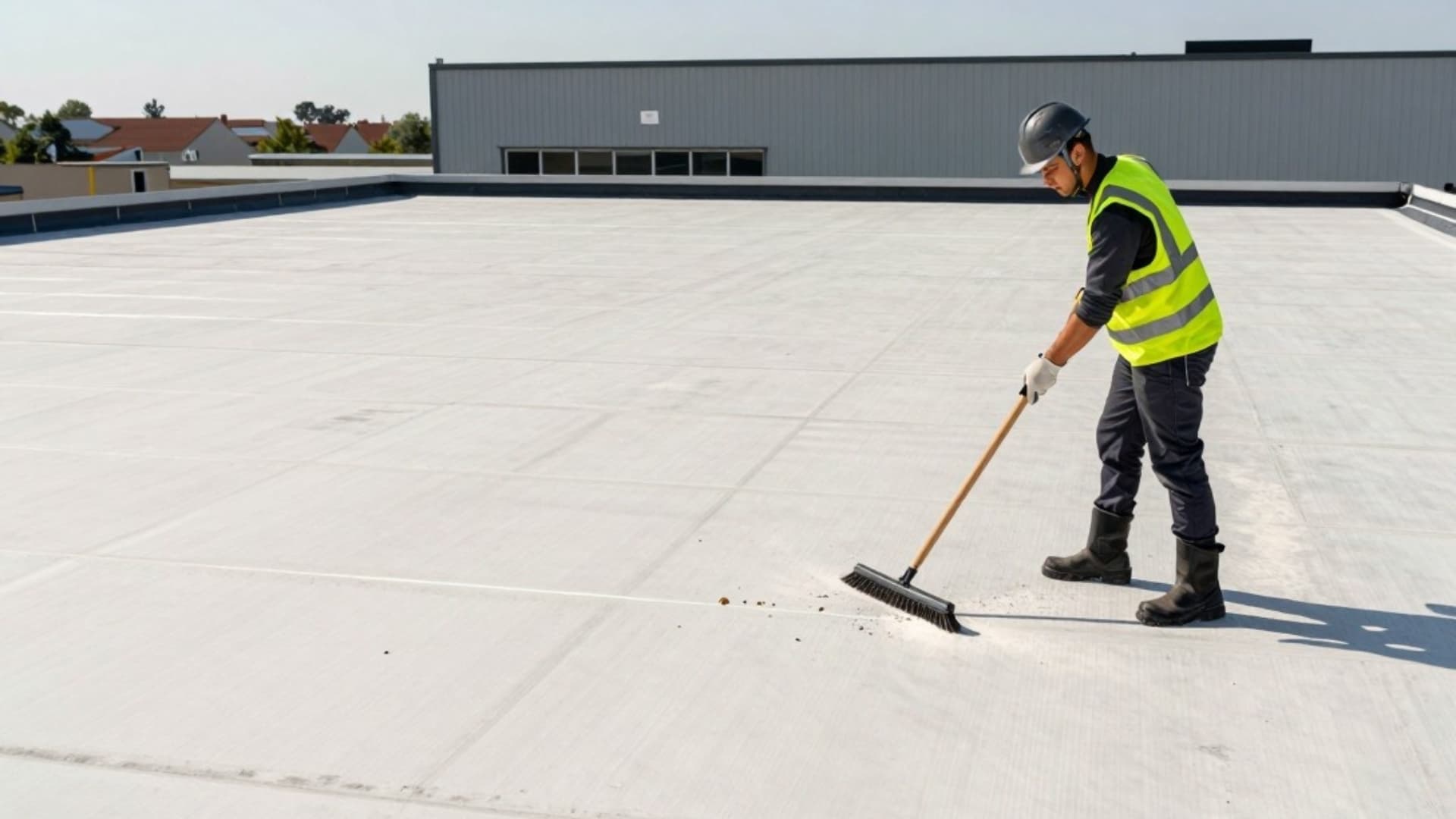
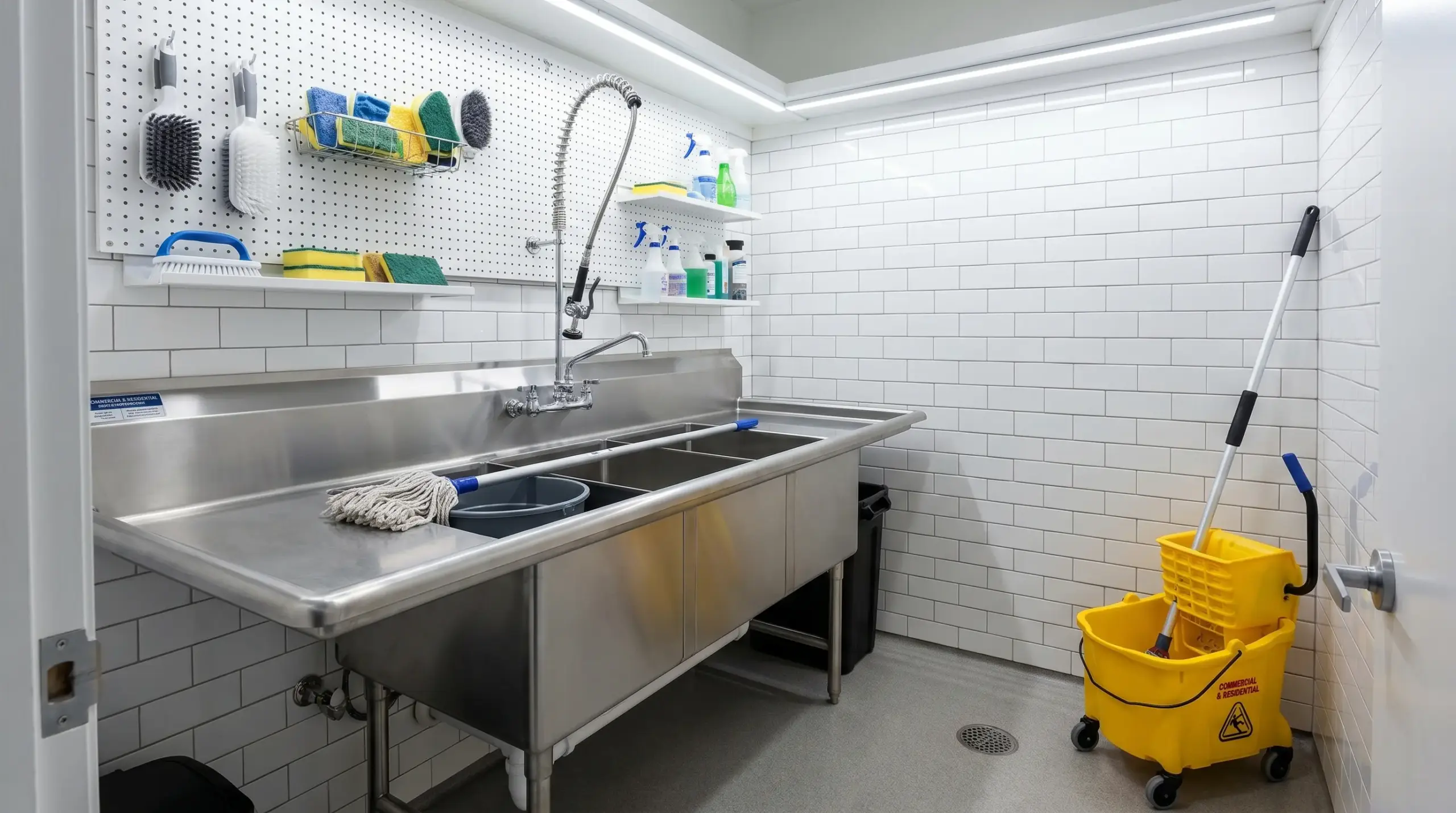
If you have ever walked into a janitor’s closet and noticed a large, deep basin mounted on the wall or sitting low near the floor, that is a service sink.
Most people walk right past it without a second thought.
But if you are setting up a commercial space or renovating a laundry room, understanding what a service sink is can save you real headaches.
It also helps if you are trying to interpret what a building inspector is asking for.
According to the International Plumbing Code (IPC) update, a service sink is defined as a plumbing fixture specifically designed for non-hygienic cleaning tasks.
It is the sink where dirty work happens. Not dish washing. Not hand washing. Dirty mop water, chemical rinses, bucket dumps.
This guide covers what a service sink is, what it is used for, how it differs from a mop sink and utility sink, where it is required by code, and where to install one.
What is a Service Sink?
A service sink is a deep basin plumbing fixture built for one job: handling dirty water and cleaning waste that you would never want near a kitchen or bathroom sink.
Think about what happens after a janitor mops a commercial floor. The bucket is full of grimy, chemical-laced water.
That water needs to go somewhere sanitary, away from food prep areas and hand-washing stations.
That is what a service sink is for. It accepts all of that without contaminating the rest of the plumbing system or creating a health hazard.
You may also hear it called a janitor sink, slop sink, or utility sink, though utility sink and service sink are not always the same thing. The floor-mounted version is usually called a mop sink.
The IPC 2021 introduced a formal definition to close a long-standing loophole.
Before that update, any sink with a 1.5-inch trap could technically be designated as a service sink, which meant some facilities were using kitchen or prep sinks to dump mop water.
The updated code now prevents that, making it clear that service sinks must be purpose-built fixtures for non-hygienic use.
What is a Service Sink Used For
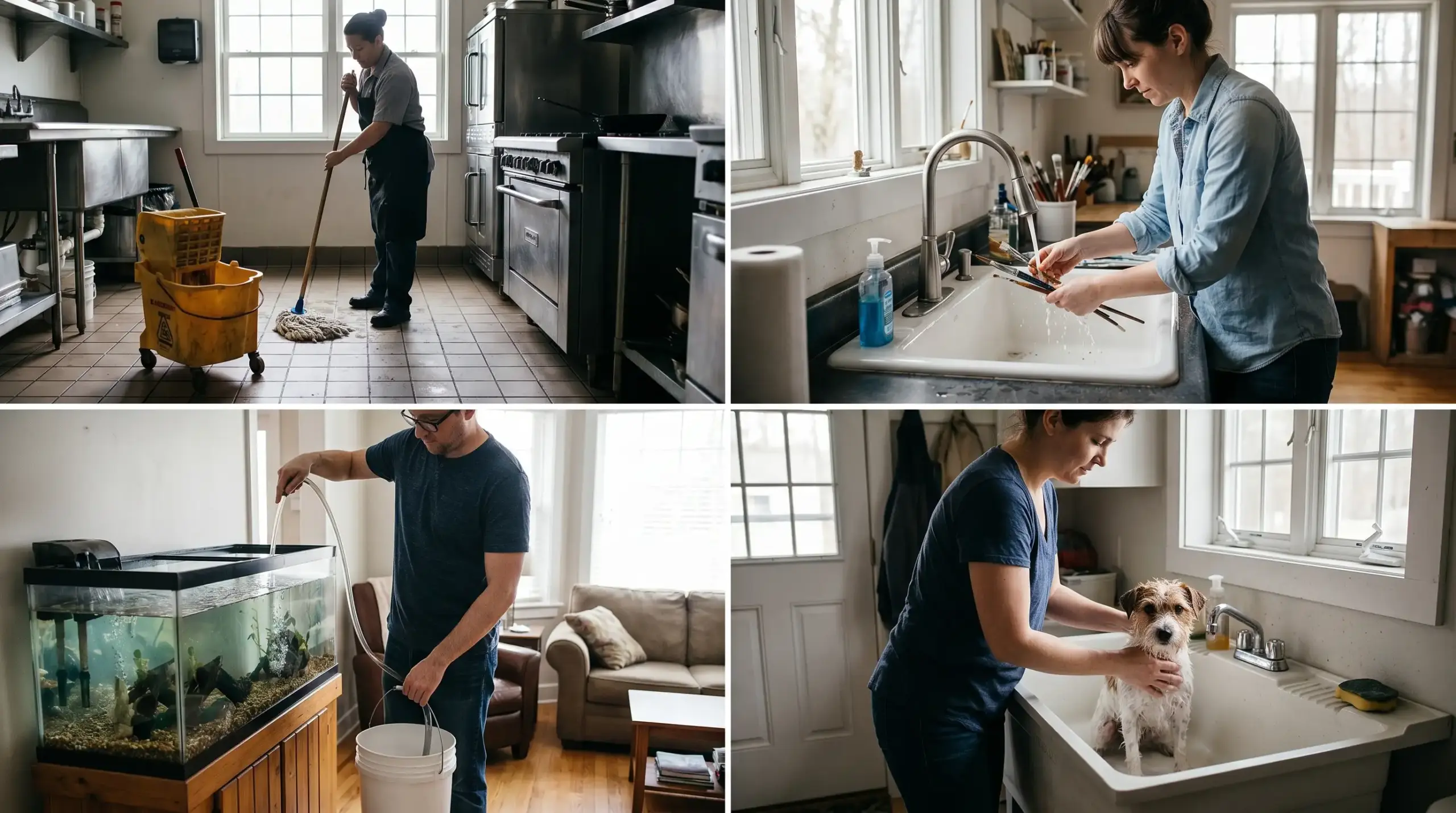
The primary job is simple: fill buckets, empty buckets, and rinse cleaning tools. But the list of actual uses is longer than most people expect.
In commercial settings:
- Filling and emptying mop buckets
- Rinsing mop heads, brushes, and floor scrubbers
- Disposing of dirty water mixed with cleaning chemicals
- Draining wet vacuums and industrial dehumidifiers
- Soaking dirty linens, uniforms, or cleaning rags
In residential settings:
- Washing paintbrushes and rollers after a project
- Rinsing garden tools caked in soil
- Draining aquariums or outdoor water features
- Cleaning up after a garage or workshop project
- Bathing pets (it is deep enough to handle a small to medium dog without soaking your bathroom)
The primary reason service sinks exist in commercial buildings is to prevent cross-contamination.
A 2020 report from the FDA Food Code notes that dirty water from cleaning operations must never be disposed of in sinks used for food preparation or hand washing.
A dedicated service sink eliminates that risk entirely by providing cleaning staff with their own fixture.
Service Sink Features and Design
Not all service sinks look the same, but they share a few design traits that separate them from regular sinks.
Understanding these features helps when you are shopping for one or verifying that an existing fixture actually qualifies.
| Feature | Why it matters |
|---|---|
| Deep basin (12 to 16 inches) | Handles full bucket dumps without splashing |
| Coved interior corners | Prevents grime buildup and is easier to sanitize |
| Integral backsplash | Protects the wall from splashes and chemical exposure |
| Vacuum breaker on faucet | Required by code to prevent backflow contamination |
| Drain grate or strainer | Catches debris before it clogs the drain line |
Material choice matters a lot in this category. Heavy-gauge 304 stainless steel is the most common choice in commercial spaces because it resists rust, harsh chemicals, and physical impact.
A widely used commercial option is the Advance Tabco 9-OP-40, built from 304 steel with an integral backsplash and adjustable legs.
Terrazzo and molded stone are used for floor-mounted mop sinks because they handle heavy bucket drops without chipping.
Polypropylene and fiberglass work well for lighter residential installs in laundry rooms or garages.
Cast iron shows up in older commercial and industrial buildings where extreme durability was the priority.
Faucet setup matters too. Most commercial service sinks use a wall-mounted faucet with a high arc to clear tall buckets.
The fixture must include a vacuum breaker to meet plumbing code. Without it, contaminated water can siphon back into the supply line.
Service Sink vs. Mop Sink
This is the question that trips up most people, including some contractors. Here is how to keep them straight.
| Mop sink | Service sink | |
|---|---|---|
| Mounting | Floor-mounted, low basin | Typically wall-mounted |
| Primary use | Filling and emptying mop buckets at floor level | General janitorial disposal, rinsing, and fill tasks |
| Basin depth | Often 6 to 10 inches | 12 to 16 inches typical |
| Code term | Qualifies as a service sink under IPC | Umbrella term that includes mop sinks |
| Best for | Multi-floor commercial buildings, restaurants | Janitor closets, utility rooms, residential |
Here is what surprises most people: under the IPC, service sink is the umbrella term. A mop sink, a janitor sink, a utility tub, and a laundry tray all qualify as service sinks.
They are not competing fixtures. They serve slightly different use cases and can coexist in the same facility.
In a large hospital, you might have floor-mounted mop sinks on each patient floor for quick bucket disposal.
Additionally, a wall-mounted service sink in a central housekeeping room is used to rinse equipment and fill supply buckets.
Both satisfy the code. The choice between them comes down to available floor space, plumbing access, and how the cleaning crew actually operates.
Service Sink vs Utility Sink
In everyday conversation, people use these terms interchangeably. In code language, they are not the same thing.
A utility sink is a general-purpose fixture. You can wash your hands in it, soak laundry, or rinse produce. It is not designated for any single use.
A service sink is dedicated to non-hygienic janitorial tasks only.
In food service settings, health codes are explicit on this point: a utility sink or hand sink cannot substitute for a service sink for disposing of mop water or cleaning chemicals.
The Virginia Administrative Code Section 12VAC5-421-2250 directly states that toilets and urinals are prohibited as substitutes for a service sink, and the same logic applies to hand sinks and prep sinks.
If you are setting up a commercial kitchen, do not assume a deep laundry sink in the back room satisfies the service sink requirement. It likely will not pass inspection.
Where Service Sinks Are Required by Code
This is the section most people skip until a building inspector flags the issue.
If you are managing a commercial build, a renovation, or even a home addition with a dedicated utility space, it is worth understanding what the code actually requires.
Under the International Plumbing Code, one service sink is required per building. That is not per floor and not per tenant space.
Hospitals are the exception: they must have one service sink on every floor. The sink must be accessible to janitorial staff across all tenant areas without requiring anyone to pass through a locked or restricted space.
Some IPC interpretations also cite a 300-foot maximum travel distance from any point in the building to the nearest service sink.
For food service facilities, the requirements are stricter. Any retail food establishment must have at least one service sink with hot and cold water under pressure and proper drainage.
It must be conveniently located for mop and floor-tool cleaning, and no substitute fixtures, including toilets, urinals, or hand sinks, are permitted.
OSHA supports service sinks as part of proper sanitation design in commercial workplaces, though OSHA does not set a specific fixture count.
There are exemptions worth knowing. Some state codes, including Texas, exempt commercial buildings of 1,800 square feet or less from the requirement, provided that other cleaning facilities are available.
Always verify with your local jurisdiction because codes vary by city and state.
For residential builds, a service sink is not typically required by code.
But if you are converting a basement or adding a utility space, installing one is a practical move. Budgeting for that kind of project is easier once you understand how much a home addition costs.
Where Are Service Sinks Installed
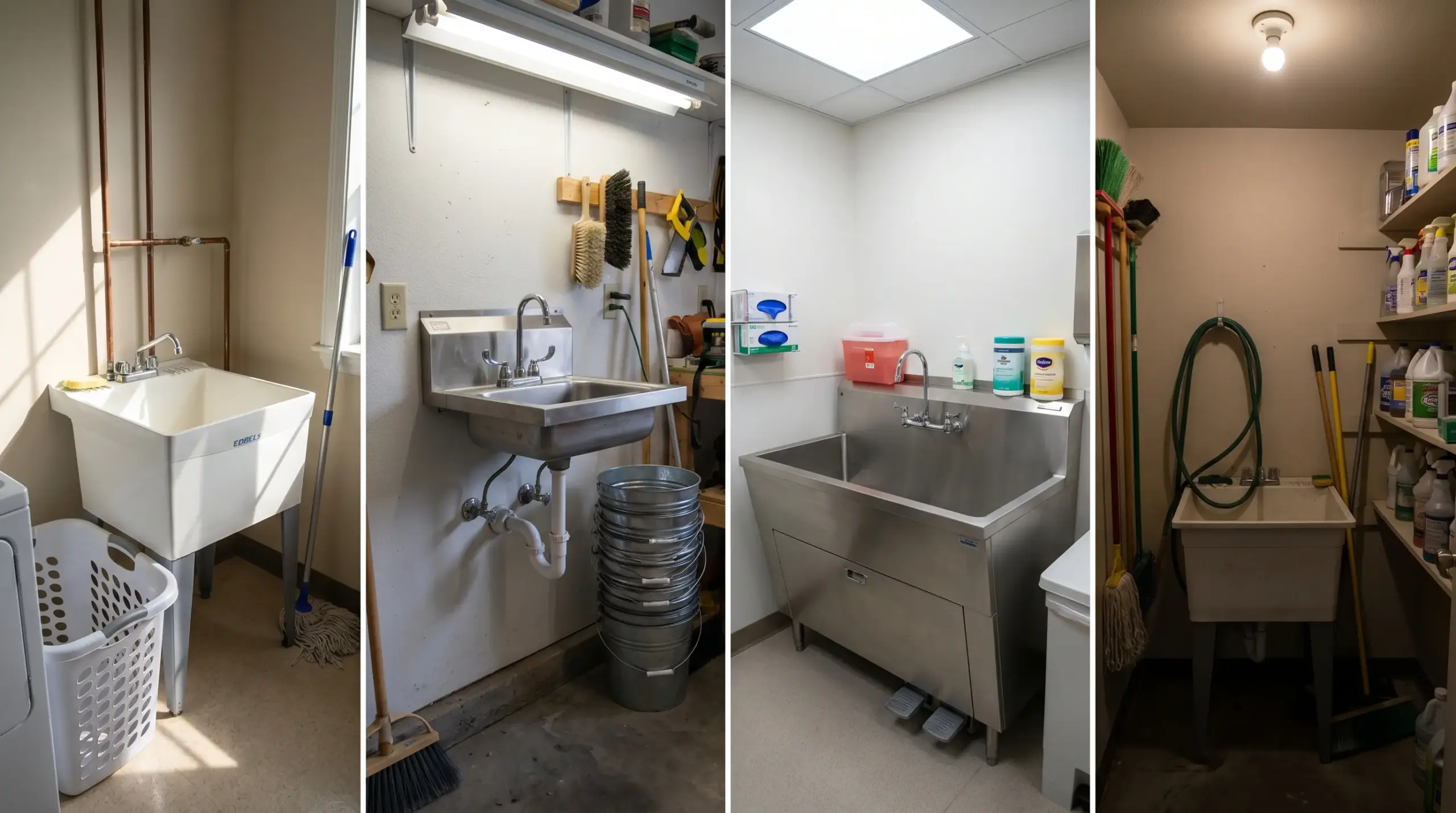
Location follows function. In commercial buildings, service sinks are found in janitor closets, custodial rooms, and back-of-house areas in restaurants.
They are also placed in soiled utility rooms in hospitals, maintenance rooms in schools, and housekeeping departments in hotels.
Industrial facilities put them in workshops, automotive garages, manufacturing floors, and commercial laundries.
For home installations, the laundry room is the most common location, followed by basements, mudrooms, and garages.
The plumbing requirements are manageable: hot and cold water supply lines, a properly sized drain connection, and a P-trap large enough to handle the higher flow volume a service sink produces.
Wall-mounted units require structural backing in the wall to support the combined weight of the sink and a full bucket. Floor-mounted units need a properly sloped drain connection.
Larger utility projects, such as rewiring a house, follow a similar permit-driven process for scoping and pricing.
Wrapping Up
A service sink is one of those fixtures most people never think about until they need one.
It handles the dirty side of any cleaning operation, keeps contaminated water away from food prep and personal hygiene areas, and, in most commercial settings, the law requires it.
Whether you are outfitting a commercial kitchen, planning a janitor closet, or adding a utility sink to your laundry room, a service sink is a practical installation that quickly pays for itself.
Frequently Asked Questions
1. What is a Service Sink in A Restaurant?
A service sink is a deep utility sink used for cleaning mops, buckets, and other non-food equipment in commercial kitchens.
2. Can You Dump Mop Water in A Service Sink?
Yes. Service sinks are designed specifically for disposing of mop water and other cleaning liquids safely, keeping them separate from food prep areas.
3. Can a Food Worker Wash Hands in A Service Sink?
No. Food workers must use designated handwashing sinks to maintain hygiene standards; service sinks are only for cleaning tools and equipment.