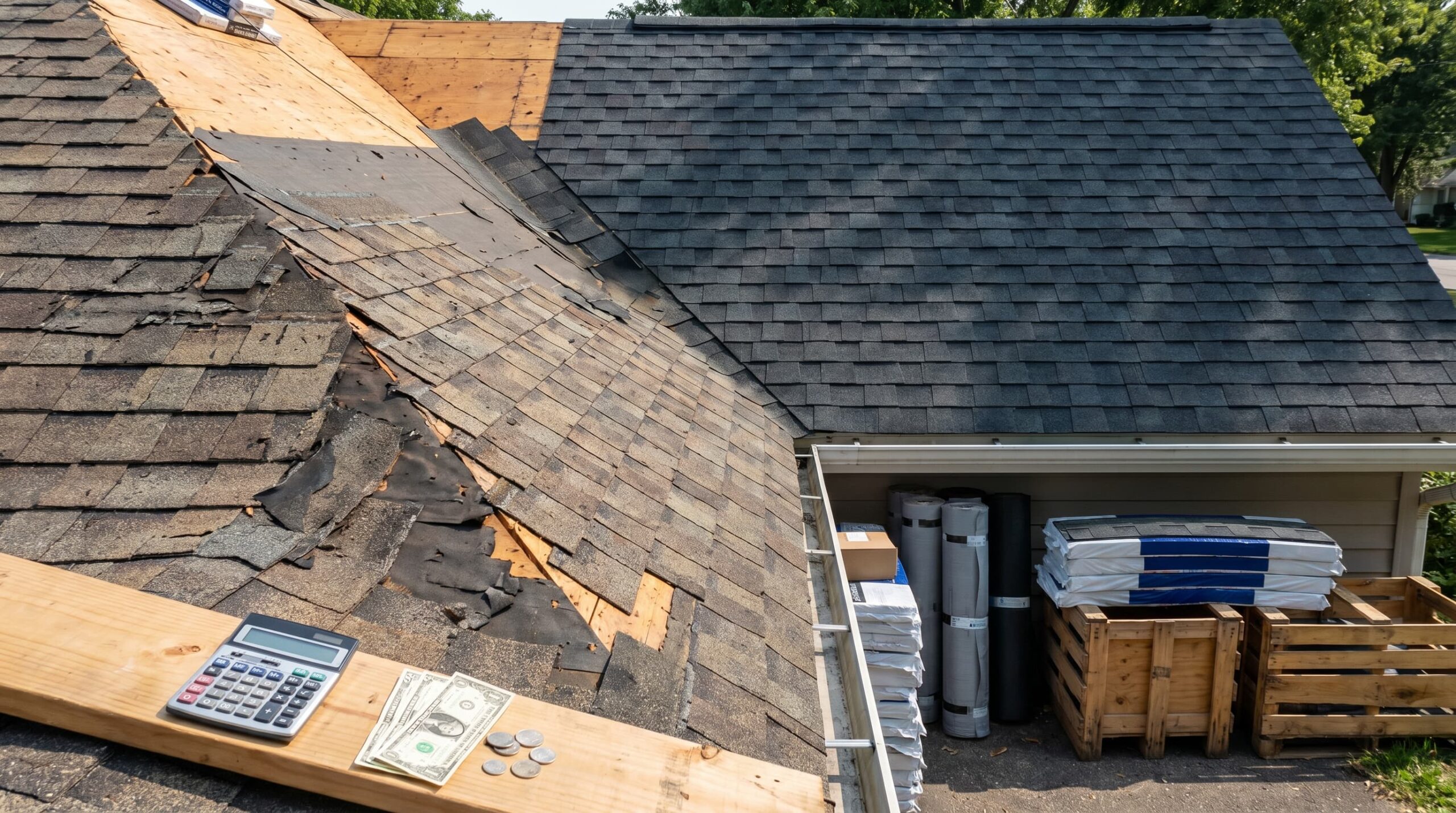
Trying to figure out the cost of replacing roof shingles can be frustrating.
One website says it costs around $10,000. Another claims it could be more than $40,000. Meanwhile, the quotes you’re receiving may look completely different.
The truth is that roof replacement costs vary based on your home’s size, location, roofing materials, and labor rates. Recent increases in material and labor costs have also pushed prices higher than many older online estimates.
In this article, you’ll learn what shingle replacement typically costs today, what affects the final price, how insurance may help cover expenses, and how to tell whether a repair or full replacement makes more sense for your roof.
Actual Cost of Replacing Roof Shingles
Most shingle roof replacements cost between$8,000 and $20,000, with the national average falling around $11,000 to $15,000 for a typical home.
Larger roofs, premium shingles, steep slopes, or high-cost labor markets can push the price above $25,000.
1. Shingle Replacement Cost By Roof Size
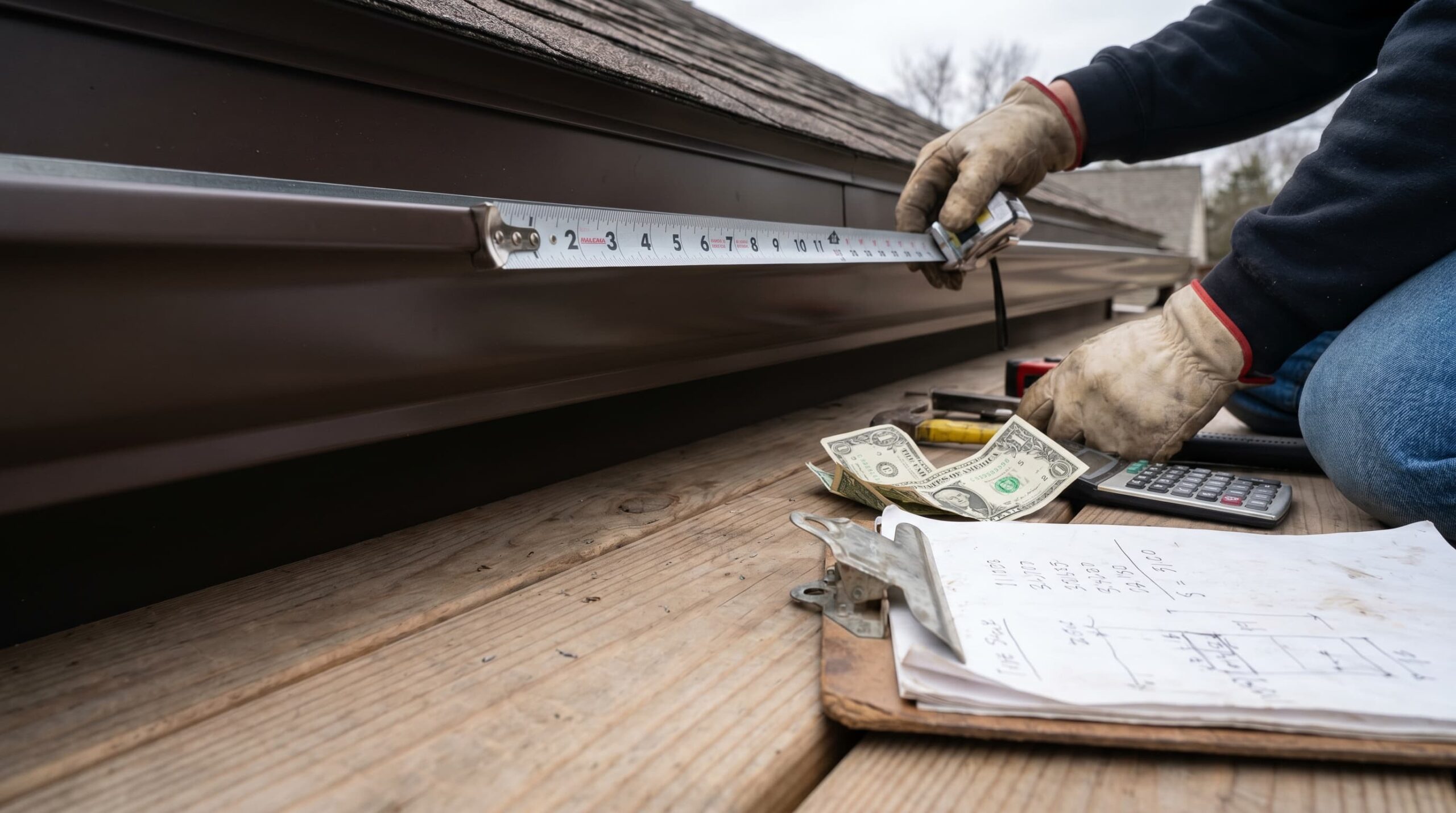
Roofing contractors price by the square; one roofing square equals 100 square feet. Your actual roof area is almost always larger than your home’s footprint because of pitch, overhangs, dormers, and valleys.
A 2,000-square-foot home typically comes out to 22 to 25 roofing squares once the slope is factored in.
| Home Footprint | Typical Roofing Squares | 3-Tab Asphalt | Architectural Shingles | Premium Architectural |
|---|---|---|---|---|
| Under 1,500 sq ft | 14–17 squares | $7,000–$10,500 | $11,000–$15,000 | $16,000–$21,000 |
| 1,500–2,500 sq ft | 17–28 squares | $10,500–$16,800 | $15,000–$25,000 | $21,000–$35,000 |
| 2,500–3,500 sq ft | 28–38 squares | $16,800–$22,800 | $25,000–$34,000 | $35,000–$47,000 |
2. Shingle Replacement Cost By Shingle Type
- 3-Tab Shingles: $1.50–$4.50 per sq ft installed, the most affordable option, lightweight and flat design, typically lasts 15–20 years, but newer versions may wear out in 12–15 years
- Architectural Shingles: $4.00–$7.50 per sq ft installed, the most common choice, thicker and more durable than 3-tab, brands like GAF Timberline HDZ and Owens Corning Duration usually come with 30-year warranties
- Premium Architectural Shingles: $7.00–$12.00 per sq ft installed, high-end option, designed to last 40–50 years, includes products like CertainTeed Landmark Premium and GAF Camelot, often features Class 4 impact resistance for potential insurance benefits
3. Shinge Replacement Cost By Region
Labor rates drive more of the regional cost variation than most homeowners expect.
| Region | Labor Cost per Square | Notes |
|---|---|---|
| Northeast | $150–$300/square | High cost of living, code requirements, ice, and water shield required |
| Southeast | $100–$200/square | High storm demand post-hurricane season keeps prices elevated |
| Midwest | $90–$170/square | Most stable labor market; shortest seasonal scheduling window |
| West Coast | $175–$350/square | California energy codes add material requirements; limited contractor supply |
Shingle Material Comparison
The shingle market has grown well beyond the standard asphalt-or-nothing conversation.
Walk into any roofing estimate today, and you’ll find five to seven material options presented to you in about 90 seconds, with almost no context for making an intelligent choice.
1. Asphalt Shingles (3-Tab)
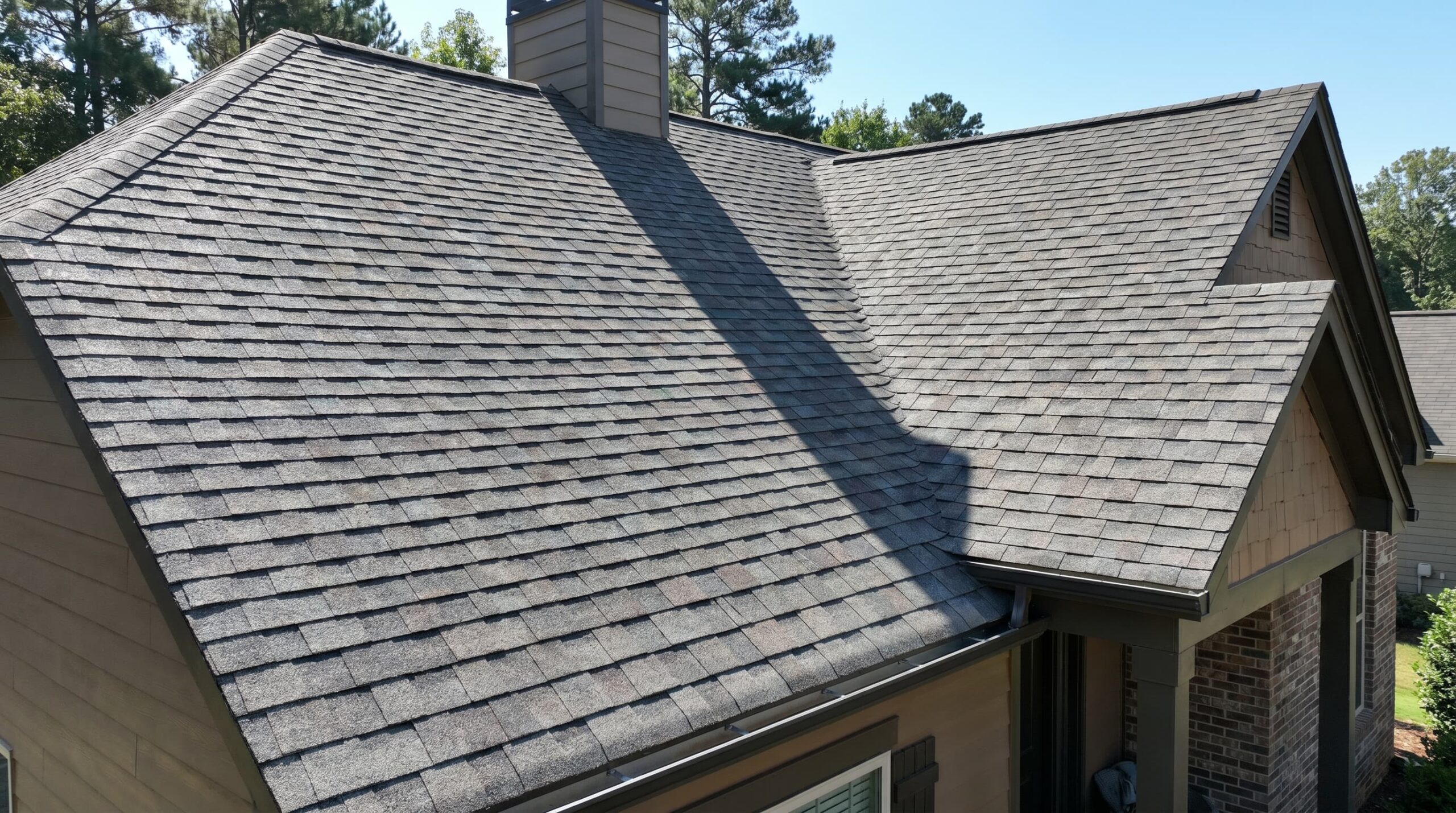
Lightest and flattest asphalt option, designed with two slots to create a three-piece look per strip
- Installed Cost: $3.50 to $5.50 per sq ft
- Lifespan: 12 to 18 years in real-world conditions
- Weight: 200 to 250 lbs per square foot
- Wind Resistance: Up to 60 mph for most products
- Best Use Cases: Suitable for tight budgets, short-term ownership (7–10 years), or structures that cannot support heavier roofing materials
- Trade-Off: Lower upfront cost but shorter lifespan, often higher cost per year over time
- Market Trend: Falling out of favor in many regions, with reduced availability as architectural shingles become the standard
2. Metal Roofing (Metal Shingles)
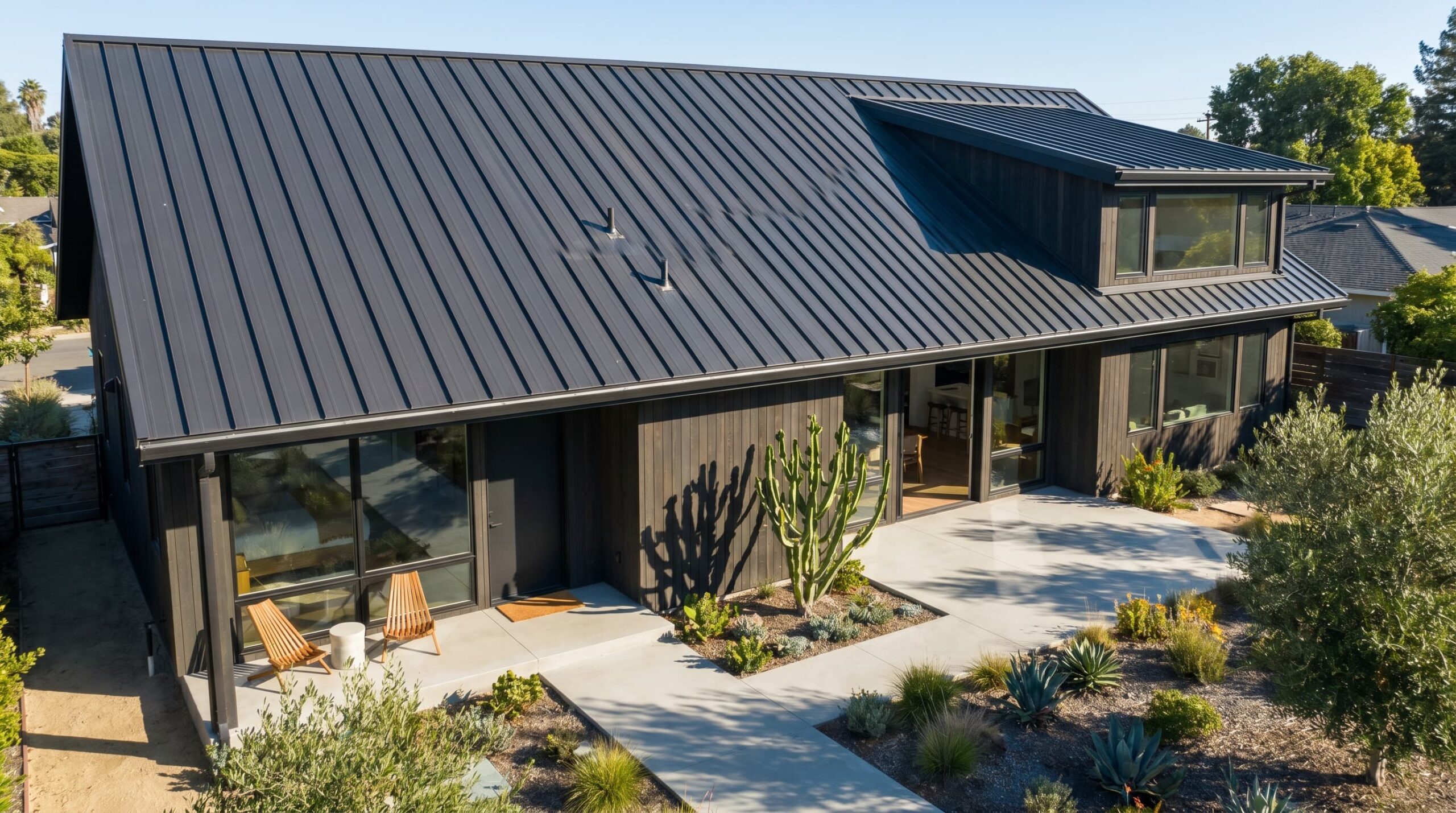
Steel or aluminum panels designed to mimic asphalt, slate, or wood shake, with concealed fasteners and an interlocking system for durability
- Installed Cost: $9.00 to $15.00 per sq ft
- Lifespan: 40 to 60 years
- Weight: 100 to 175 lbs per square foot
- Wind Resistance: 120 to 160 mph
- Performance Advantage: More durable and wind-resistant than asphalt, with a traditional look and better repairability than standing seam
- Cost Positioning: Mid-range option, cheaper than standing seam but more expensive than asphalt
- Hail Resistance: Varies by product and gauge; check UL 2218 rating for impact performance
- Best Use Cases: Ideal for homeowners wanting metal durability with a conventional appearance and balanced cost
3. Wood Shingles and Shakes
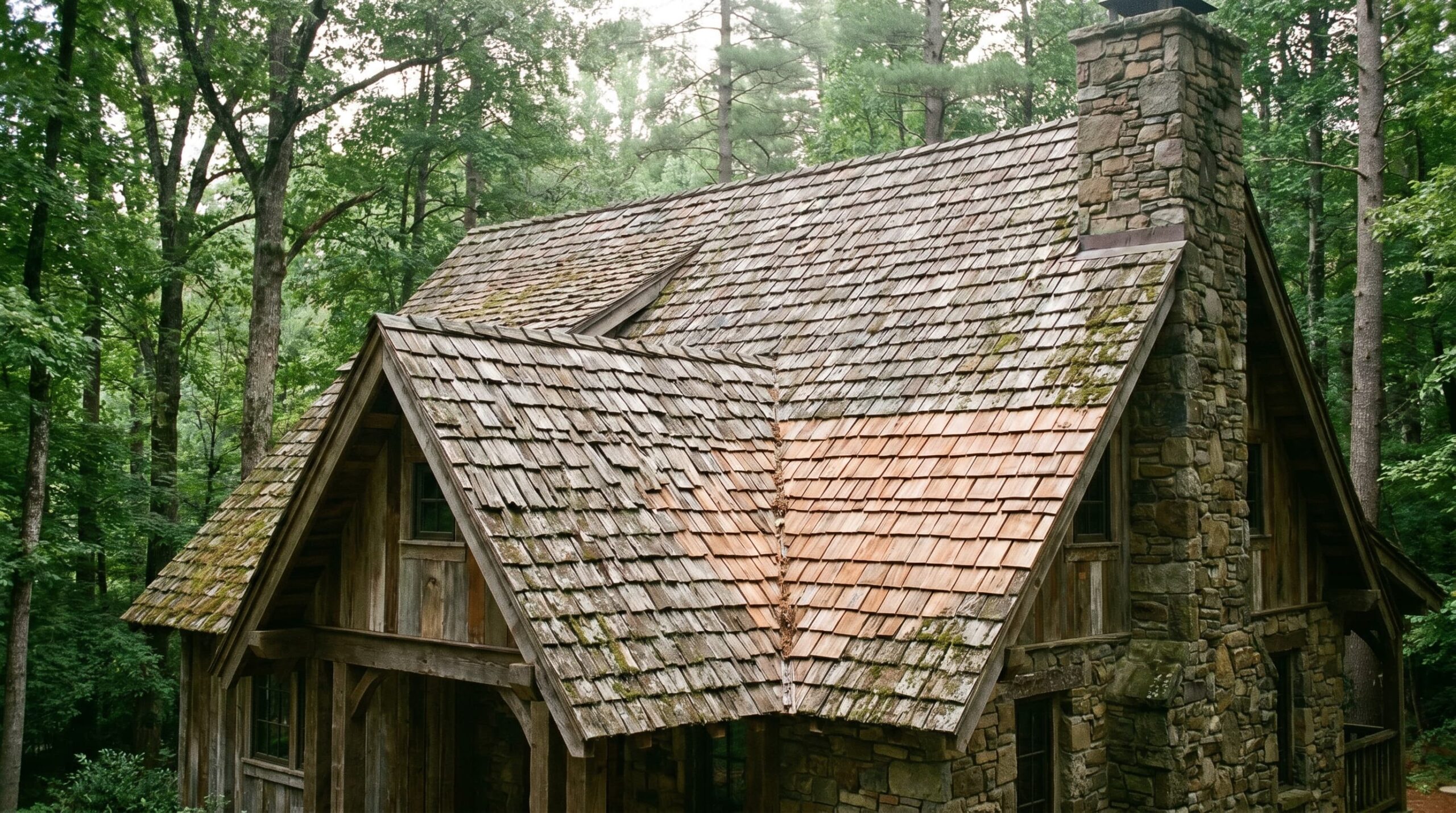
Made from cedar, pine, or spruce, available as hand-split shakes or sawn shingles, valued for a natural look but less common due to maintenance and fire concerns
- Installed Cost: Shingles $7.00–$10.00 per sq ft, Shakes $8.00–$13.00 per sq ft
- Lifespan: 20 to 30 years with regular maintenance, but can drop to 12–15 years if neglected
- Weight: 250 to 350 lbs per square foot
- Wind Resistance: Moderate, depends on installation quality
- Maintenance Needs: Requires cleaning every 2–3 years and periodic treatment to prevent moss, algae, and moisture damage, especially demanding in humid climates
- Fire Considerations: Often requires fire-retardant-treated (FRT) wood, which increases cost and may affect warranties
- Regulations: Restricted or prohibited in some fire-prone areas, especially parts of California and western states
- Best Use Cases: Suitable for specific architectural styles where natural appearance matters and ongoing maintenance is acceptable
4. Slate
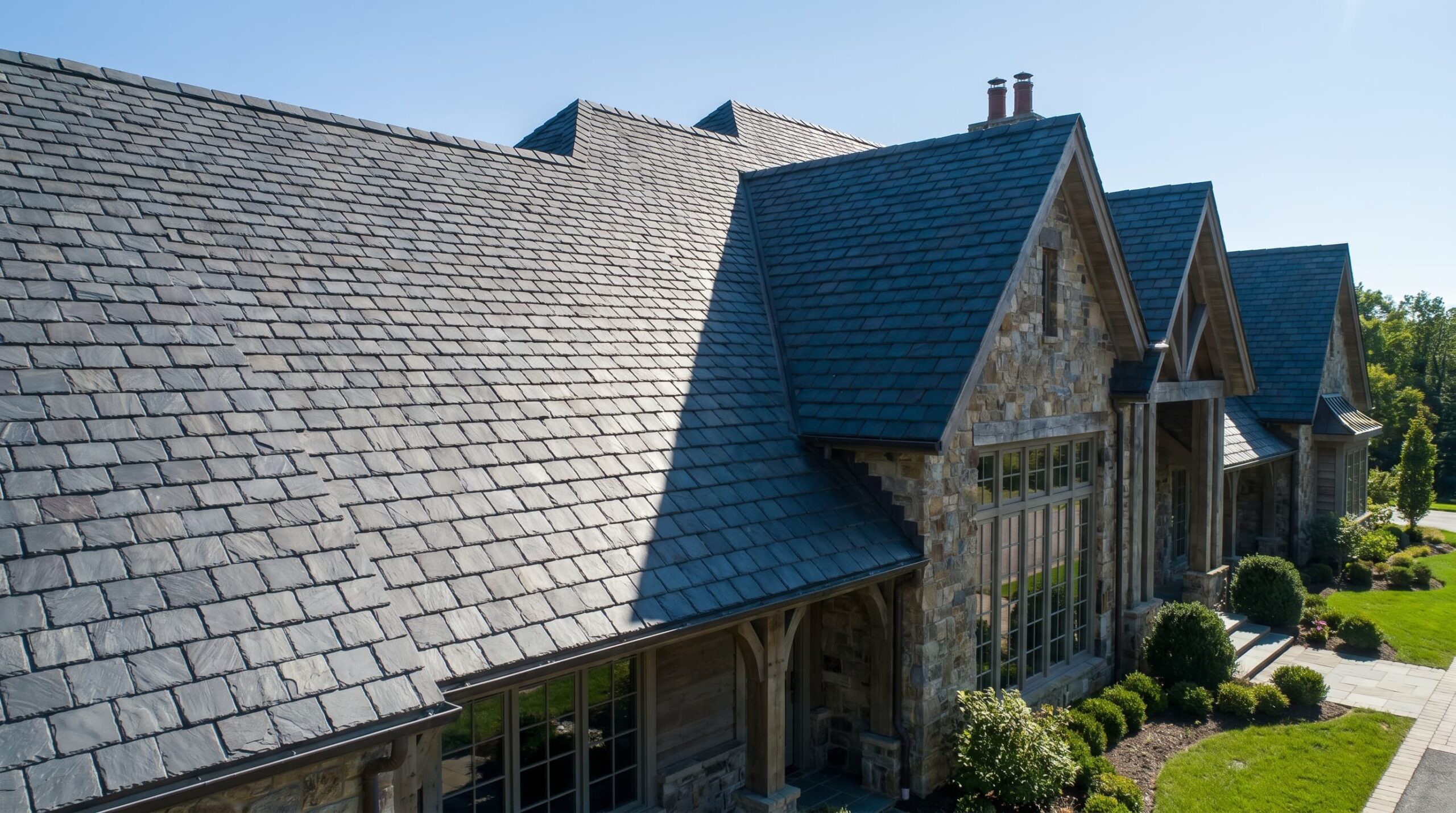
Premium stone roofing from sources like Vermont, Spanish, or Welsh slate, known for unmatched longevity and classic appearance
- Installed Cost: $25.00 to $60.00+ per sq ft
- Lifespan: 75 to 150 years, with some roofs lasting over a century
- Weight: 700 to 1,500 lbs per square foot, significantly heavier than most materials
- Wind Resistance: Excellent overall, though individual tiles can loosen in extreme winds
- Structural Requirement: Most homes need an engineering assessment and possible reinforcement before installation due to the heavy weight
- Installation & Repairs: Requires specialized contractors, improper installation leads to costly failures, and skilled labor is harder to find
- Cost Consideration: High upfront cost plus potential structural upgrade expenses
- Best Use Cases: Ideal for historic homes, long-term ownership, and buyers seeking a lifetime roofing solution
- Limitations: Not suitable for tight budgets, standard framing without reinforcement, or areas with limited access to slate specialists
5. Composite (Synthetic) Shingles
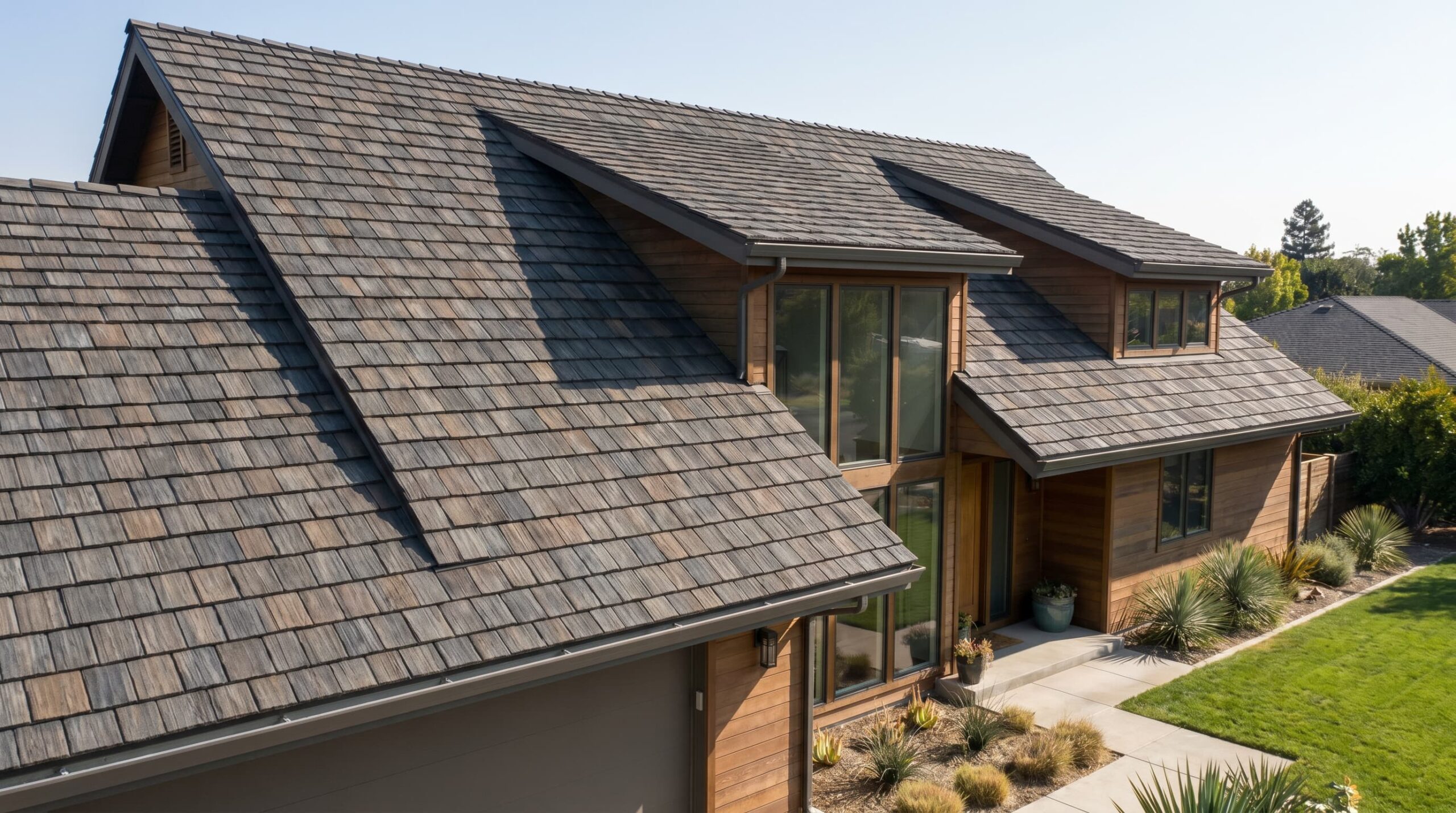
Made from engineered materials like fiberglass, recycled plastics, rubber, and asphalt, designed to mimic slate or wood at a lower weight and cost
- Installed Cost: $9.00 to $16.00 per sq ft
- Lifespan: 30 to 50 years, depending on product quality
- Weight: 200 to 350 lbs per square foot
- Wind Resistance: 110 to 150 mph in most products
- Performance Improvement: Modern products from brands like DaVinci, Brava, and CertainTeed Belmont offer strong durability and UV resistance
- Insurance Benefit: Many products carry Class 4 impact ratings, which may lower insurance costs
- Best Use Cases: Ideal for achieving a slate or cedar look without heavy structural load or high maintenance
- Cost Advantage: Typically costs one-third to half of natural slate or wood alternatives
- Quality Caution: Wide variation in product quality, older products had early failures, verify ASTM D3462 testing and manufacturer reliability before choosing
When to Replace vs. Repair Roof Shingles
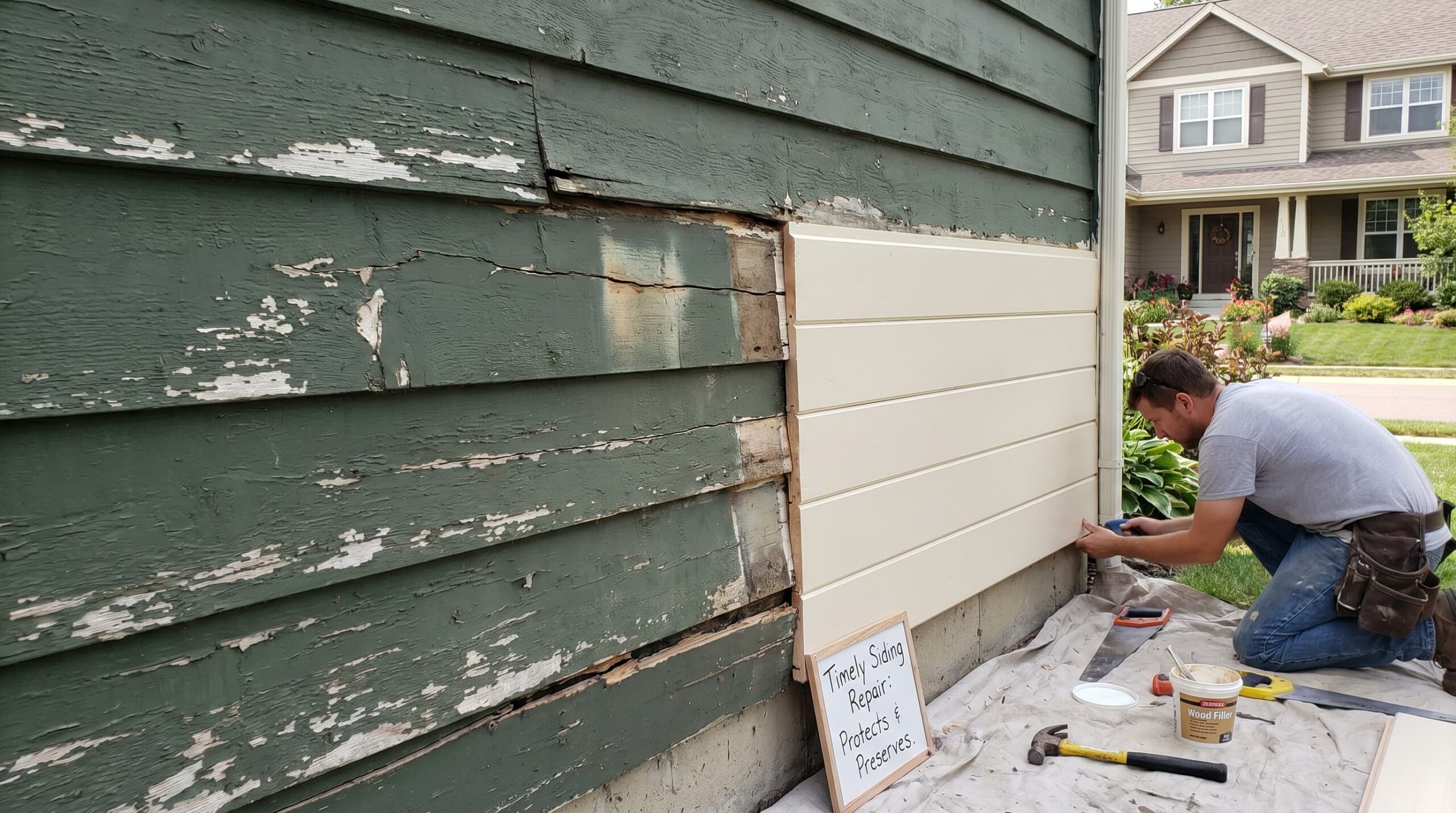
The most expensive roofing mistake most people make is replacing a roof that could have been repaired, or spending money on repairs on a roof that needed replacing. Here’s a clear way to make that call.
Repair is the Right Call When
- Your roof is under 15 years old
- The damage is isolated, covering less than 30% of the total roof surface
- The underlying decking shows no signs of rot or moisture damage
- Your shingles are still in overall sound condition (no widespread granule loss, curling, or cracking)
Replacement is the Right Call When
- Your roof is 20 years or older (15 years for 3-tab shingles, given modern material quality)
- Damage covers more than 30% of the roof area
- There’s evidence of systemic failure, widespread granule loss, curling at the edges, and multiple areas of cracking
- You’ve repaired the same section more than once
- There’s active rot or moisture damage in the decking under the shingles
The middle zone, a 15-to-20-year-old roof with moderate damage, is where a professional inspection earns its cost immediately.
How to Lower Your Shingle Replacement Cost
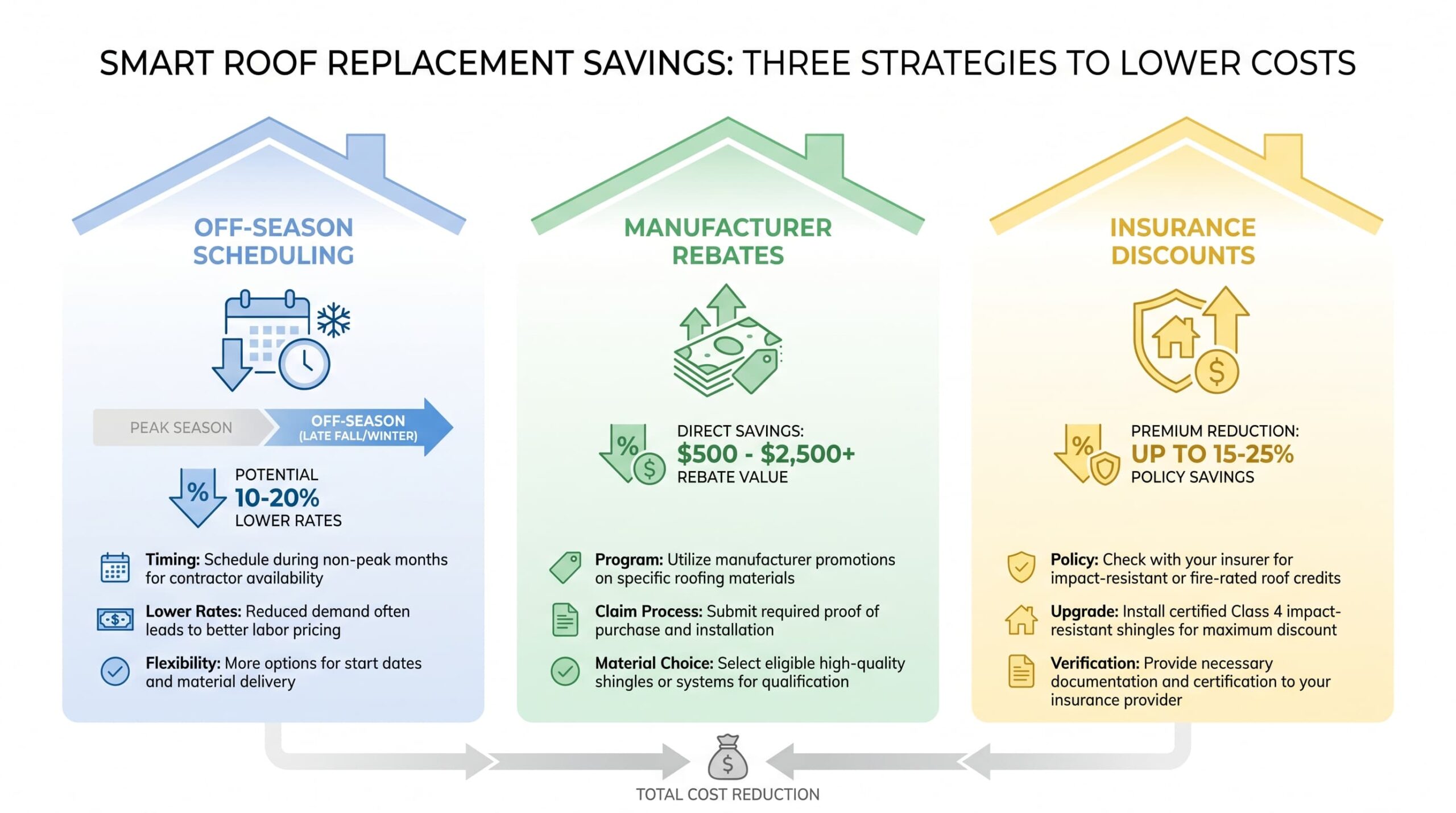
- Off-Season Scheduling: Schedule your roof replacement during slower months, such as winter, when contractor demand is lower. This can lead to more flexible scheduling and savings of 10% to 20% on labor costs.
- Manufacturer Rebates: Many manufacturers offer rebates on qualifying shingles and roofing systems. These programs can reduce your project cost by $500 to more than $2,500, depending on the materials selected.
- Insurance Discounts: Installing impact-resistant shingles may qualify you for insurance premium discounts. Some insurers offer savings of up to 25% for roofs that provide better protection against weather damage.
- Combined Savings: Using multiple cost-saving strategies together can significantly reduce the overall cost of your roof replacement while still allowing you to choose durable, high-quality materials.
This infographic will guide you through the process of lowering your shingle replacement cost, providing helpful tips and insights to make the task more affordable:
Conclusion
Replacing your roof is one of the bigger financial decisions you’ll make as a homeowner, and the margin between a smart choice and an expensive mistake usually comes down to how prepared you are before anyone shows up with a ladder.
The numbers in this guide reflect where the market actually sits, not where it was two years ago.
Material costs are higher, tariffs have changed what contractors pay for supplies, and shingle quality is not what it was a generation ago.
None of that should scare you off. It should just inform how you budget, which questions you ask, and which estimates you trust.
Get the inspection done. Read your insurance policy before you need it. Understand what you’re signing before any financing agreement is in front of you.
A well-chosen roof installed by a contractor you’ve properly vetted will protect your home for decades, and that peace of mind is worth the extra time you put in upfront.
Frequently Asked Questions
What is the Labor cost to install shingles?
Labor typically costs $2.00 to $5.00 per square foot, depending on roof complexity, pitch, tear-off needs, and local labor rates.
How Long Do Asphalt Shingles Last?
Asphalt shingles typically last 15 to 30 years, with 3-tab on the lower end and architectural shingles lasting longer with proper installation and ventilation.
Is it Cheaper to Repair or Replace a Shingle Roof?
Repair is cheaper for small, isolated damage, but replacement is more cost-effective if the roof is old, leaking in multiple areas, or near the end of its lifespan.