Waking up to unexplained bite marks or spotting dark stains on your bed frame can be unsettling, and in many cases, bed bugs are the cause.
Although bed bugs are commonly associated with mattresses, they are also frequently found in wooden furniture.
Wooden furniture, with its natural cracks, joints, and grooves, gives bed bugs plenty of places to hide unnoticed for months.
In this blog, we cover everything from identifying early warning signs and knowing where bed bugs hide in wooden furniture to treatment and prevention.
What Do Bed Bugs Look Like?
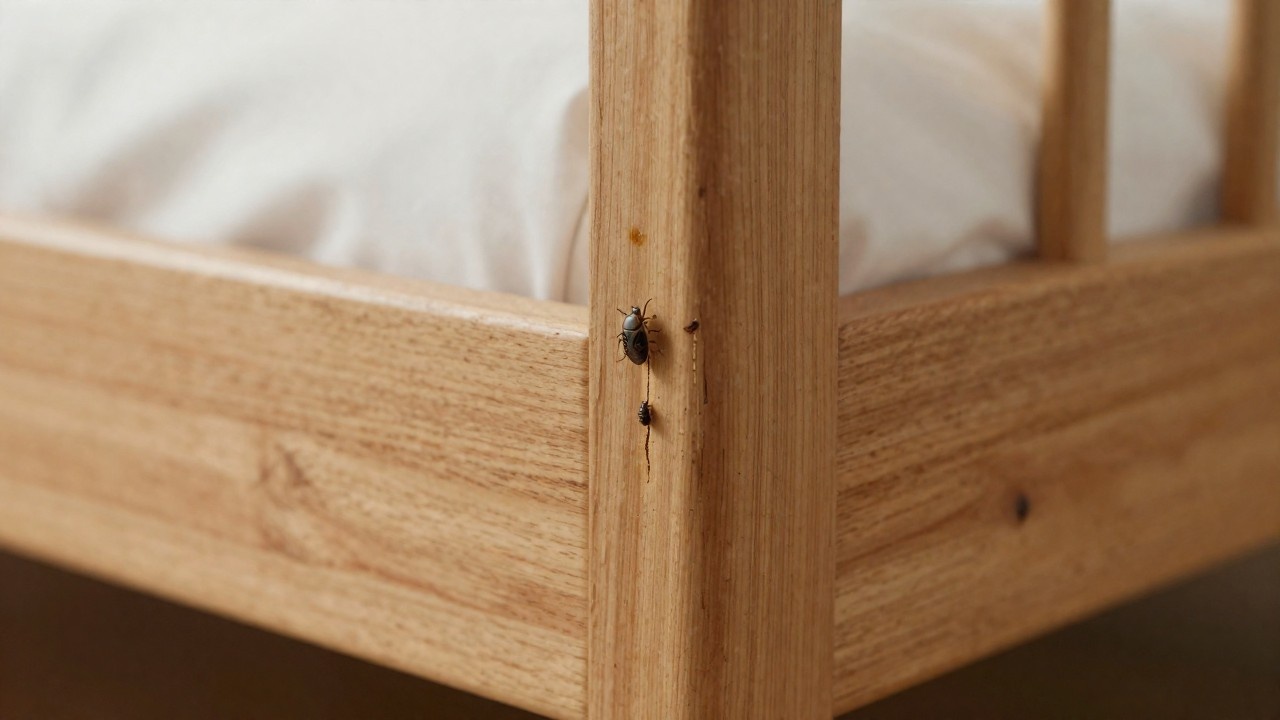
Bed bugs are tiny, flat, reddish-brown parasitic insects that feed on human blood and are roughly the size of an apple seed.
Their appearance can change significantly depending on their life stage and feeding status; for instance, while naturally flat and oval, their bodies elongate and turn bright red immediately after a blood meal.
These resilient pests are expert hitchhikers that do not fly or jump; instead, they crawl quickly to hide in the deep cracks and joints of furniture, where they remain undetected for long periods.
Adult bed bugs can survive for several months without feeding, and in cooler conditions, some may live for close to a year without a blood meal, allowing infestations to grow silently.
Females can lay up to 250 eggs in a lifetime, which can quickly escalate a minor problem.
Why Do Bed Bugs Appear in Wood Furniture?
Bed bugs are drawn to wooden furniture because it offers small, protected spaces where they can stay hidden close to people. Here is a look at why these pests favor wood and how they use it to their advantage.
- Natural Hiding Spots: Wooden furniture features natural narrow gaps, grain, and joints that provide the perfect dark, tight hiding spots that bed bugs crave.
- Proximity to Hosts: Items like nightstands and headboards are kept close to sleeping areas, providing easy access to blood meals while remaining undetected.
Wood type can also make a difference over time, since furniture that develops deep cracks, splits, or loose joints creates more hiding spaces for pests to settle unnoticed.
Softer or poorly maintained wood is often more likely to develop these hidden gaps as it ages. Choosing durable, well-finished furniture can make inspections and long-term maintenance much easier.
Signs of Bed Bugs in Wood Furniture
Spotting the signs of bed bugs in wooden furniture early can make a significant difference between a minor problem and a full-blown infestation.
Since these insects are experts at staying hidden, knowing exactly what to look for is key.
1. Black Spots, Stains, and Marks
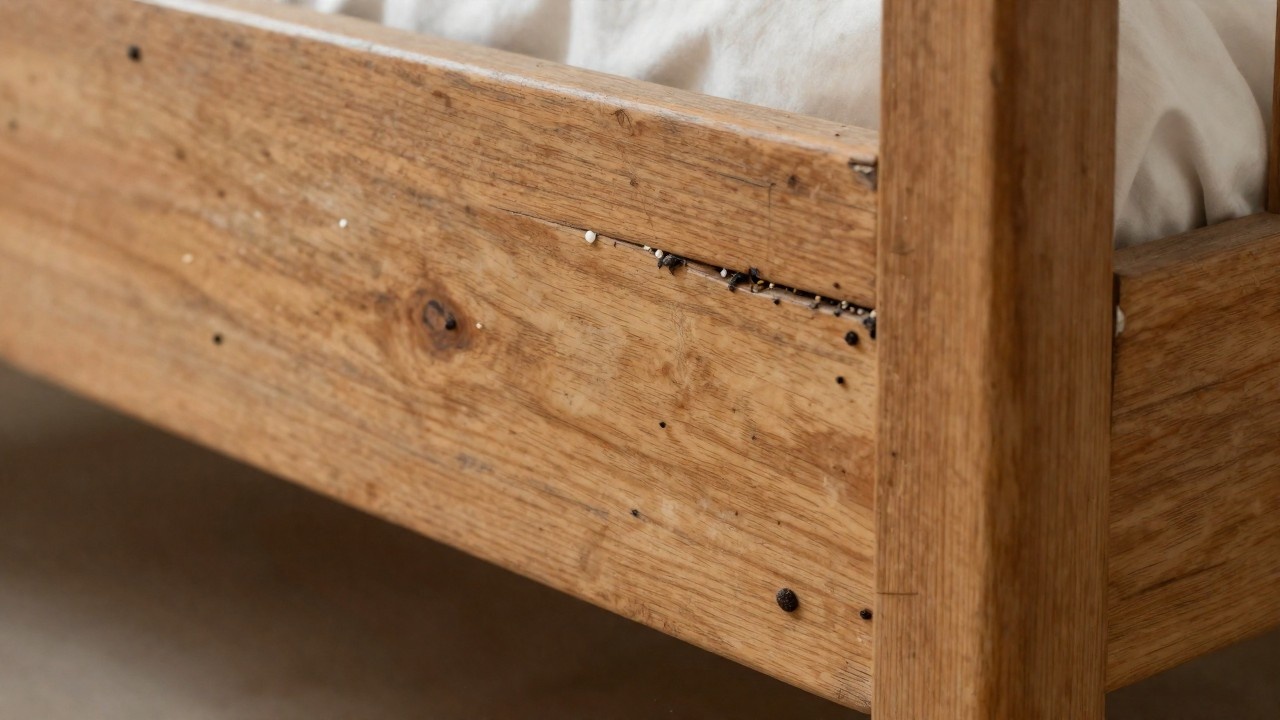
Bed bugs leave fecal deposits after every feeding, appearing as tiny dark brown to black spots or smears around openings, joints, and screw holes on wooden surfaces.
You may also notice reddish stains from bed bugs accidentally crushed, usually visible along the edges of joints or the corners of furniture.
2. Shed Skins and Eggs
As bed bugs grow, they shed their exoskeletons five times, leaving behind light brown, hollow, and transparent casings commonly found along drawer corners, furniture joints, and near screw holes.
Their eggs are about 1mm in size, pearly white, and oval-shaped, laid in clusters inside deep cracks. Finding either of these confirms an active, breeding infestation that is already growing.
3. Live Bugs in Cracks and Joints
Bed bugs usually stay hidden during the day, so seeing one crawling on furniture often means the infestation has already grown.
Check areas such as:
- Bed frame joints
- Drawer tracks
- Screw holes
- Headboard edges
- Cracks behind furniture
- Undersides of wooden furniture
They often gather in tight clusters close to sleeping areas. In many cases, people first notice bed bugs after repeatedly waking up with bites, even when there are no obvious signs on the mattress itself.
4. Musty Odor
Larger infestations sometimes produce a faint musty smell. Many people describe it as slightly sweet or damp. While odor alone is not enough to confirm the presence of bed bugs, it can become noticeable in more severe cases.
How to Check Wood Furniture for Bed Bugs
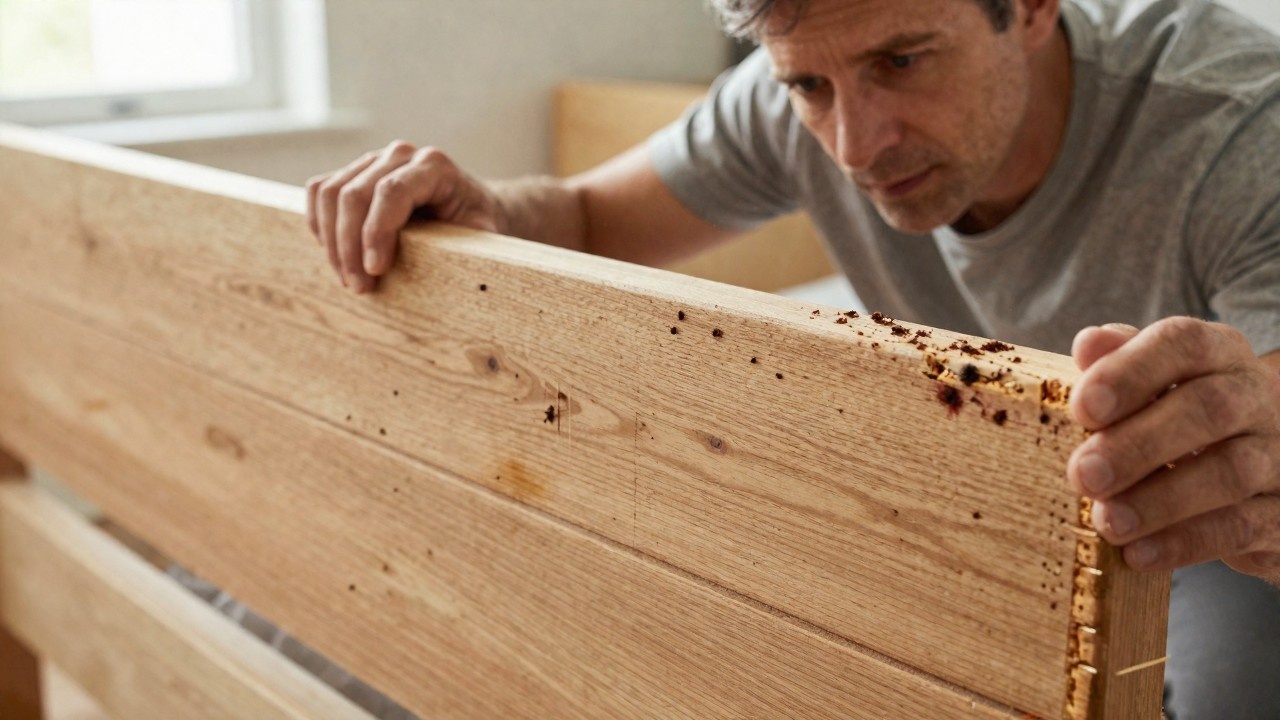
Before starting an inspection, gather a flashlight and a magnifying glass, as bed bugs and their eggs are too small to spot reliably with the naked eye. Once you are ready, follow these steps:
Step 1: Move the Furniture Away from the Wall
Pull furniture away from walls so you can access all sides, including the back panel and lower sections that are usually out of sight. Bed bugs frequently hide in areas facing the wall, making this a critical first step before any inspection begins.
Step 2: Start from the top and Work Downward
Running your flashlight along every joint, groove, screw hole, and corner as you go.
Taking a systematic approach ensures you do not accidentally skip over an area where bugs may already be nesting.
Step 3: Check the Undersides and Inner Edges
Particularly the undersides of shelves, inner drawer corners, and drawer tracks, as these are the most commonly missed spots.
Remove each drawer completely and inspect the frame behind it, as bugs often hide in the cavity left by the drawer.
Step 4: Probe Small Openings
By sliding a thin card along joints and crevices to disturb any hiding bugs and bring them into view.
If bed bugs are present, you may also detect a faint musty odor, which is a known sign of an active infestation even before any visible bugs appear.
Step 5: Inspect Secondhand Furniture Outdoors
Always carry out the inspection outdoors or in an isolated space before bringing the piece inside.
This simple precaution ensures that any bugs present cannot escape into your home and establish themselves during the process.
Also read: How to Get Rid of Mold on Wood Furniture?
Bed Bug Signs vs Other Wood Damage
Not every stain or mark on wooden furniture comes from bed bugs. Other pests can leave behind similar evidence, but there are important differences.
| Feature | Bed Bugs | Termites | Wood-Boring Beetles | Carpenter Ants |
|---|---|---|---|---|
| Wood Damage | No structural damage | Hollow or tunneled wood | Small round exit holes | Smooth galleries inside damp wood |
| Visible Residue | Dark fecal spots, shed skins, eggs | Mud tubes, damaged galleries | Fine powdery frass | Sawdust-like debris |
| Common Location | Near beds, couches, and sleeping areas | Walls, flooring, framing, and structural wood | Furniture, flooring, beams, or stored wood | Moist, decaying, or water-damaged wood |
| Bites Humans | Yes | No | No | No |
| Eggs Visible | Sometimes, but very small | Rarely visible | Usually hidden inside wood | Usually hidden inside galleries |
| Treatment | Vacuuming, heat, sealing cracks, and professional pest control | Licensed termite treatment | Moisture control, borate treatment, or fumigation | Moisture repair, nest removal, and pest control |
How to Get Rid of Bed Bugs in Wood Furniture?
Dealing with bed bugs in wooden furniture requires a consistent, multi-step approach, as a single treatment is rarely enough. Here are the most effective methods:
- Vacuum Thoroughly: Use a crevice tool to cover every joint, crack, screw hole, and drawer corner. Seal and dispose of the vacuum bag immediately after use outdoors.
- Apply Heat: Sustained heat above 120°F can kill bed bugs and their eggs. Professional heat treatment is usually more reliable because it reaches hidden internal spaces where bugs survive
- Use Diatomaceous Earth: Dust it into cracks and joints to dehydrate and kill bugs over time. It is non-toxic but requires patience as results can take days to weeks.
- Seal Cracks: After treatment, fill any visible cracks with wood filler to eliminate future hiding spots and prevent reinfestation.
- Avoid Overusing DIY Sprays: Using too many store-bought sprays may push bed bugs deeper into nearby walls or furniture instead of eliminating them completely.
Call a Professional if bugs have spread beyond the furniture to baseboards or carpets. Professional pest control with targeted insecticides is strongly recommended.
What to Do with Infested Furniture?
Furniture with minor or early-stage infestations can often be treated successfully, especially when the bugs are limited to a few cracks or joints.
Solid wood furniture is usually easier to inspect, clean, and restore than upholstered pieces because it has fewer fabric layers and fewer hidden areas where bed bugs can spread.
Expensive, antique, or sentimental furniture may also be worth saving if the structure is still in good condition and professional treatment is available.
However, heavily infested furniture can become much harder to recover, particularly if the bugs have spread deep into cushions, padding, or multiple hidden sections. In these cases, repeated treatments may cost more than replacement.
If you decide to remove infested furniture, avoid dragging it through the house uncovered, as this can spread bed bugs to other rooms. Wrapping the item securely in plastic before moving or disposing of it helps contain the infestation and reduces the chance of bugs spreading further.
How to Prevent Bed Bugs in Wood Furniture?
Prevention is always easier than treatment. A few consistent habits can significantly reduce the risk:
- Inspect Secondhand Furniture: Always examine used wooden pieces outdoors with a flashlight before bringing them inside, focusing on joints, screw holes, and drawer corners.
- Seal Cracks Regularly: Apply wood filler or caulk to visible cracks and joints to eliminate potential hiding spots before bed bugs can settle in.
- Reduce Clutter Around Furniture: Keeping areas around beds and furniture clean and uncluttered makes it harder for bed bugs to hide for long periods.
- Use Bed Bug Interceptors: Place interceptor traps under furniture legs as an early-warning system and a physical barrier against climbing bugs.
- Be Cautious When Traveling: Inspect your luggage thoroughly after hotel stays before placing it near any wooden furniture at home.
Conclusion
Bed bugs can hide in wooden furniture for a long time, so small warning signs should never be ignored.
Dark spots, shed skin, unusual odors, or activity around joints and corners are often early signals that something is wrong.
Regularly checking furniture and promptly addressing problems can help prevent bugs from spreading to mattresses, carpets, and other areas of the home.
If the infestation becomes difficult to control or keeps recurring, it may be time to contact a professional pest control expert to properly inspect the problem and stop it from spreading further.
Frequently Asked Questions
How Long Can Bed Bugs Live in Wood?
Bed bugs can survive for over a year inside wooden furniture without feeding, which is why an infestation can go undetected for months, even in stored or unused pieces.
Early-Stage Signs of Bed Bugs on the Couch?
Early signs include tiny, dark fecal spots along seams, a single shed skin inside a cushion zipper, and unexplained bite marks appearing after sitting or resting on the couch.
Can Bed Bugs Live in Plastic Furniture?
Bed bugs can live on plastic furniture, but they rarely prefer it, as plastic offers far fewer cracks and crevices than wood, limiting their hiding spots.