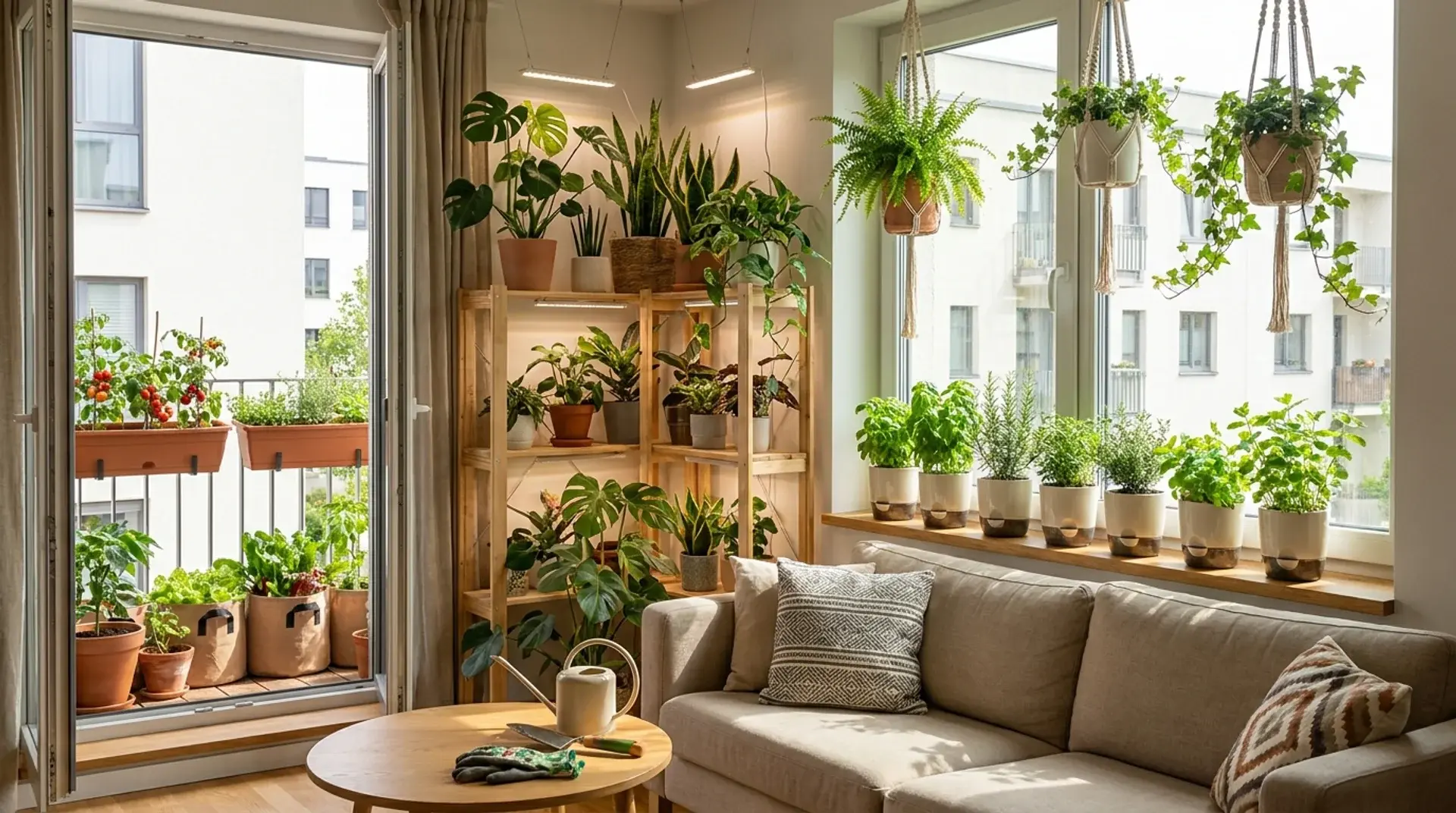
It’s possible to cultivate a garden even without a yard.
Apartment gardening lets you grow fresh herbs, leafy greens, and real vegetables from a balcony, a windowsill, or a single sunny spot.
Getting started doesn’t require years of experience or a large budget.
This blog walks you through reading your light, picking the right containers and soil, and choosing plants that actually thrive indoors.
By the end, you will have a real apartment indoor vegetable garden, no matter how small your space is.
What Apartment Gardening Actually Gives You
Apartment gardening lets you grow fresh plants, upgrade your living space, and enjoy the benefits of nature, even with limited space.
A large meta-analysis of urban nature studies found that time spent in green spaces measurably reduces negative moods, such as anxiety and low mood, among city dwellers. (Nature Cities, 2025).
A few plants on your windowsill can genuinely shift your mood on a hard day.
There are practical benefits too. Fresh herbs grown at home taste sharper than store-bought ones. A pot of basil or mint costs less than buying bunches every week.
Gardening is a gentle form of exercise, and plants also enhance the ambiance of a room.
How to Plan Your Apartment Garden Space
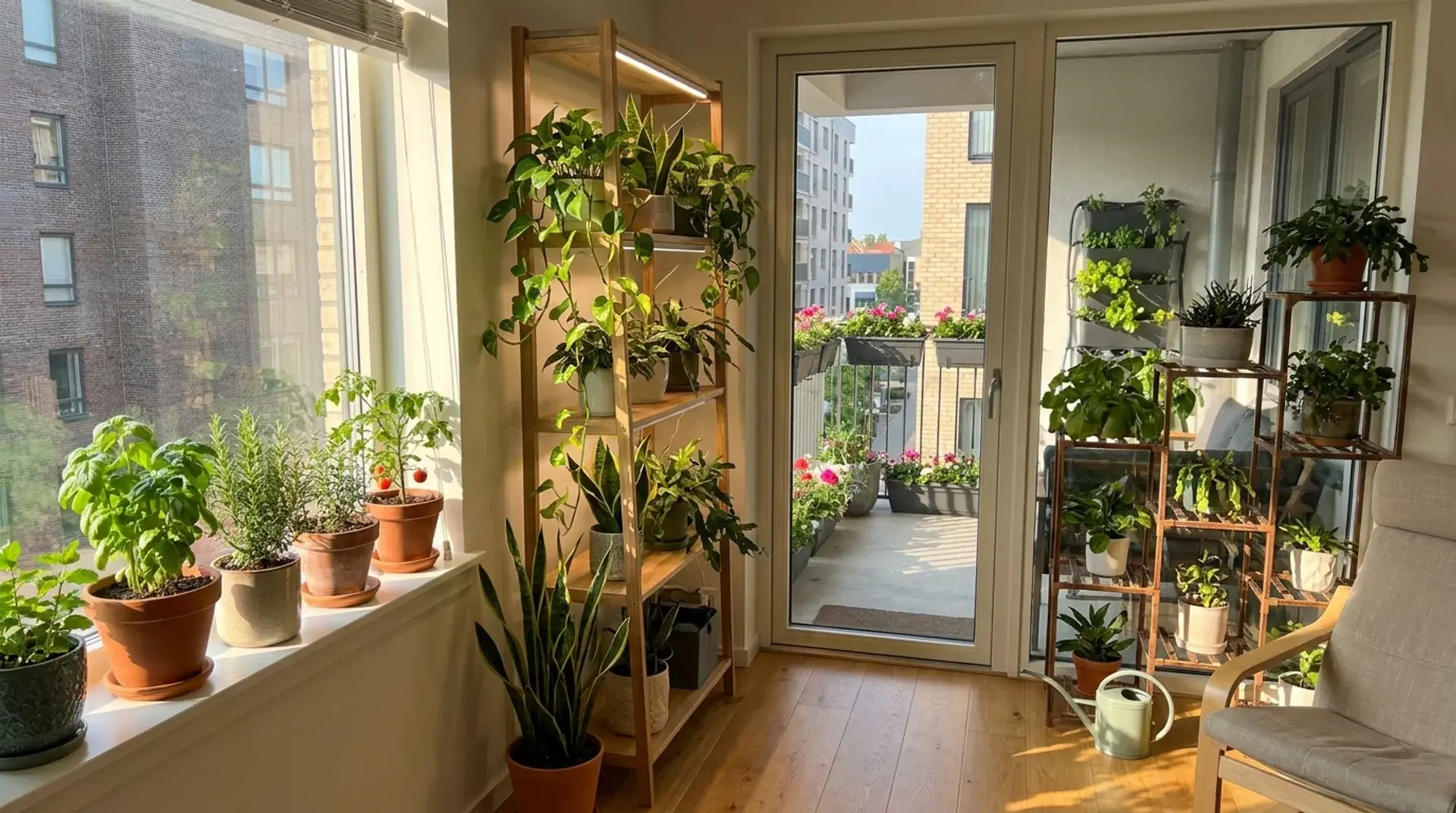
The most important decision you will make before buying a single plant is understanding your light.
If you want a fuller walkthrough of laying out beds, timing, and plant spacing beyond containers, our guide to planning a garden from scratch covers the basics that carry over indoors too.
Here is a simple guide to window direction and what works best in each:
- South-facing windows: Get the most direct sunlight, making them ideal for herbs and most edible plants.
- East- or west-facing windows: Receive medium light for part of the day and suit ZZ plants, philodendrons, and some herbs.
- North-facing windows: Get low, indirect light and work best for shade-tolerant plants.
Once you get a feel for your light, think about the kind of space you’d love to create.
Best Plants for Apartment Gardening
Choosing the right plants for your actual conditions is the single most important factor in keeping an indoor garden alive. Here is a breakdown by category.
Best Herbs to Grow in an Apartment
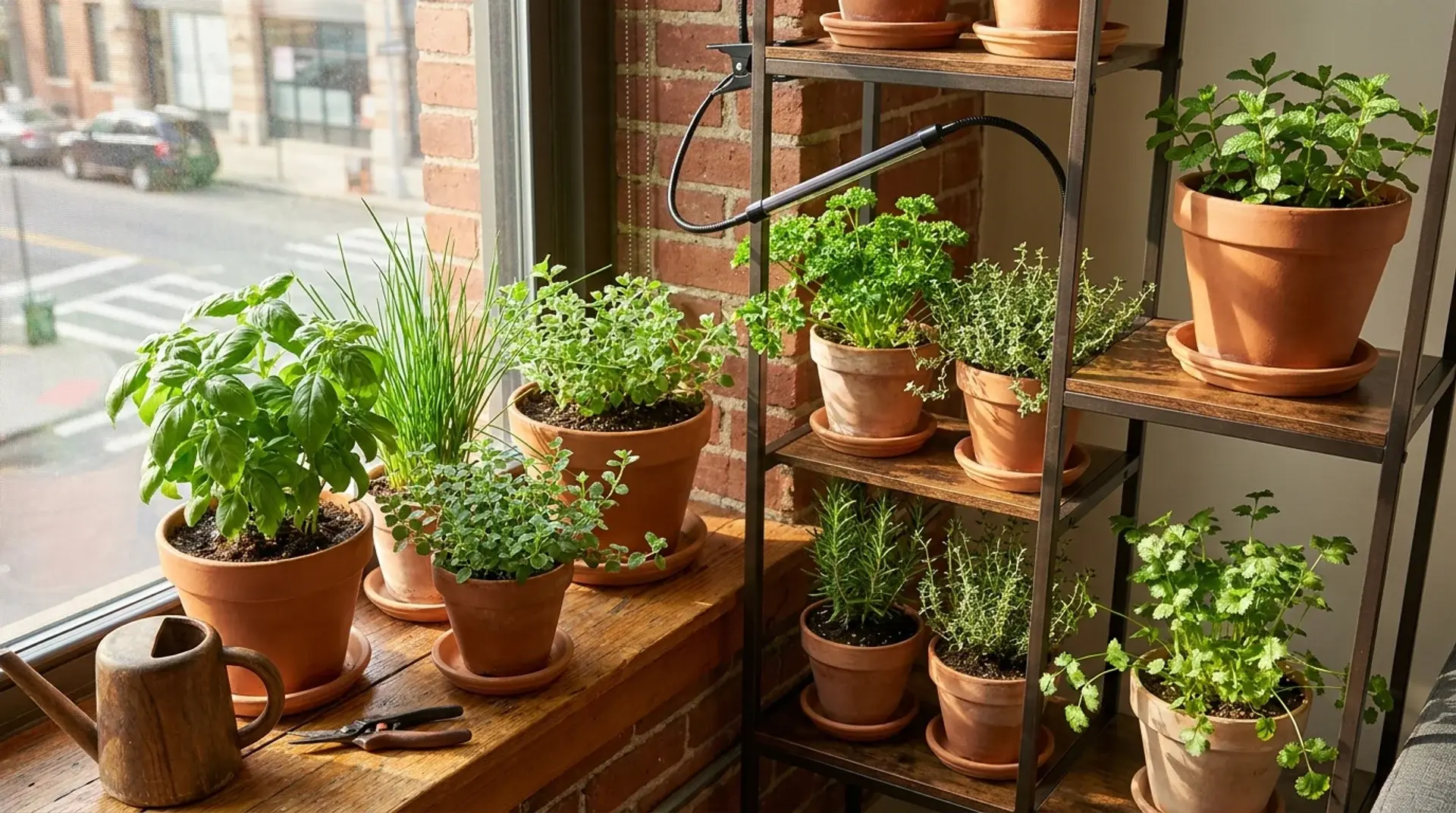
Herbs are such a wonderful option for small spaces and are super easy to grow indoors. They’re a fantastic way to add fresh flavors to your meals right at home!
- Place them near a sunny window or under a grow light.
- Start with basil, chives, oregano, parsley, rosemary, thyme, mint, and cilantro.
- Harvest regularly to encourage fresh growth.
- Use containers with good drainage and quality potting soil.
- Keep mint in a separate pot since it spreads quickly.
Vegetables You Can Grow in Containers
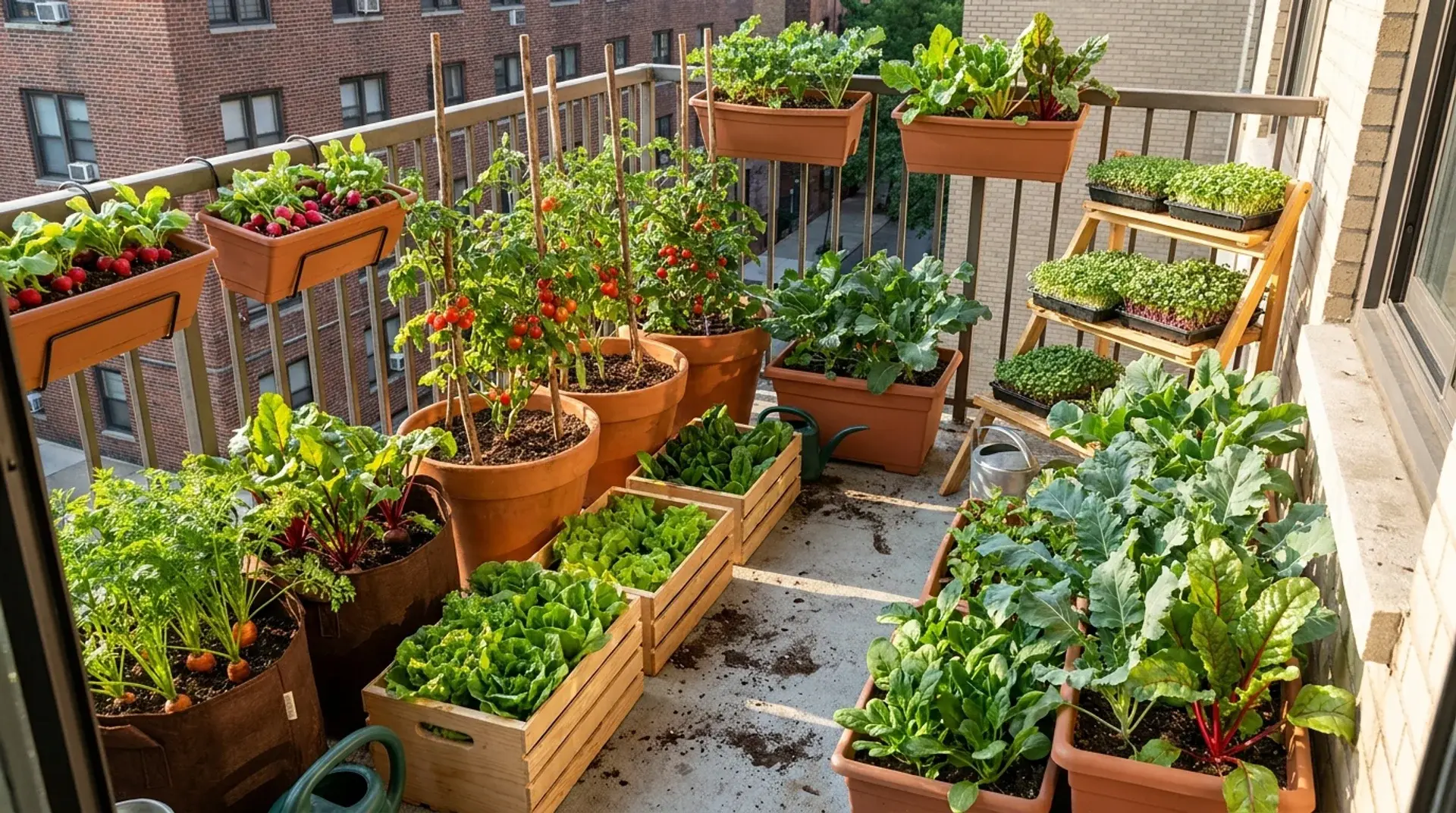
You don’t need a raised bed to enjoy growing your own food! Many vegetables grow beautifully in pots:
| Plant | Light or Space Needs | Growing Tip |
|---|---|---|
| Lettuce and spinach | Low light | Harvest leaves gradually. |
| Cherry tomatoes | Full sun or grow lights | Use pots at least two feet wide. |
| Kale and Swiss chard | Moderate light | Needs less sun than most vegetables. |
| Radishes | Bright light | Ready in about 25 days. |
| Carrots and beets | Bright light | Use deep 10-inch pots. |
| Microgreens | Minimal space | Ready in one week indoors. |
Containers, Soil, and Tools You Need for Gardening
Choosing the right containers, quality soil, and a few basic tools gives your apartment garden the best foundation for healthy plant growth.
1. Choosing the Right Container
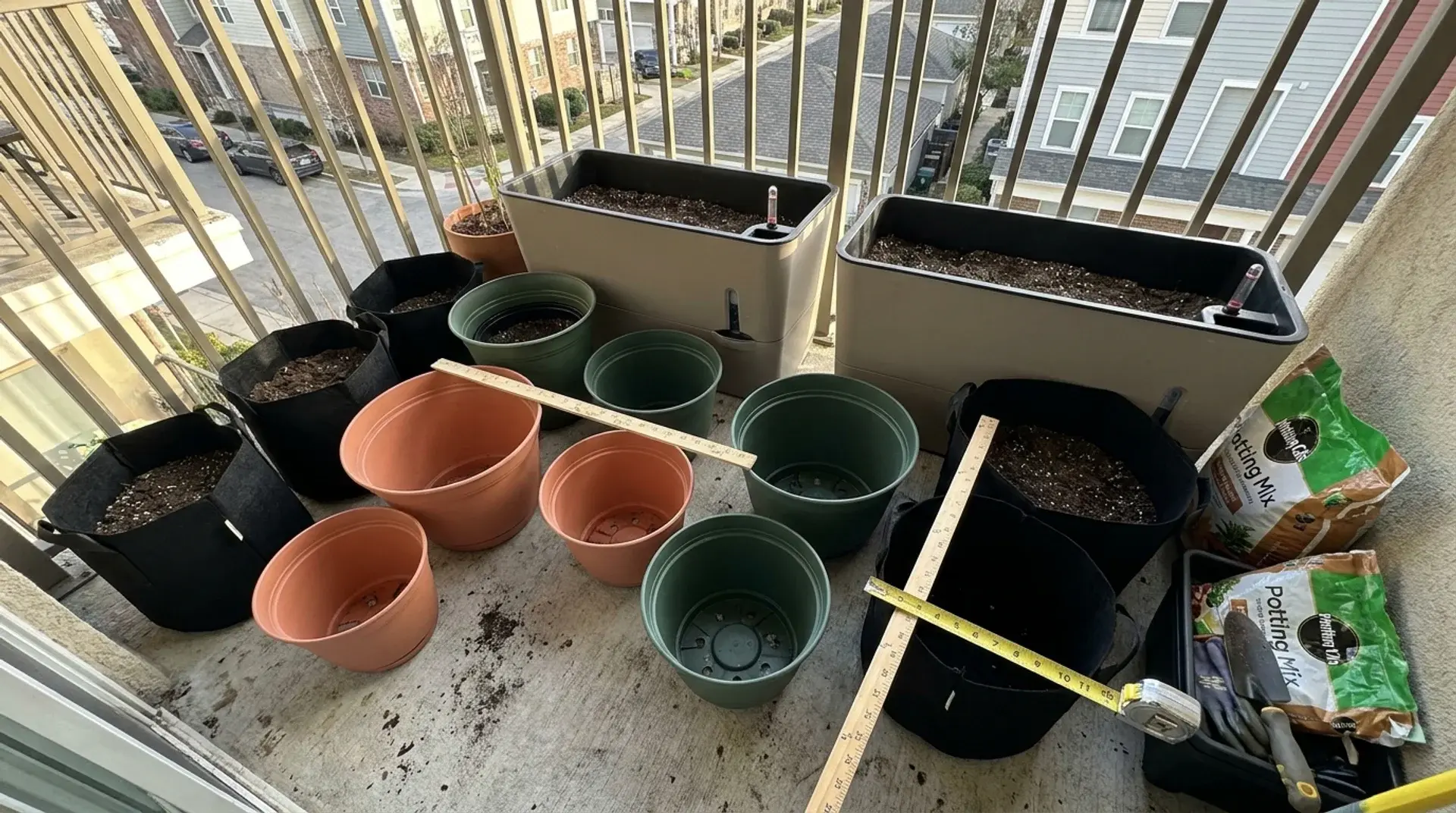
Every container must have drainage holes. Without them, roots sit in standing water and rot.
- Useplastic or fabric pots on balconies to reduce weight on upper floors.
- Self-watering pots are a good choice if you travel or have a busy schedule.
- Minimum depth: 8 inches for herbs, 12 inches for most vegetables, 24 inches for tomatoes.
- Skip terra cotta on balconies above ground level. It dries out faster and weighs more than plastic.
Every container starts with fresh, loose soil, so you skip the compaction and digging problems that no-till gardening methods try to solve outdoors.
2. What Soil to Use
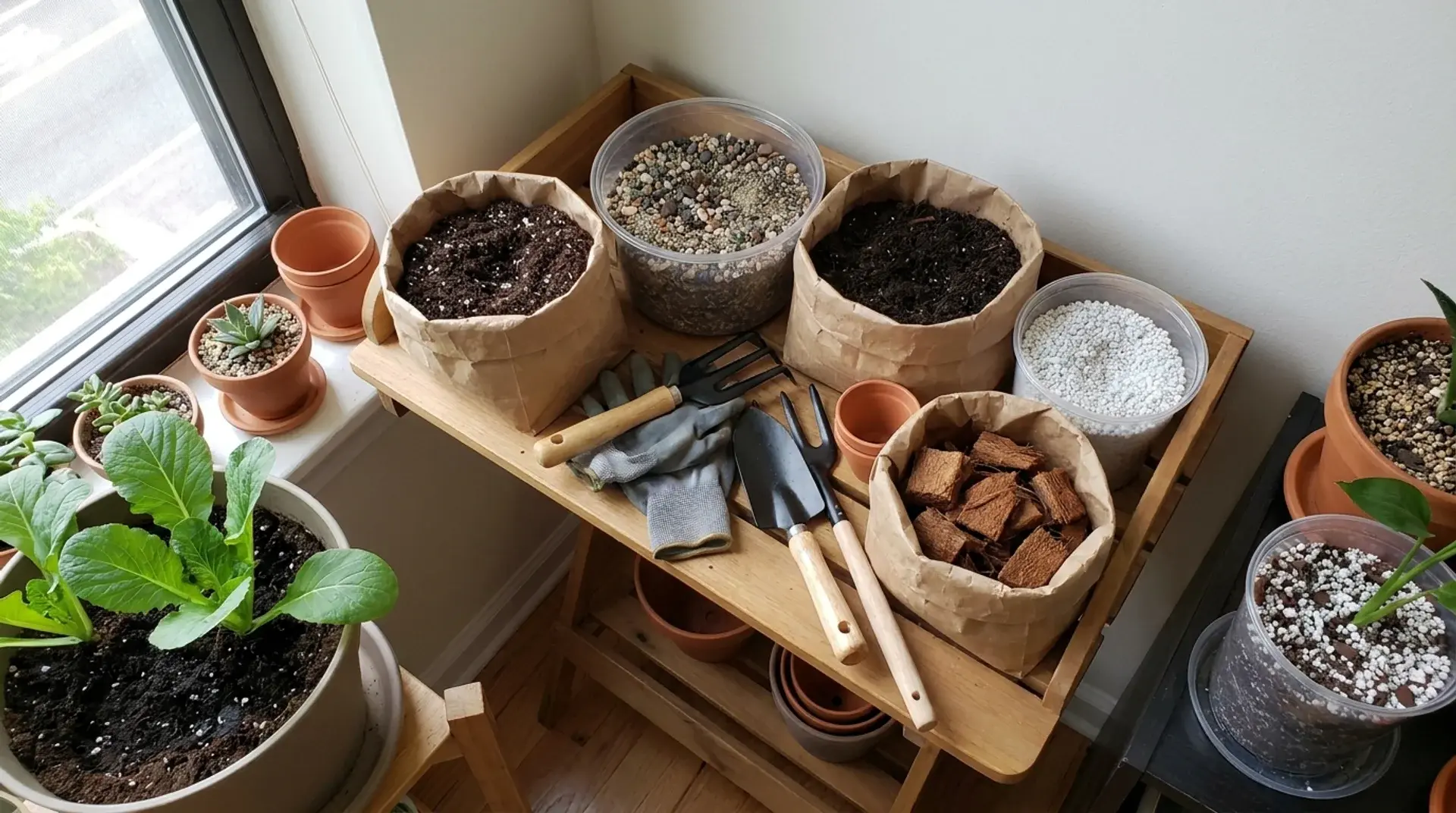
The right soil is essential for successful apartment gardening and indoor vegetable gardening because container plants depend on good drainage and nutrients.
- Avoid garden soil: It is too dense and may bring pests indoors.
- Use potting mix: Choose peat-based or organic potting soil with compost for most indoor plants.
- Choose fast-draining soil: Use a cactus-and-succulent mix for plants that dislike excess moisture.
- Use vegetable-friendly soil: Pick a potting mix or raised-bed soil with slow-release fertilizer.
- Improve soil texture: Add perlite, vermiculite, or coconut coir to enhance airflow, moisture retention, and root health.
3. Essential Starter Tools
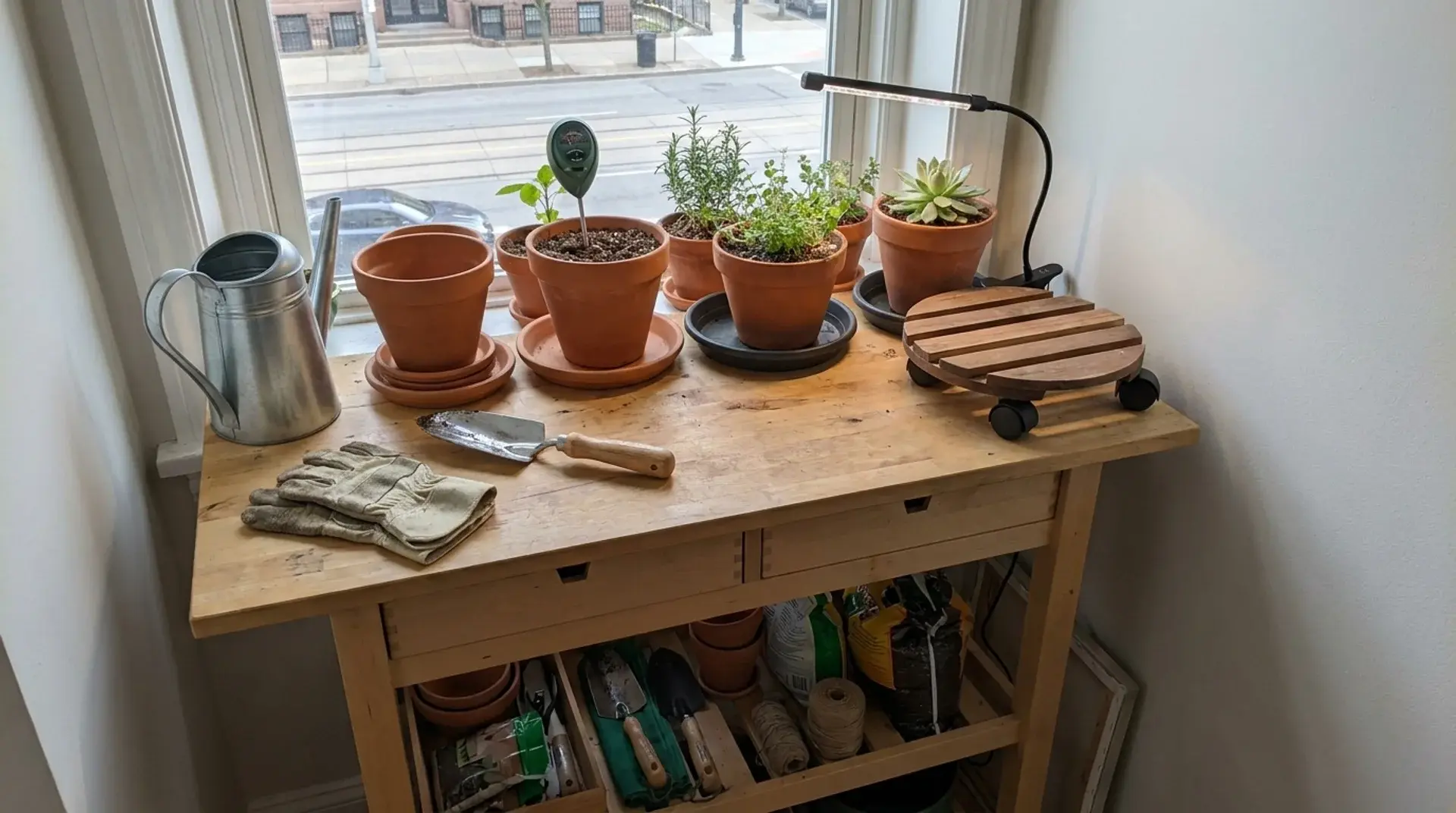
A few basic gardening tools can make indoor planting, watering, and maintenance easier while keeping your apartment clean and organized.
| Tool | Use |
|---|---|
| Watering can | Waters gently and prevents spills. |
| Small trowel | Helps plant, transplant, and add soil. |
| Saucers or trays | Catch water and protect surfaces. |
| Gardening gloves | Keep hands clean and protected. |
| Moisture meter | Checks soil moisture before watering. |
| Grow lights | Support herbs and vegetables indoors. |
| Plant caddies | Help move heavy pots easily. |
With these essentials in place, you’ll be well prepared to grow and maintain a productive apartment garden with confidence.
How to Start an Apartment Indoor Vegetable Garden
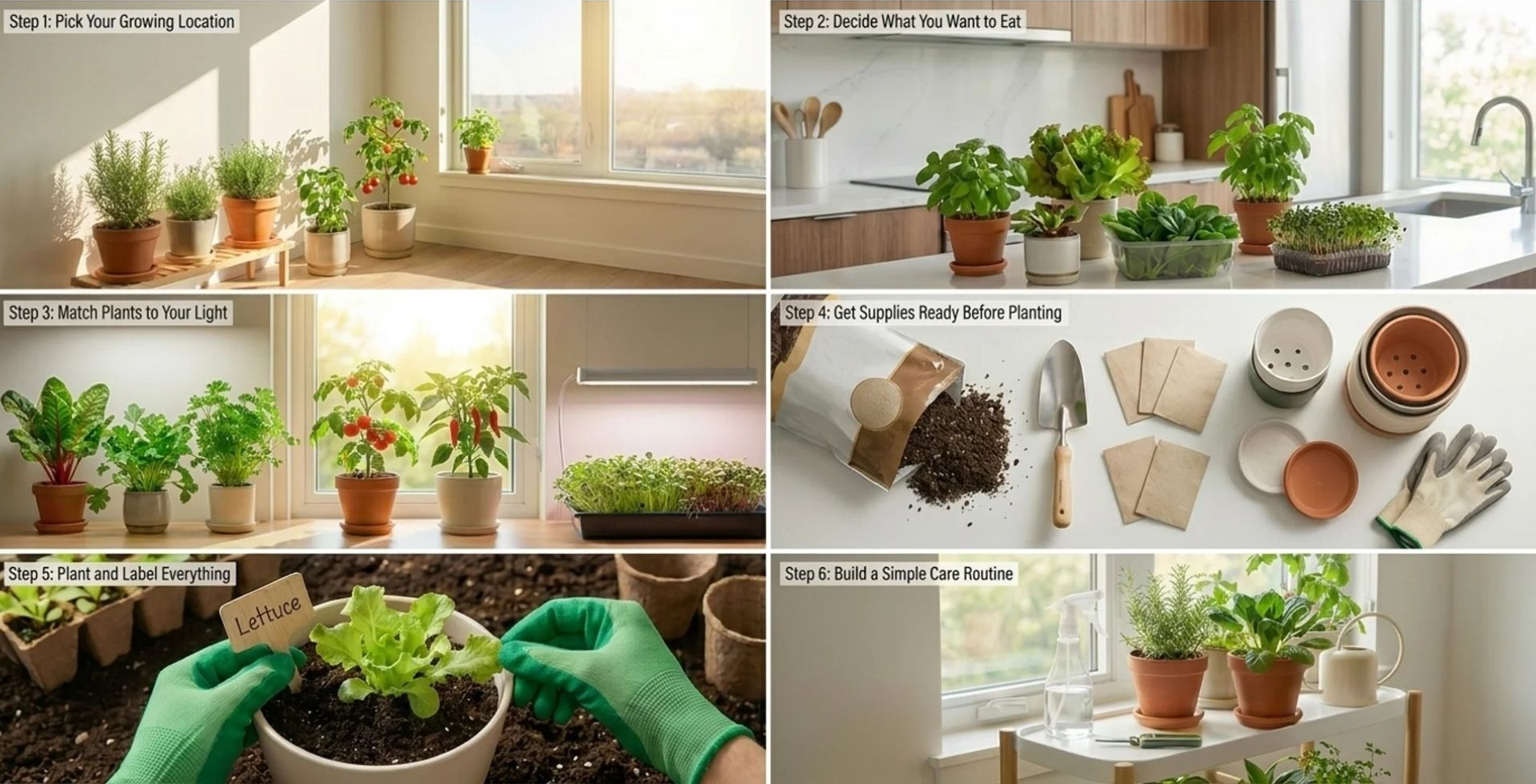
Starting an indoor apartment vegetable garden feels overwhelming at first. It is not. Break it into steps, and the process becomes clear.
Step 1: Pick Your Growing Location
Walk through your apartment and look for the brightest spot. South-facing windows are the best starting point for edible plants.
If you have a balcony, that works well too. Write down how many hours of direct light that spot gets. Most vegetables need at least six hours.
If you get less than four, plan to add a grow light from the beginning. A good location makes plant care easier and helps vegetables receive the light they need for steady growth.
Step 2: Decide What You Want to Eat
Grow what you actually cook with. If you use basil in most of your meals, start there.
If you make salads regularly, grow lettuce. Connecting your garden to your kitchen habits keeps you motivated to tend it.
Choosing useful plants increases your chances of maintaining a successful indoor garden for the long term.
Step 3: Match Your Plant Choices to Your Light
Once you know your light level, narrow down your plant list to what will actually thrive there. Herbs and leafy greens work in moderate light.
Tomatoes and peppers need the most sun. Microgreens work almost anywhere.
Selecting plants based on available light prevents poor growth and saves time, effort, and resources.
Step 4: Get Your Supplies Together Before Planting
Gather everything before you start, not midway through. You need potting mix, your chosen containers with drainage, seeds or starter plants, and saucers.
Having everything ready on day one prevents the most common beginner mistake: planting too early and then scrambling for missing supplies.
Preparing your tools and materials in advance creates a smoother and more enjoyable gardening experience.
Step 5: Plant and Label Everything
Plant according to the instructions on your seed packet or plant tag. Then label each pot.
It sounds obvious, but unlabeled pots create real confusion six weeks later when seedlings look similar.
Labels help you track plant varieties, watering needs, and growth progress throughout the season.
Step 6: Build a Simple Care Routine
Check your plants at the same time every day, even if only for two minutes. Morning works well.
You will catch problems early, notice new growth, and build the habit that keeps an indoor vegetable garden producing.
A consistent routine helps prevent common issues and keeps your apartment garden healthy and productive.
Apartment Indoor Vegetable Garden Setup Ideas
The right setup depends on your available space, sunlight, and gardening goals. These simple arrangements can help you grow fresh vegetables and herbs even in a small apartment.
- Windowsill setup: It uses your brightest window to grow compact plants like basil, parsley, lettuce, and small tomato varieties while saving floor space.
- Kitchen counter grow light shelf: It creates a small indoor growing station for microgreens, spinach, lettuce, and herbs, powered by LED grow lights in low-light apartments.
- Balcony container garden: It provides extra growing space for larger crops like cherry tomatoes, peppers, kale, cucumbers, and herbs, using pots, railing planters, or vertical supports. If your balcony floor can handle the weight, a small raised garden bed works too.
- Rolling cart garden: It turns a movable shelf into a flexible garden setup for herbs, leafy greens, and microgreens, which can be moved to meet sunlight needs.
- Single deep pot garden: It allows beginners to grow multiple edible plants together, such as dwarf tomatoes with basil or chives, in one large container.
These setups make it easier to create a productive indoor vegetable garden that fits your available space, lifestyle, and gardening experience.
Indoor Vegetable Garden Maintenance Tips
Setting up an indoor vegetable garden is only the first step. Regular care and a few simple habits help your plants stay healthy and continue producing fresh harvests.
- Prune regularly to encourage growth: Trim herbs like basil by removing flower buds before they bloom, as flowering reduces leaf production. Harvest leafy greens like lettuce by removing the outer leaves.
- Fertilize based on plant needs: Feed actively growing vegetables and herbs with diluted liquid fertilizer every two to three weeks during the growing season. Leafy greens need more nitrogen.
- Check for pests weekly: Inspect leaves, stems, and soil for common indoor pests such as fungus gnats, aphids, and spider mites. Keep the soil surface slightly dry.
- Improve airflow around plants: Use a small fan on a low setting for a few hours each day to strengthen stems, reduce humidity buildup, and lower the risk of mold and other fungal issues.
- Hand-pollinate fruiting vegetables: Indoor tomatoes, peppers, and cucumbers may need hand pollination because there are no natural pollinators indoors. Gently shake flowering plants.
Following these maintenance steps will help your apartment indoor vegetable garden produce healthier plants, longer harvests, and better results throughout the growing season.
Apartment Gardening With No Balcony or Low Light
I have grown plants successfully in apartments with no direct sunlight, only a north-facing window, and plenty of doubt.
The key is choosing the right plants and creating the best possible growing conditions with what you actually have.
A south-facing window, even one you barely notice, can carry herbs, microgreens, and leafy greens on its own.
Microgreens need little space or light, while an LED grow light and nearby mirrors help plants thrive through darker months.
And when in doubt, build your plant list around low-light herbs, leafy greens, and compact vegetables instead of fighting to grow something that needs full sun.
With the right setup and plant choices, even a small, low-light apartment can become a productive indoor garden.
Common Apartment Gardening Mistakes to Avoid
Most problems in indoor gardens come from a short list of repeatable errors. Avoid these, and your plants will do much better:
- Overwatering the top cause of plant death indoors; always check soil moisture first.
- Choose plants that need more light than your apartment provides; match plants to your actual conditions, not your ideal ones.
- Using garden soil instead of potting mix causes it to compact in containers and drain poorly.
- In containers without drainage holes, standing water quickly causes root rot.
- When pots are placed too far from windows, plants stretch toward light sources and become weak and leggy.
- Installing shelves or hooks without checking the lease can cost you your security deposit.
- Starting with too many plants at once, begin with two or three and learn what works before scaling up.
Final Thoughts
Apartment gardening does not take a yard or years of practice.
It takes one decision: pick two or three plants, put them where the light actually works, and check on them.
A windowsill basil pot or grow-light herb shelf still counts as your home garden.
You do not need to fill every surface on day one. Get one plant thriving first. Everything else gets easier after that.
What will you start growing first? Share below.
Frequently Asked Questions
What Is the Easiest Plant to Grow in An Apartment?
Pothos and snake plants are among the easiest apartment plants because they handle low light, limited care, and occasional missed watering while staying healthy.
How Long Until an Apartment Vegetable Garden Produces a Harvest?
Microgreens are ready in 7 to 10 days, leafy greens in 4 to 6 weeks, and fruiting vegetables like tomatoes in 8 to 12 weeks.
How Much Does It Cost to Start Apartment Gardening?
You can start apartment gardening for under $40 by buying basic supplies like seeds, small containers, potting mix, and simple gardening tools.
Do Container Vegetables Need Repotting as They Grow?
Yes, herbs and vegetables that outgrow their pot need repotting into a container one size larger, usually every season or when roots crowd the drainage holes.
How Many Hours a Day Should Grow Lights Run for Apartment Plants?
Most vegetables and herbs need 12 to 16 hours of light daily under a grow light, with at least 6 hours of darkness for healthy growth.