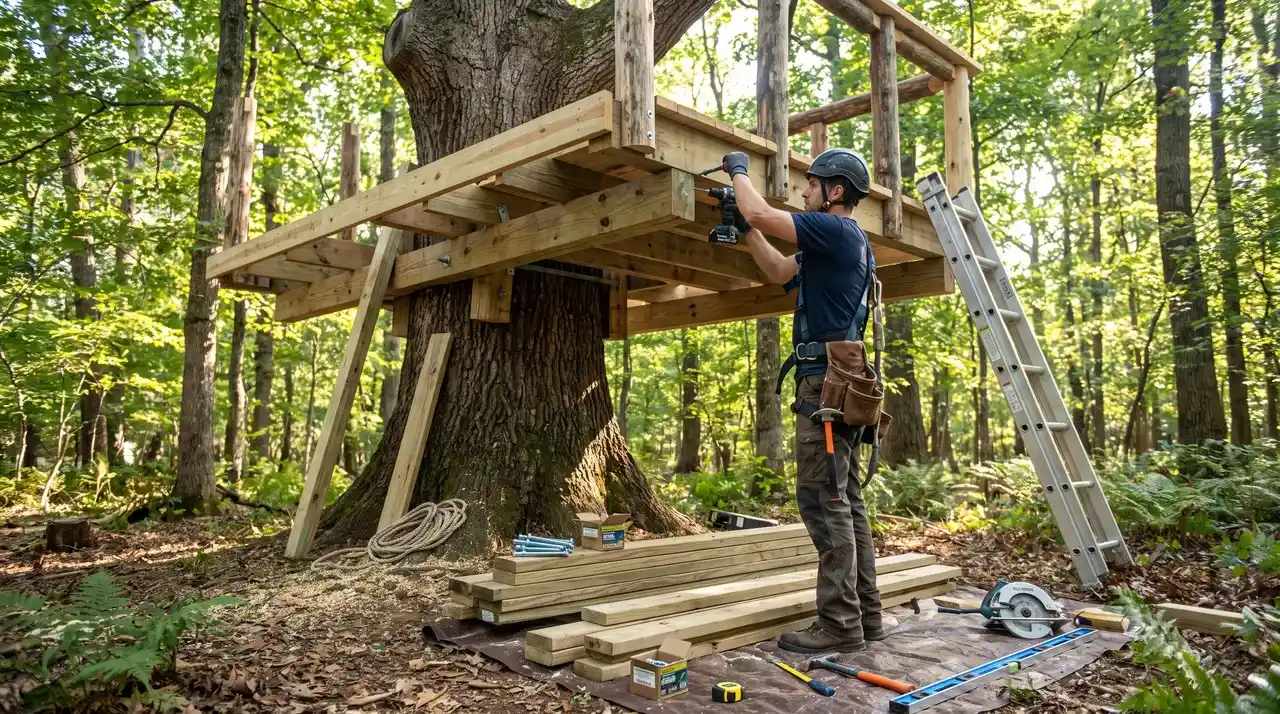
You want to build a treehouse for your kids, and that big oak tree in the backyard is calling. Maybe it’s the old oak your kids already climb.
Building a treehouse is not a weekend craft project. It holds real weight, sits above the ground, and stays outside through every Texas season.
Get it wrong, and the platform fails. Get it right, and it lasts for years of climbing and quiet afternoons.
Here’s what it takes: tree selection, safe bolts, framing steps, permits, and costs.
You’ll learn everything from choosing the right tree and understanding local permit requirements to planning, construction, safety tips, and realistic costs.
Do You Need a Permit to Build a Treehouse?
Skipping this step can lead to costly problems later and reduce the wall’s lifespan.
Many local councils require a permit for structures more than 6–8 feet above the ground. A treehouse often falls under the same rules as a garden shed.
Build without checking, and you may be asked to tear it down after all your hard work.
If your tree sits near a property line, check with your neighbor before you start. Some neighborhoods also have HOA height restrictions that apply to outdoor structures.
Liability is real. If someone gets injured on an unpermitted treehouse, you could be held responsible
Materials and Tools You Will Need
Buy the right materials from the start. Cutting corners here leads to rot, instability, and costly repairs.
| Category | Items |
|---|---|
| Wood | Pressure-treated lumber, cedar/redwood, avoid untreated pine for structural parts |
| Hardware | Treehouse attachment bolts (TABs), galvanized or stainless steel bolts, joist hangers, beam brackets, lag screws |
| Essential Tools | Power drill, saw, spirit level, tape measure, carpenter’s square, safety harness, hard hat, ladder |
| Optional Upgrades | Rope or wooden railings, metal or shingle roof, basic insulation, LED string lights or solar lantern hooks |
Tip: Choose weather-resistant materials and quality hardware to build a safer, longer-lasting treehouse.
Step-by-Step Process to Build a Treehouse
Building a treehouse requires careful planning, strong materials, and step-by-step construction to ensure safety and long-term stability.
Step 1: Prepare the Tree and Site
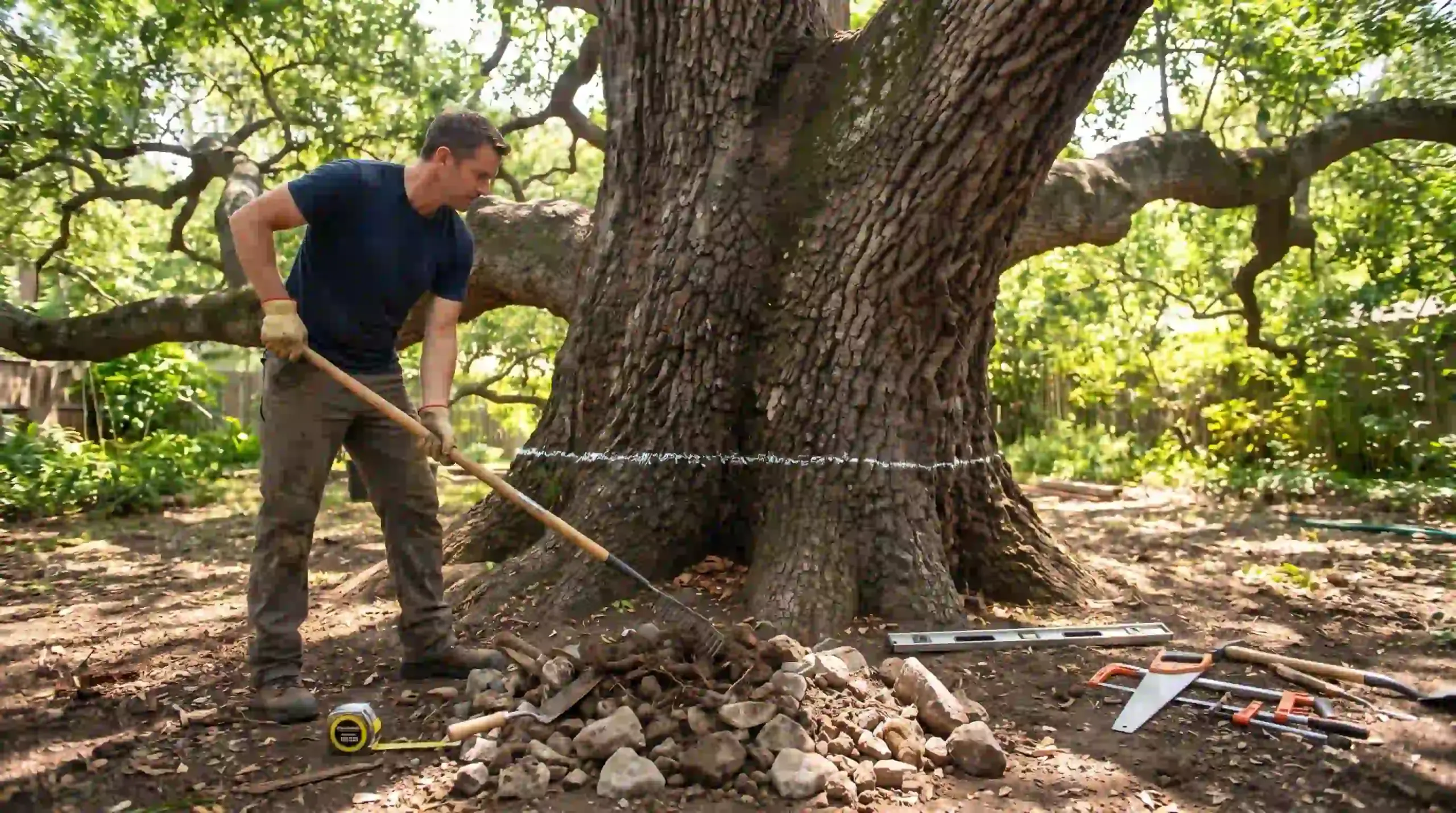
Clear the area around the base of the tree. Remove rocks, roots, or debris that could cause falls during construction.
Choose a healthy oak or maple with a thick trunk, strong branches, and no rot.
Before drilling a single hole, do one final check on the tree. Look again for any new cracks, soft spots, or signs of pest damage. Once you start drilling, you are committing to this tree.
Mark the height of your platform on the trunk with chalk or tape. Step back and check the level from a distance.
Step 2: Install Support Beams
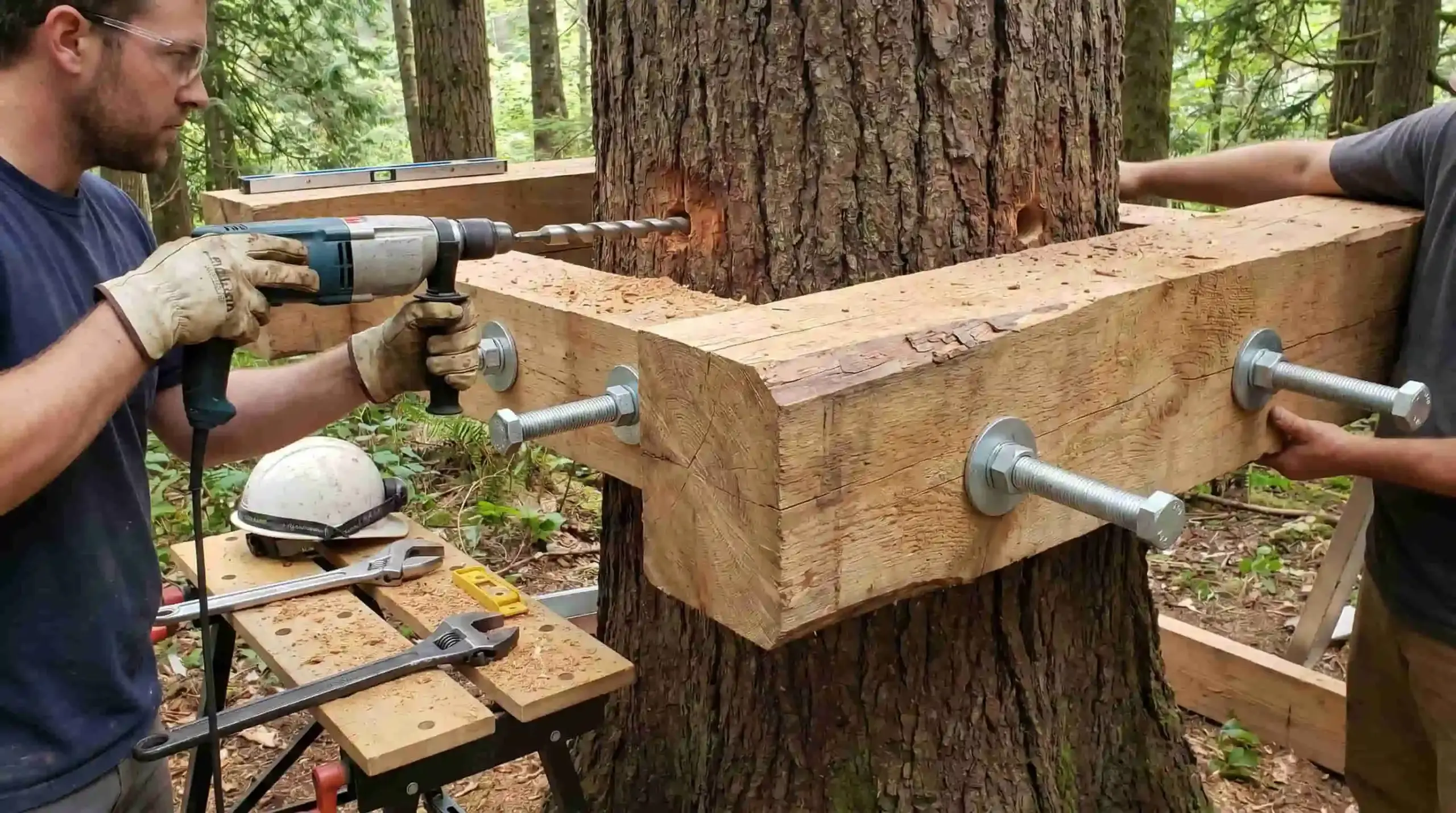
Use bolts, not nails. This is one of the most important rules in treehouse building. Nails pull out over time as the tree moves and grows. Structural bolts hold.
Use Treehouse Attachment Bolts (TABs) where possible. These are designed to spread load across the tree without cutting off the flow of nutrients under the bark.
Drill one clean hole per bolt. Do not drill multiple holes close together; this weakens the tree.
Note: Spread the beams evenly across the trunk and supports to prevent shifting and reduce stress on attachment points.
Step 3: Build the Floor Platform
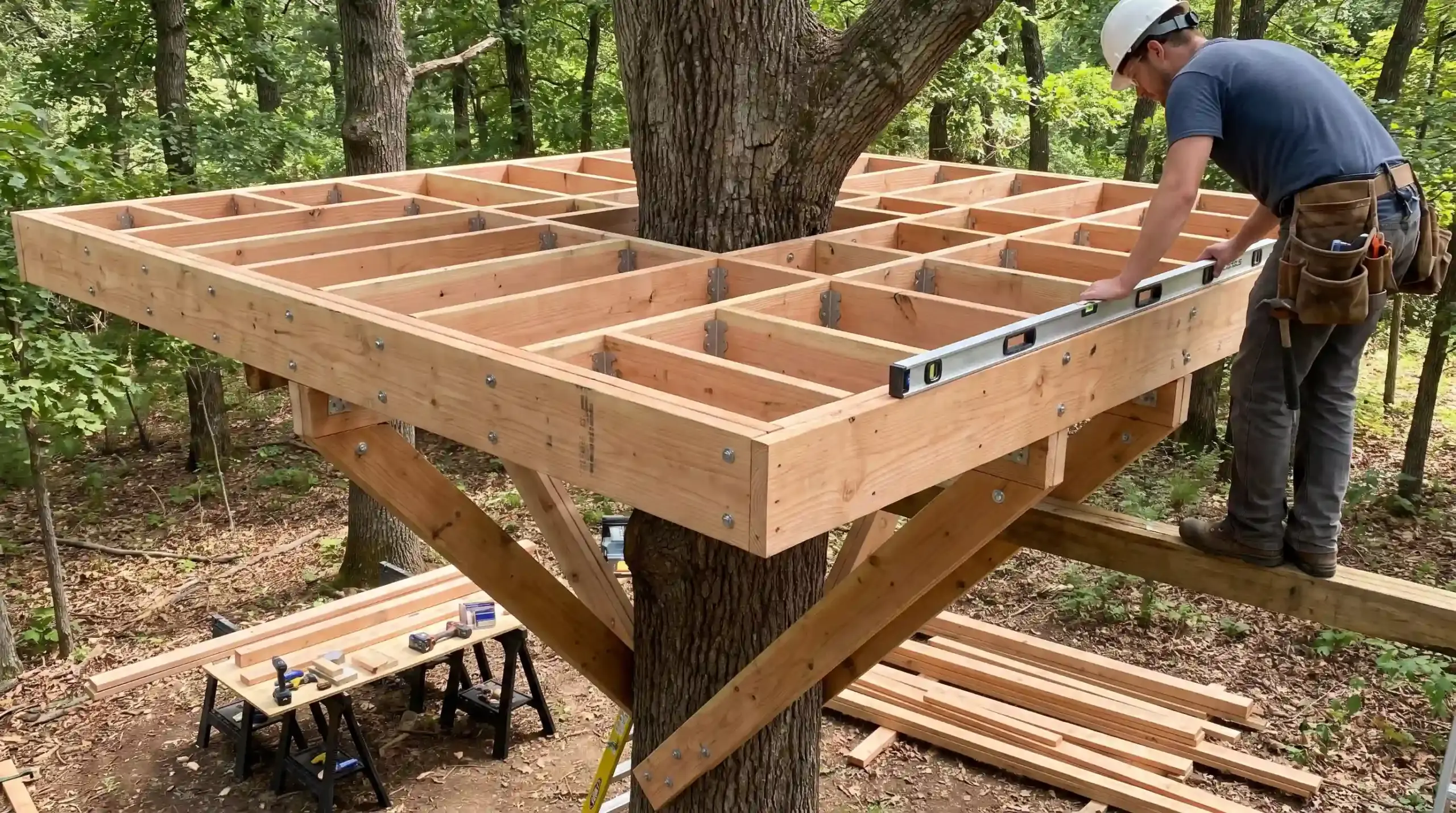
Once your support beams are in place, build the floor frame on the ground first. This is called pre-framing, and it saves a lot of time up in the tree.
Use joist hangers to connect your floor joists to the main beams, the same hardware used to frame a ground-level outdoor deck. Space joists no more than 16 inches apart for solid footing.
Check the level often, since an uneven floor can affect every wall and railing added later.
Add a diagonal brace across the underside of the floor frame. This stops the platform from racking (shifting side to side) over time.
Step 4: Add Vertical Supports and Walls
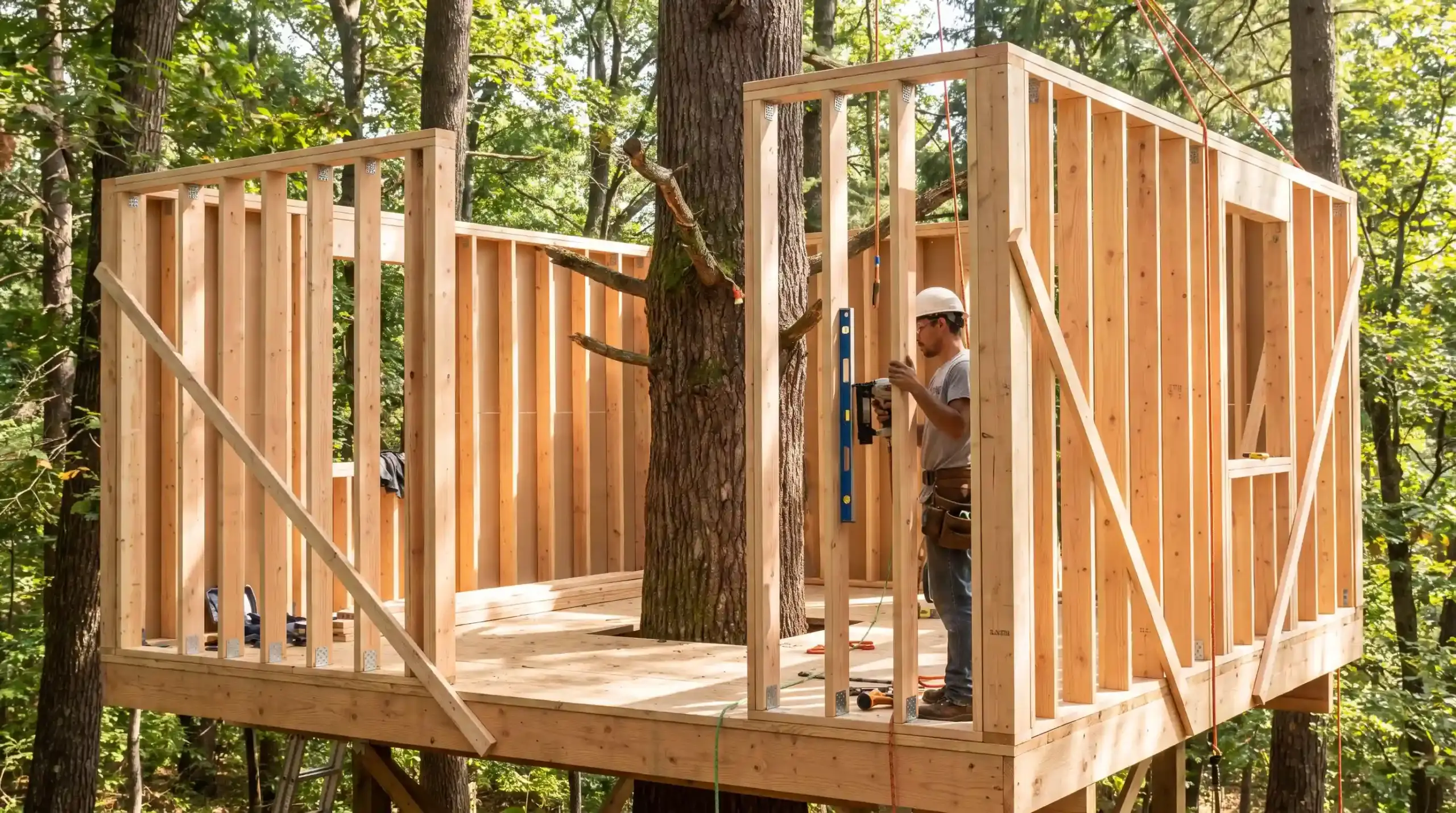
Frame your walls using standard stud framing, with vertical studs spaced 16–24 inches apart and top and bottom plates.
Leave space around the trunk so the tree can grow safely.
A wall built flush against the trunk will crack as the tree grows and pushes outward. Leave at least 2 inches of clearance on all sides.
Keep walls light. Every extra pound of wall weight adds load to your attachment points.
Step 5: Build the Roof Structure
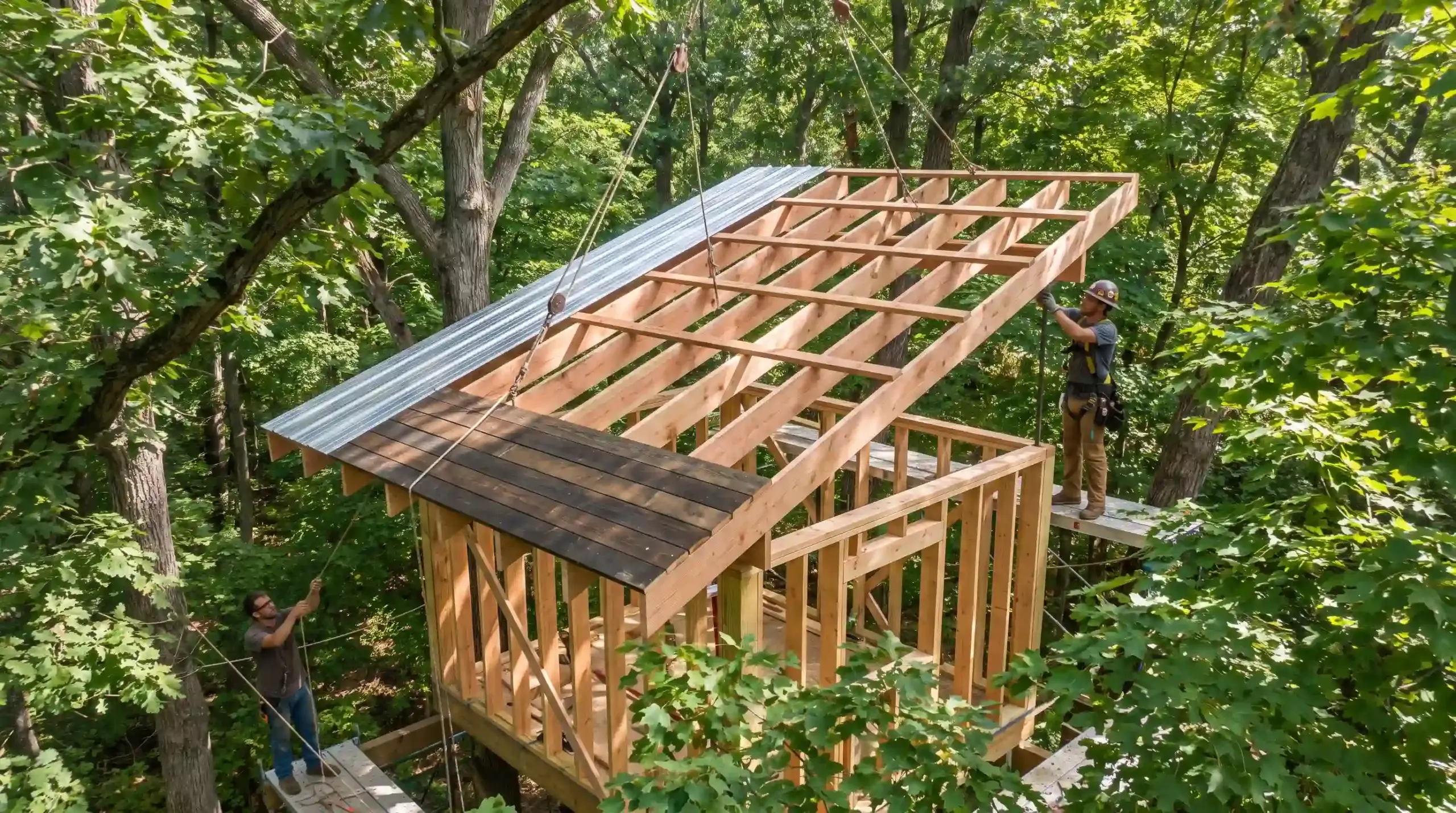
A simple single-slope (shed) roof is the easiest and most effective option for a treehouse. It sheds rain quickly and adds minimal weight.
Build your roof frame on the ground, using simple rafters instead of a full truss system, then lift it into place.
Use a minimum slope of 3:12, meaning 3 inches of rise for every 12 inches of horizontal run. This keeps water moving off the roof.
Cover with corrugated metal roofing or asphalt shingles. Seal all edges and any gaps where the roof meets the walls.
Step 6: Add Safety Features
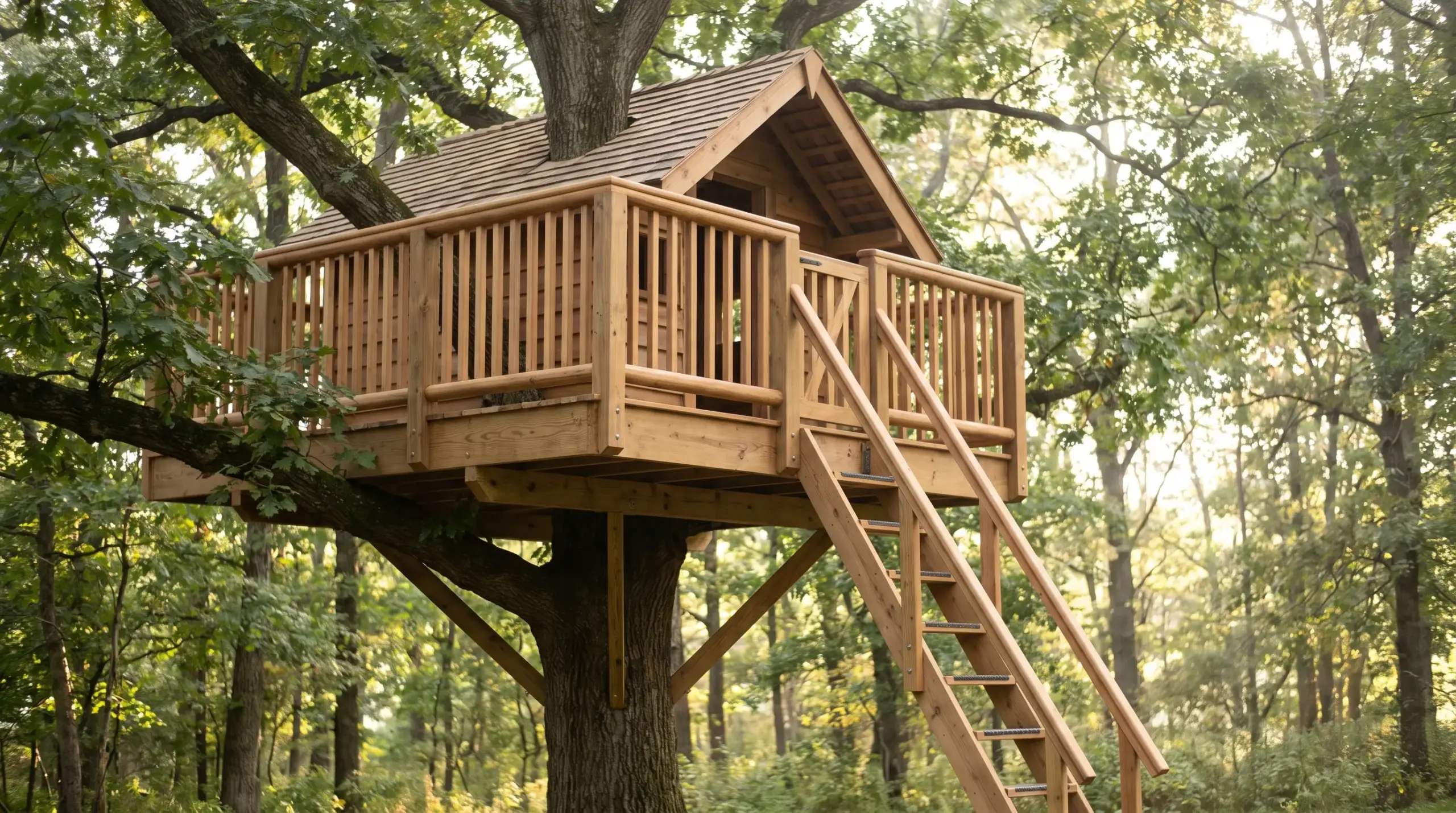
This step is not optional.
Railings and guardrails:
- Install guardrails on all open sides of the platform
- Minimum railing height: 36 inches, the IRC minimum for any residential structure over 30 inches high (2018 IRC §R312.1.2). Many builders go to 42 inches on a treehouse for extra margin with kids.
- Vertical railing spindles should be no more than 4 inches apart; a child’s head should not be able to fit through
Ladder or stair access:
- A fixed ladder should sit at about 75 degrees, the same safe climbing angle OSHA’s 4:1 rule sets for job-site ladders (29 CFR 1926.1053): steep enough to save space, safe enough to climb.
- Use non-slip rungs
- Rope ladders are fun, but harder to climb safely for young children
Step 7: Finishing Touches
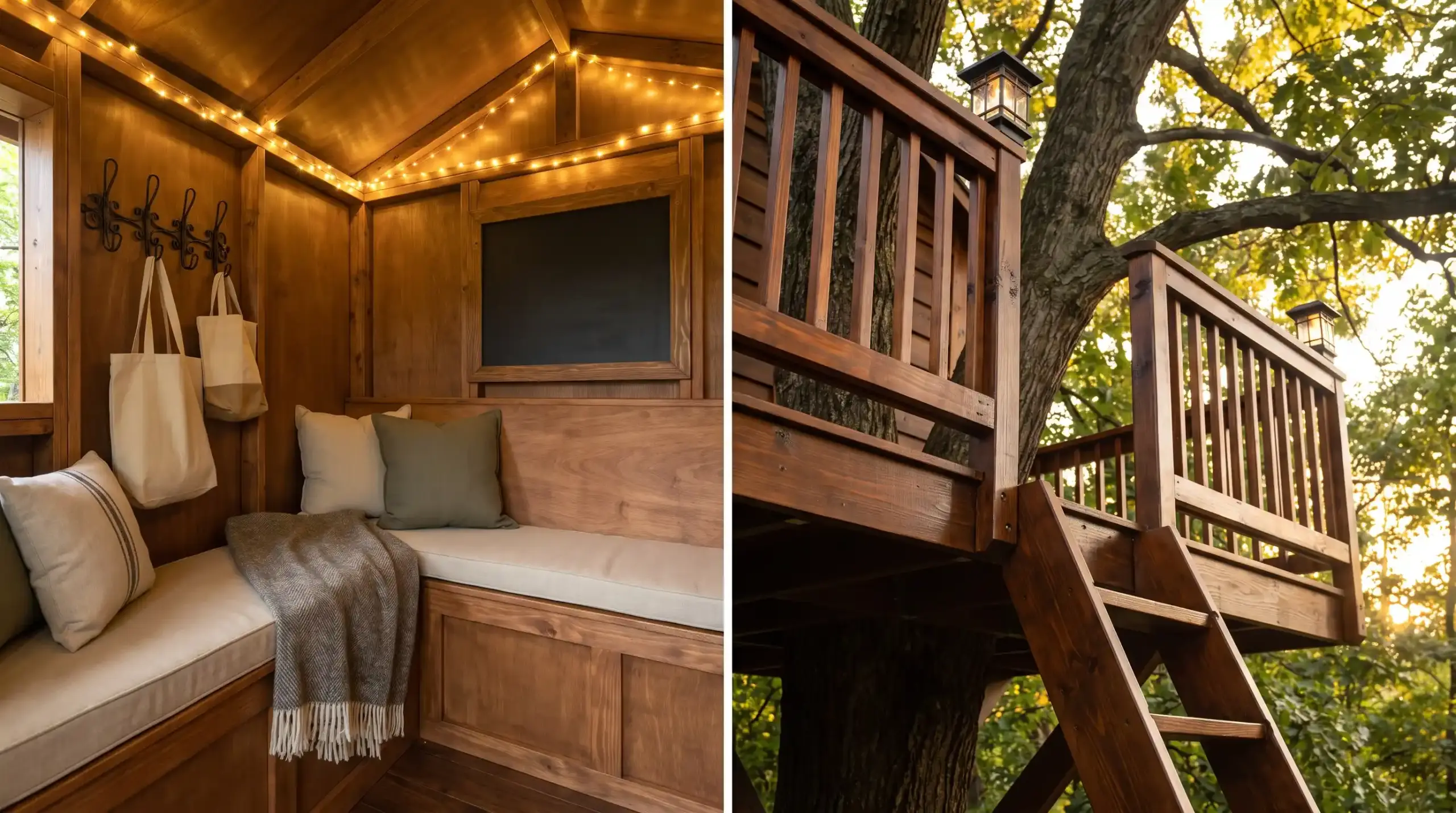
Seal and protect the wood:
- Apply an exterior wood sealant to all exposed surfaces
- Use a UV-resistant paint or stain for visible surfaces
- Pay extra attention to any end-grain cuts, as they absorb moisture fastest
Interior setup ideas:
- Wall hooks for bags or gear
- A small built-in bench or storage box
- Battery-powered LED lights
- A chalkboard panel on one interior wall
Keep the interior simple. Less weight means less stress on the structure.
Safety Rules You Should Never Ignore
Treehouse safety depends on careful construction, regular inspections, and child-friendly design. Following these rules helps prevent falls, structural failure, and avoidable injuries.
| Stage | Essential Safety Rules |
|---|---|
| During construction | Wear a harness above 6 feet, use a ground helper, avoid the ladder’s top rung, and stay 10 feet from power lines. |
| After construction | Set a weight limit, inspect bolts every 6–12 months, allow for tree growth, and remove heavy snow. |
| Child safety | Keep rail gaps under 4 inches, avoid climbable rails, add top handholds, and clear hard surfaces below. |
Common Mistakes When Building a Treehouse
Here is a quick guide to common mistakes when building a treehouse, highlighting key safety, design, and structural errors to avoid, ensuring a stable, long-lasting build.
- Choosing the wrong tree: A tree that looks strong from the outside may have rot inside. Always inspect before you build.
- Overbuilding and ignoring weight limits: More walls, more rooms, more features- it all adds load. Know your limits before you add extras.
- Using nails instead of structural bolts: Nails pull out. Bolts hold. This is not a debate; it’s a structural fact.
- Ignoring tree movement: Trees sway in the wind and grow over time. Rigid connections that don’t allow any movement will crack and fail.
- Poor weather protection: Untreated wood outdoors will rot within 2–3 years. Seal everything. Every cut edge. Every joint.
- Skipping the arborist check: A 30-minute consultation with a certified arborist can tell you more about your tree than any online guide. It’s worth the cost.
Cost Breakdown of Building a Treehouse
Here’s a rough cost breakdown to help you estimate your treehouse building budget. These numbers move as much as any backyard remodel budget, depending on labor, size, and region.
| Build Type | Estimated Cost Range |
|---|---|
| Budget DIY (basic platform) | $500 – $1,500 |
| Mid-range DIY (enclosed, roofed) | $1,500 – $5,000 |
| Custom professional build | $5,000 – $25,000+ |
Hidden costs most people miss:
- Treehouse attachment bolts (TABs) – $50–$150 each
- Arborist consultation – $100–$300
- Permit fees – $50–$500 depending on location
- Tool rental – $100–$300 if you don’t own the basics
- Sealant and paint – $80–$200
Budget at least 20% above your estimate for unexpected costs. They always come up.
Maintenance Tips for Long-Term Durability
A treehouse needs regular attention. Here’s a simple schedule to follow:
| Maintenance Schedule | Tasks |
|---|---|
| Every 6 Months | Tighten bolts, inspect wood for cracks, check tree health, and inspect railings and ladders. |
| Every Year | Reapply sealant where needed, inspect the roof, and ensure the tree has room to grow around the structure. |
| Every 2–3 Years | Sand and repaint/re-stain, replace rotten boards, have the tree professionally inspected if its condition changes. |
| Pest Check | Look for termite activity and inspect for wasp or bee nests, especially in spring. |
Treehouse Ideas and Inspiration
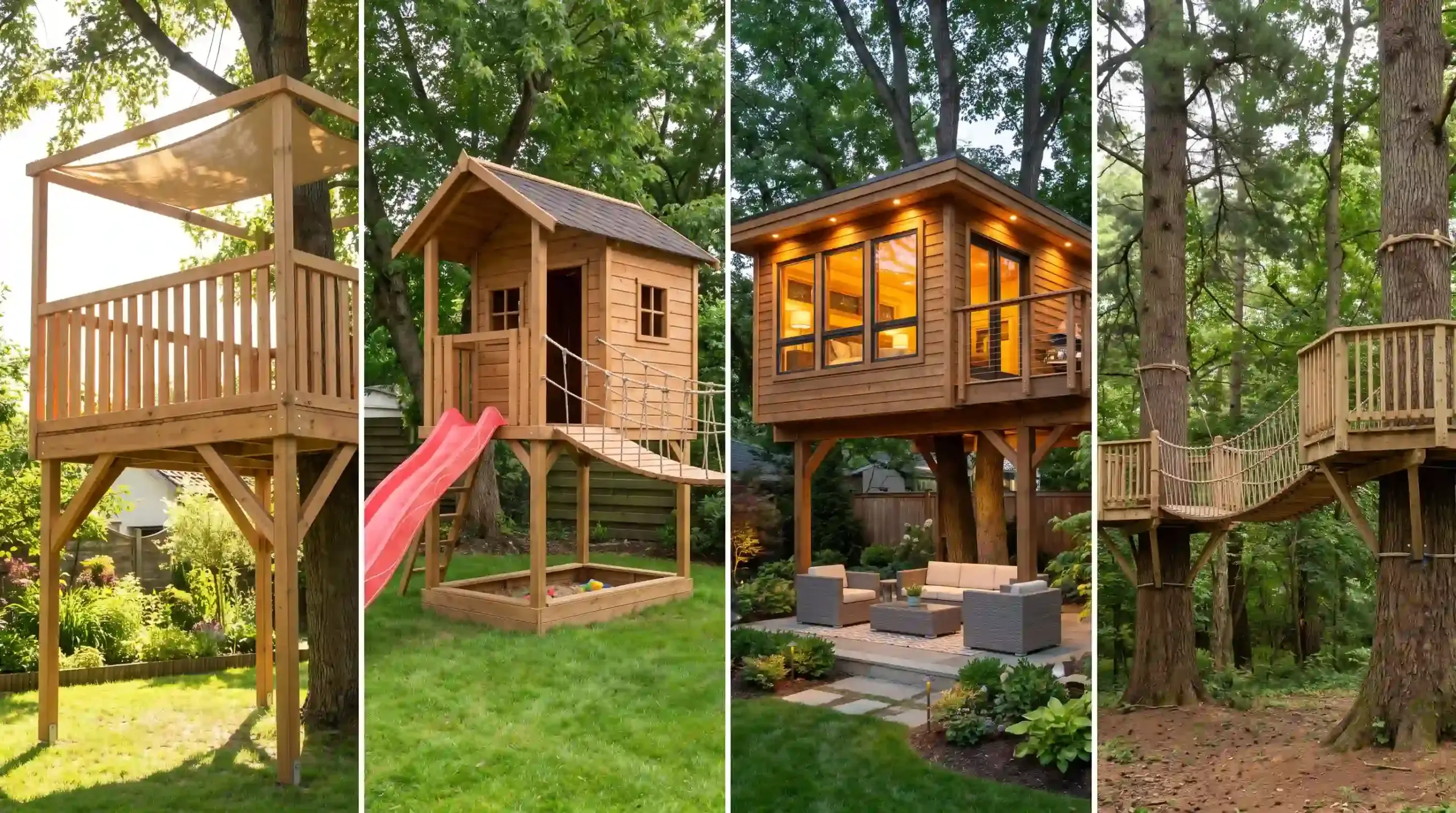
Treehouse ideas range from simple platforms to luxury builds, each varying in complexity, safety needs, materials, and structural support requirements.
- Minimalist Platform Treehouse: A simple open deck with rope railings, a ladder, and an optional canopy for shade.
- Kids’ Adventure Treehouse: An enclosed cabin with a slide, rope bridge, lookout window, and a safe height of 6–8 feet.
- Luxury Backyard Treehouse: A weatherproof structure with insulated walls, a proper roof, and adult-sized furniture.
- Multi-Tree Bridge Design: Two platforms connected by a rope or wooden bridge, requiring careful load planning and strong hardware.
Conclusion
Building a treehouse starts long before you pick up a saw. It starts with the right tree, a solid plan, and honest safety rules you never skip.
A treehouse carries real weight, faces wind, and takes years of weather and tree growth.
The ones that lasted were secured with bolts instead of nails and had room for the trunk to expand.
Pick your tree, sort your permit, and check the platform twice a year. Ready to start your build? Grab your tools, measure your tree, and begin.
Frequently Asked Questions
How Much Money Does It Cost To Build a Treehouse?
It typically costs $300–$5,000+ depending on size, materials, height, and whether you DIY or hire professionals.
How To Build a Simple Treehouse?
Choose a strong tree, build a small platform with secure bolts, add a basic frame, floor, railing, and ladder for safety.
Is It Legal To Build a Treehouse In Your Backyard?
Yes, usually, but local building codes, permits, HOA rules, and safety regulations may apply depending on your area.
Will Treehouse Bolts Kill the Tree?
No. Properly placed Treehouse Attachment Bolts let a healthy tree heal around the metal and keep growing, which is why arborists prefer them over multiple nails or screws.
Can Neighbors Complain About My Treehouse?
Yes, especially if it sits close to a property line or breaks local height and zoning rules. Check with your city and neighbors before you build to avoid disputes.