There is a particular kind of house that never needed a rebrand. No hashtag. No magazine moment to resurrect it.
It just kept standing brick by brick, room by room, while everything around it chased the next thing.
Traditional style houses have outlasted shiplap, survived the all-gray decade, and watched open-concept living go from revolutionary to exhausting.
And right now, more people are choosing them not out of nostalgia, but because they finally understand what a well-built, well-proportioned, properly finished home actually feels like to live in.
It is a guide about understanding what traditional residential design actually is, its logic, its language, its staying power, and how to apply that understanding, whether you are buying, building, or renovating.
Also read: Different Types of Houses: Architectural and Structural Styles
What Traditional Style House Actually Means
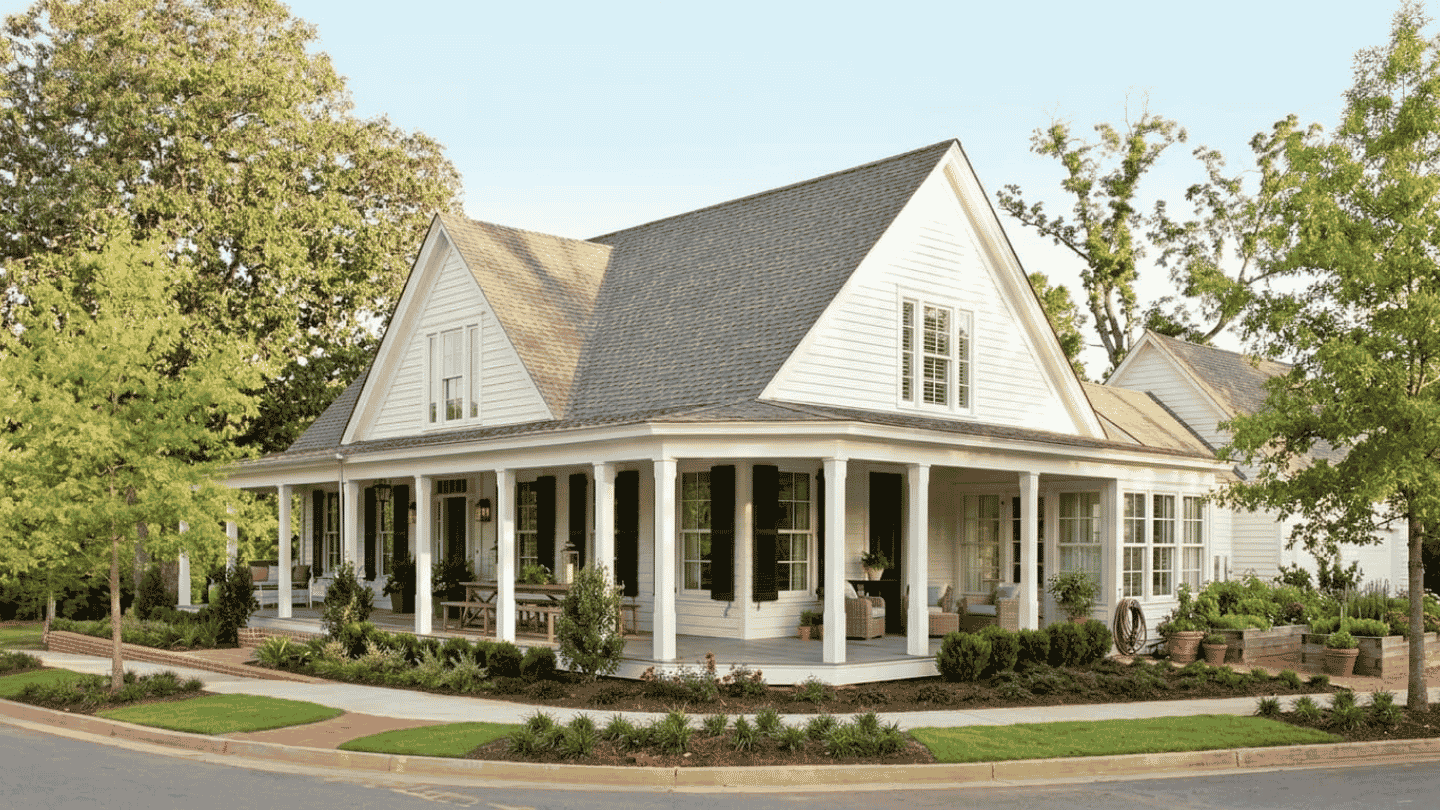
Most people come to traditional style with a picture in their head. A brick Colonial with black shutters. A white clapboard farmhouse.
Traditional is not a single style. It’s a family of styles held together by a shared set of values. And understanding those values is more useful than memorizing a list of features.
That’s the philosophy. The aesthetic follows from it, not the other way around. This is the distinction most people miss, and it matters practically.
A homeowner in Connecticut working with a Georgian Colonial and a homeowner in Portland renovating a Craftsman bungalow are both operating within traditional style, but their homes look nothing alike.
Same values, very different expression.
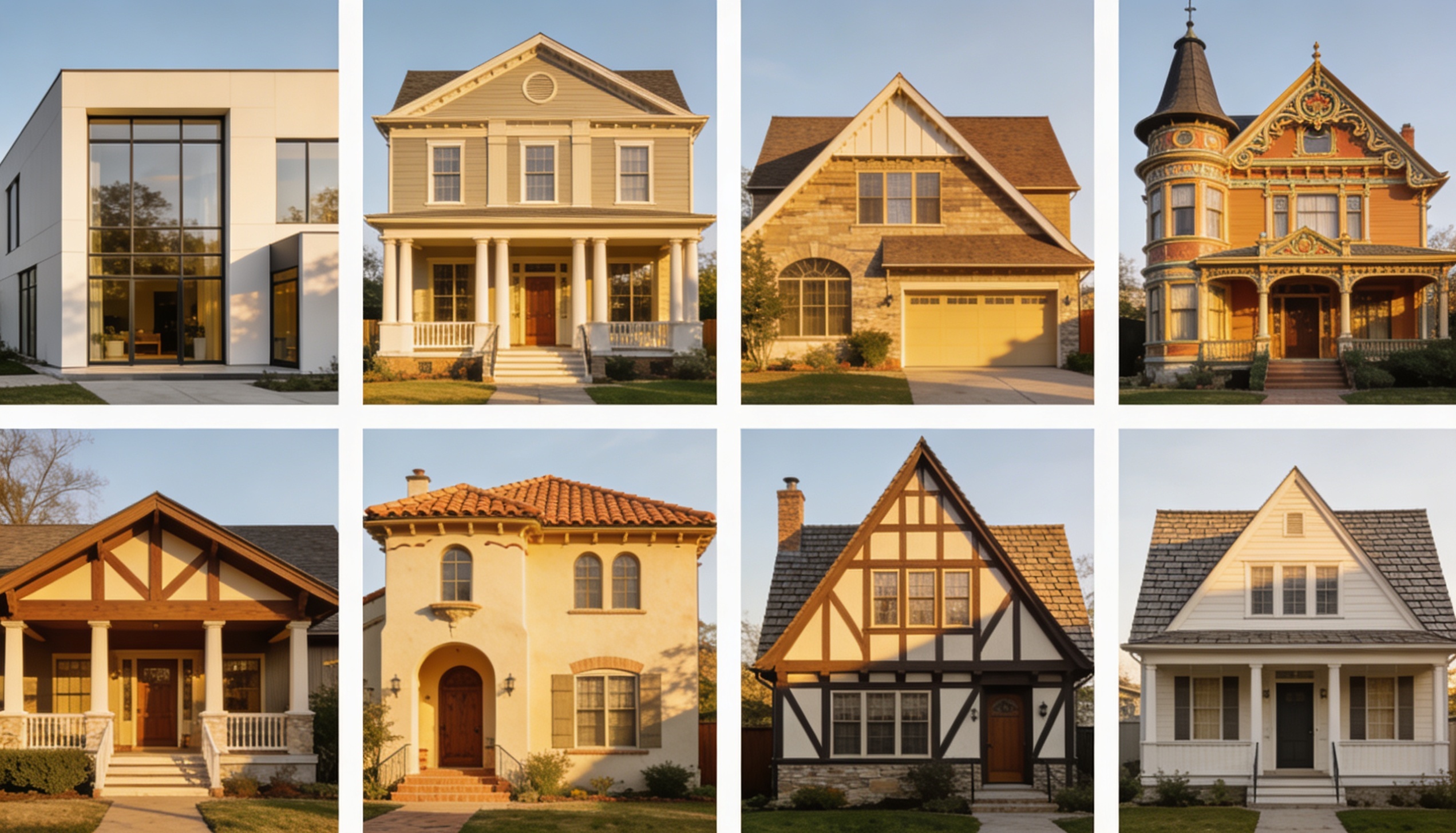
That’s why “traditional” covers so much ground. American Traditional, English Country, French Provincial, and American Craftsman each have its own personality, its own material palette, its own regional history.
They share the same bones: order, quality, and a respect for how a room is supposed to function. But they wear those bones differently.
Types of Traditional Houses
Traditional houses come in various styles, each reflecting regional influences and historical periods.
Common types include Colonial, Georgian, and Craftsman, each with distinct features such as symmetrical facades, ornate detailing, and handcrafted materials.
These homes emphasize timeless design and enduring architectural elements.
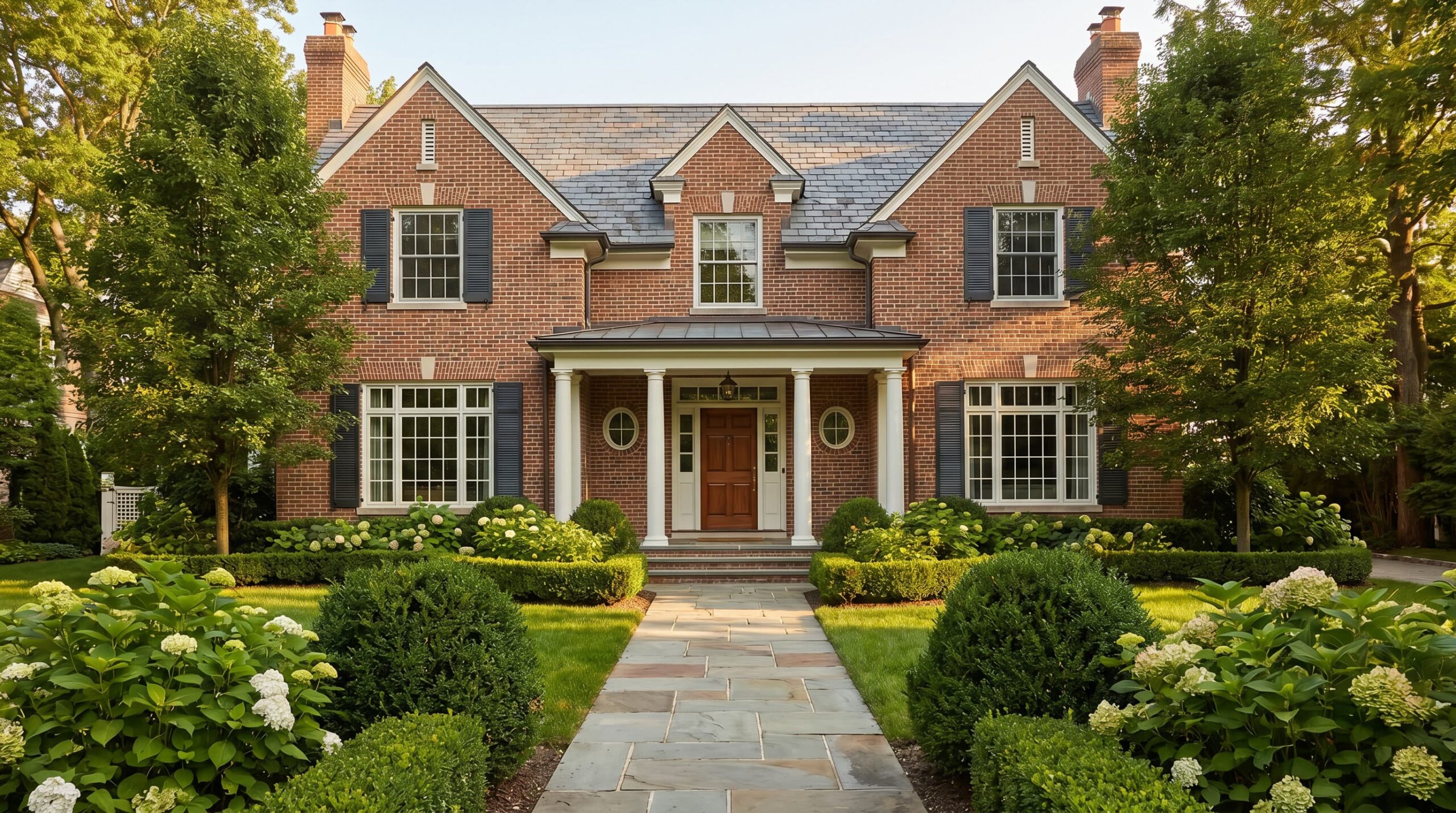
1. American Traditional (Colonial, Georgian, Federal)
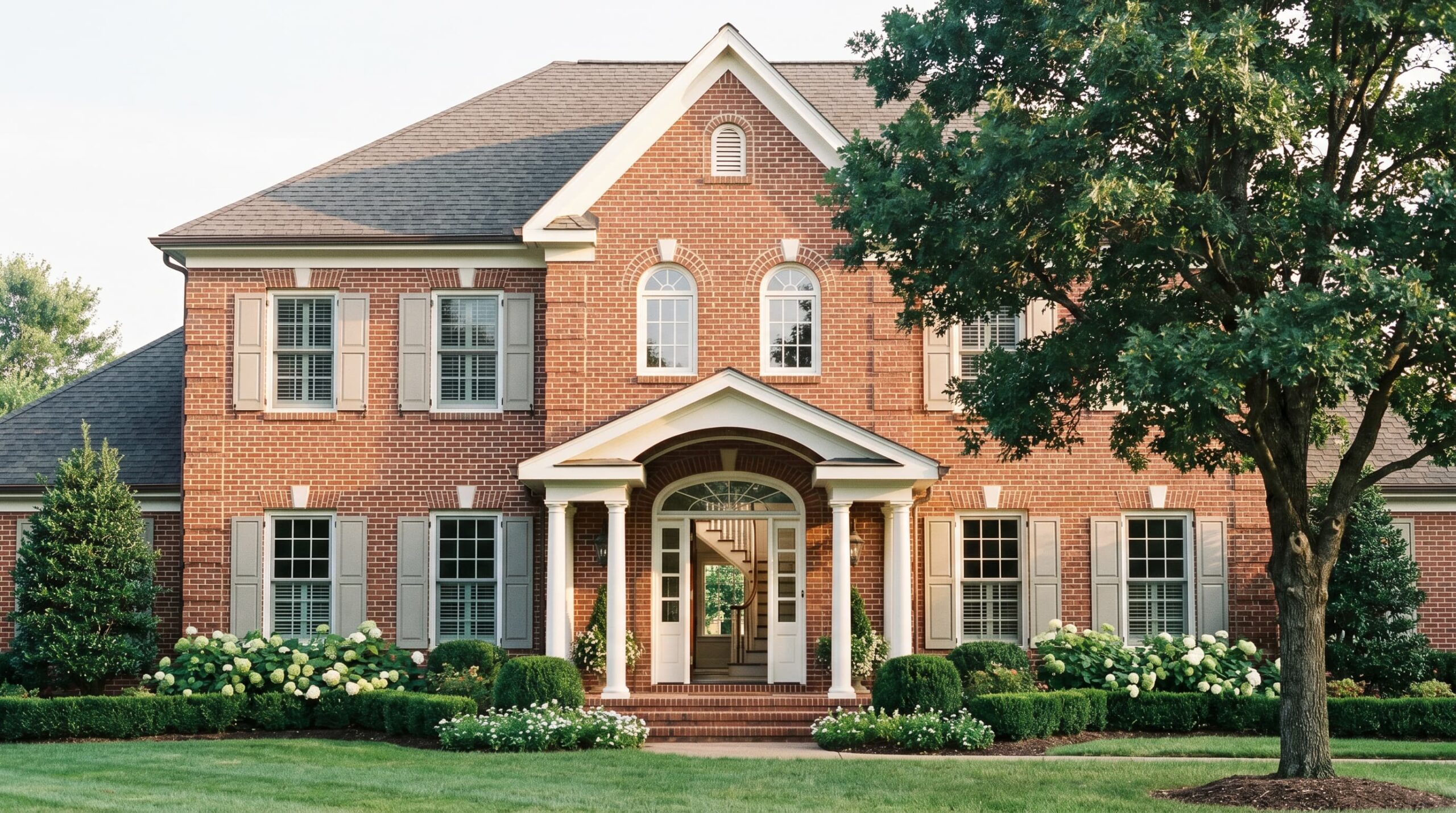
- Brick or White Clapboard: A classic exterior material, often used in traditional homes for a timeless look.
- Symmetrical Facade, Double-Hung Windows: The front of the house is balanced and even, with windows that can be opened from the top or bottom for ventilation.
- Central Hallway: A main hallway running through the center of the home, often creating a formal and welcoming feel.
- Civic Pride and Formality: The home has an elegant, respectful appearance that reflects pride in its design and a sense of tradition.
- Kitchens: Features like inset cabinetry, plate racks, and arched range hoods add charm and functionality to the space.
2. English Country (The Biggest Trend Now)
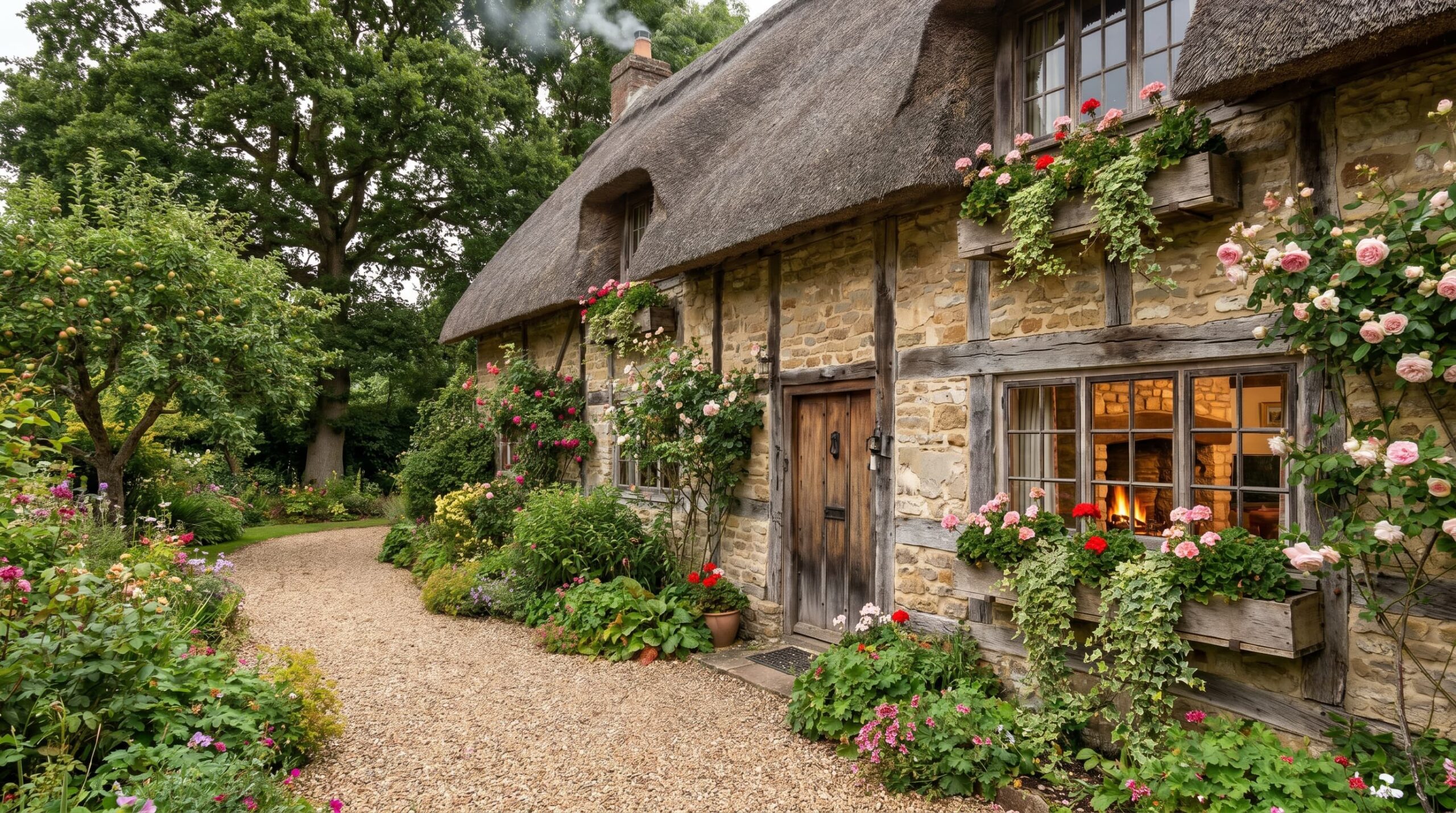
- Architectural Style: Traditional and rustic with a charming, timeless appeal.
- Materials: Often constructed with local stone, brick, or timber, creating a natural, earthy aesthetic.
- Color Palette: Soft, earthy tones like sage green, dusty rose, and neutral beiges. Wood tones and floral prints are commonly used.
- Floor Plan: Open-plan kitchens and informal living spaces, often with a focus on functionality and comfort.
- Location: Typically situated in rural areas or the countryside, often surrounded by beautiful views of rolling hills, woodlands, or fields
3. American Craftsman
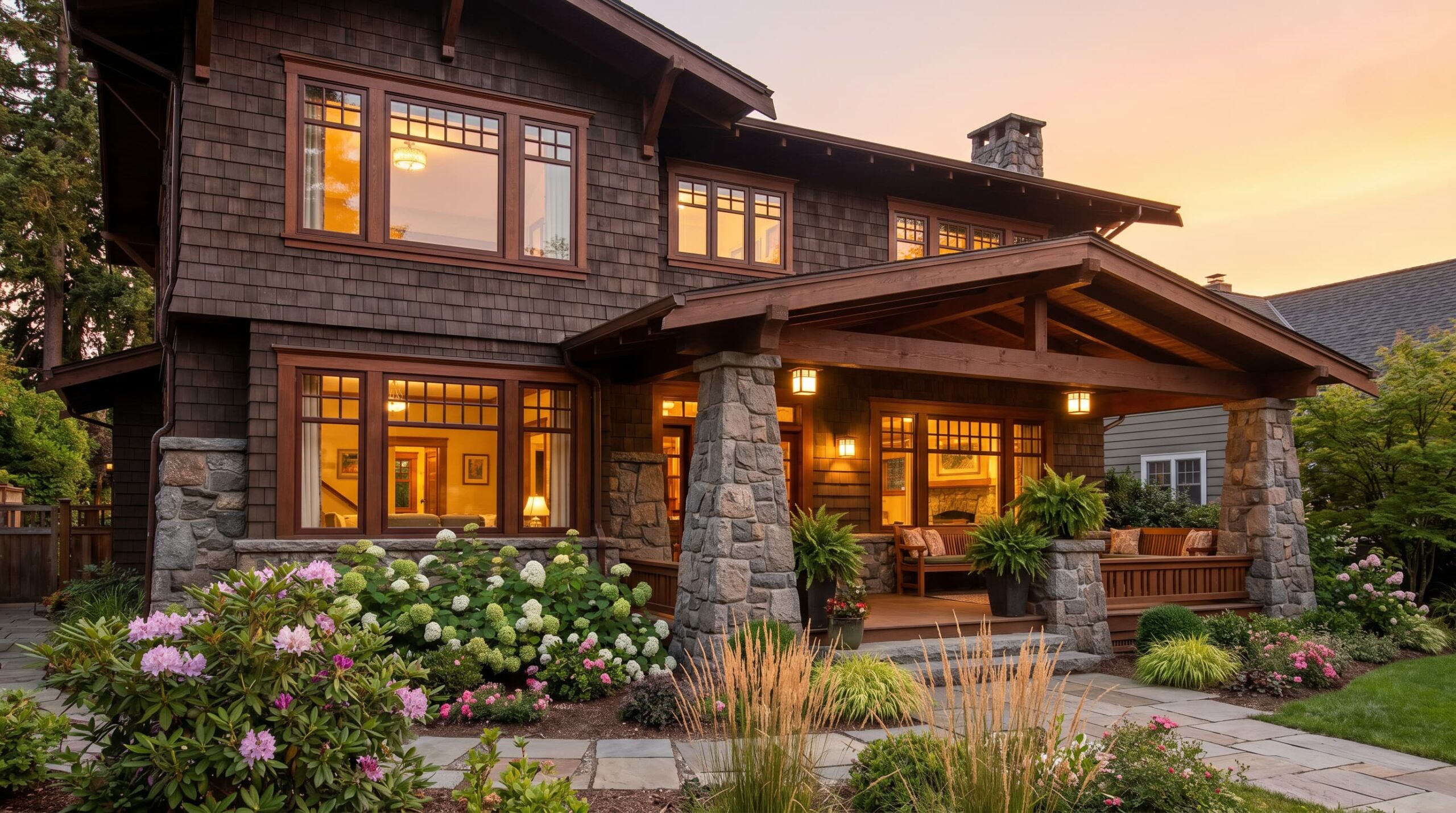
- Features: Architectural elements such as exposed rafters, tapered columns, wide porches, and Built-ins that emphasize openness, create visual interest, and provide functional storage.
- Natural Materials, Handcrafted Details: The use of natural materials and artisan craftsmanship creates a warm, inviting space without being overdone.
- Strong Resale Value: Quality construction and thoughtful design ensure the home retains its value, making it a smart investment for the future.
4. French Provincial / Transitional Traditional
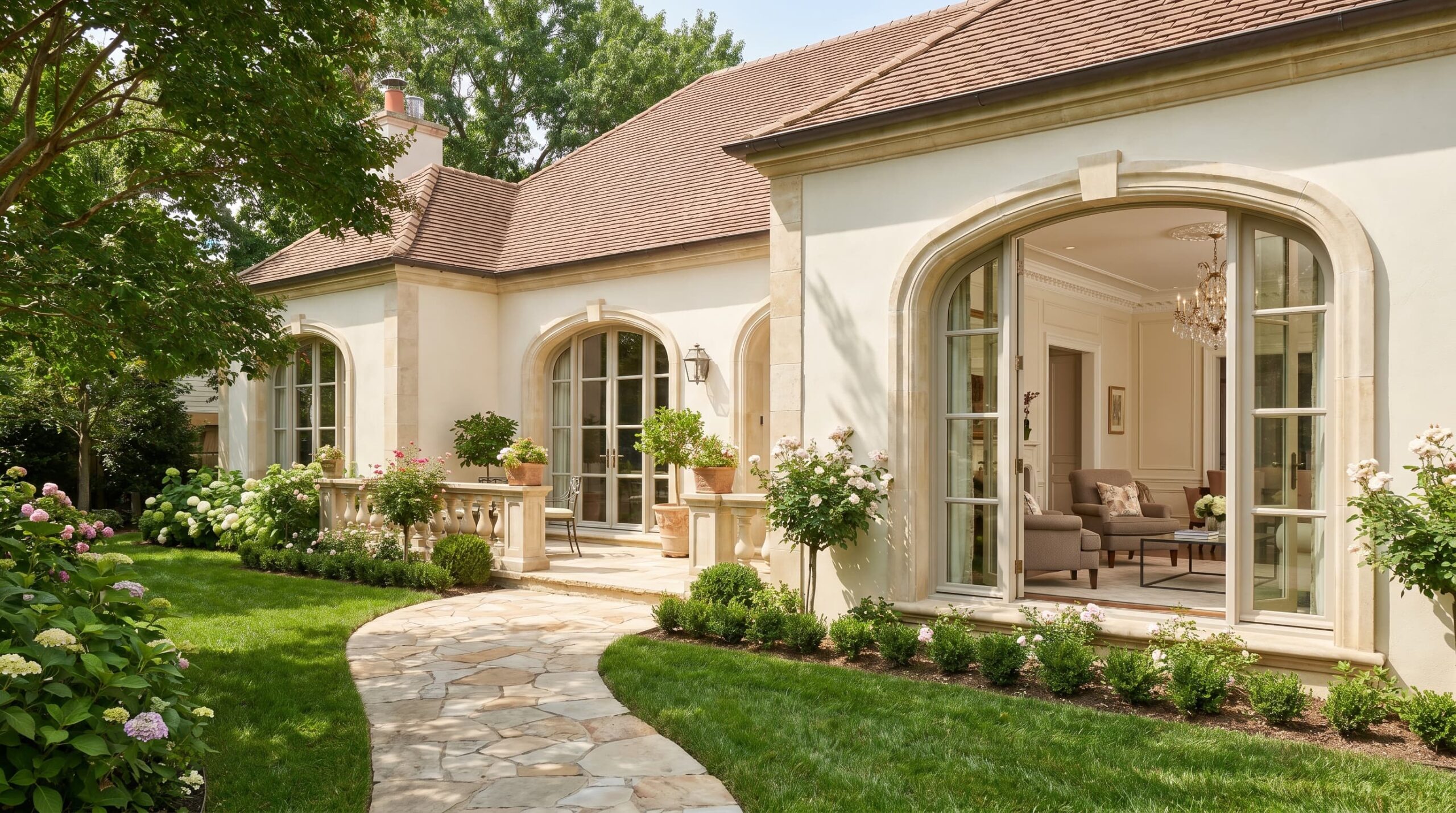
- Features: Architectural features such as Softer Curves, Plaster Walls, and Limestone Details that add a romantic, timeless quality, with gentle lines and rich textures.
- A Blend of Traditional and Contemporary Elements: A harmonious mix of classic design and modern touches, creating a balanced and welcoming atmosphere.
- High Sale Prices: Homes featuring this style often command high resale prices, appealing to renovators who seek traditional charm without the stiffness of formality.
The Traditional Style Home Exterior
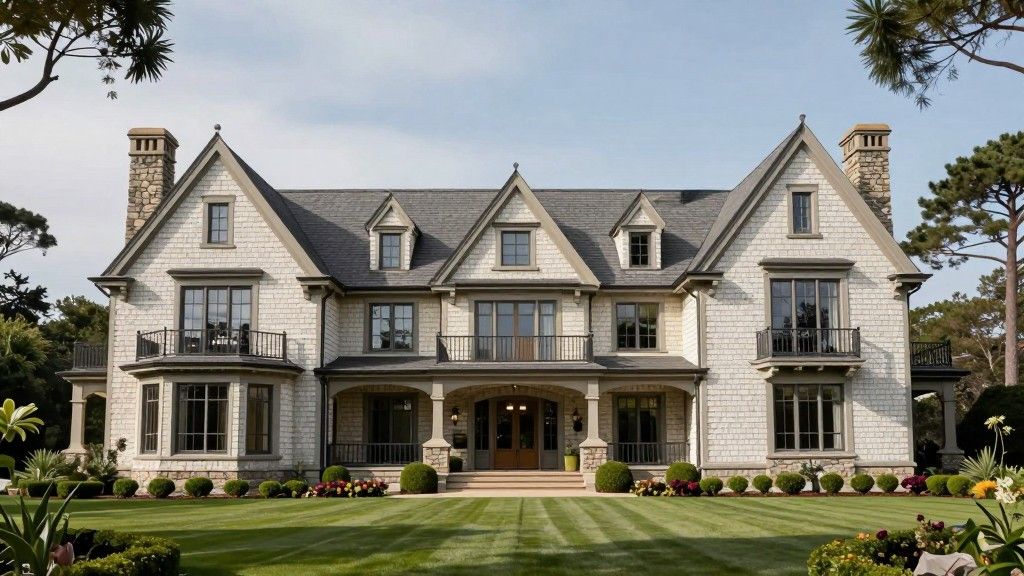
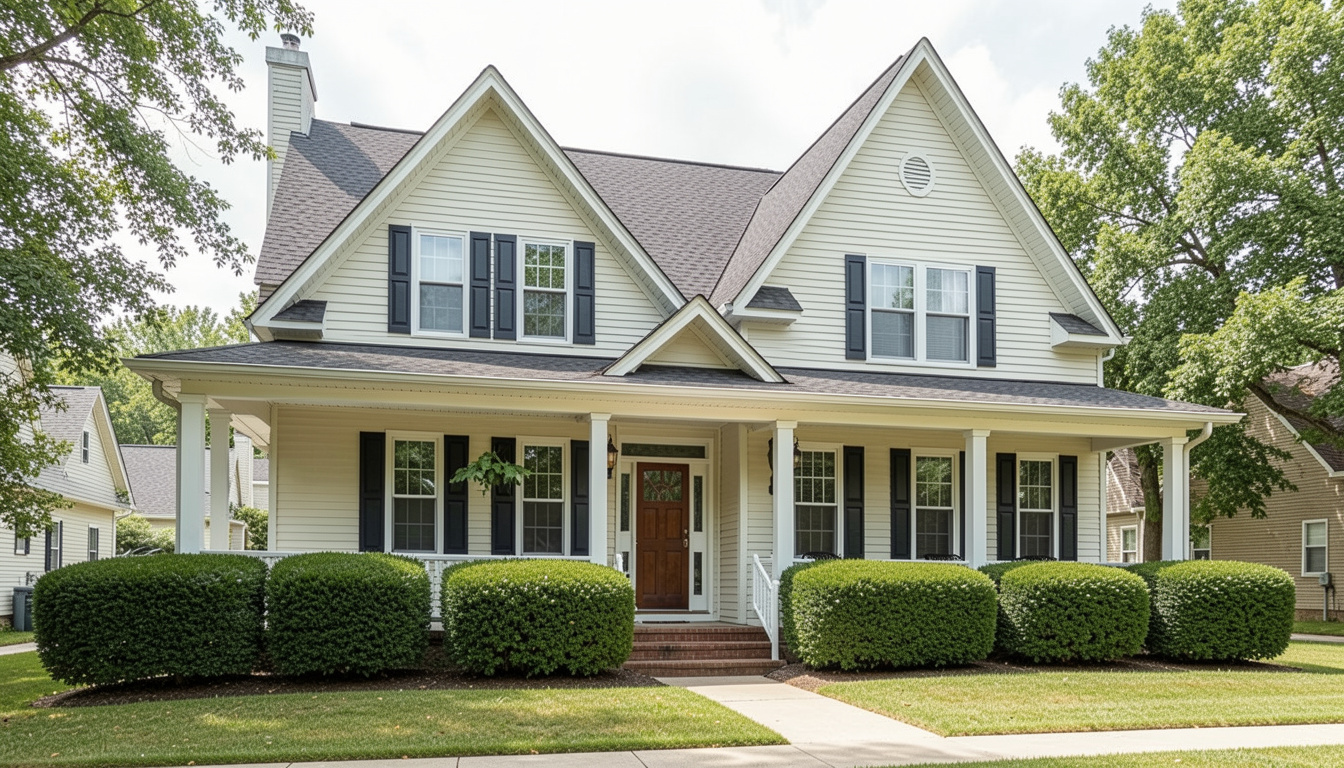 A traditional-style home exterior features a symmetrical design, steep rooflines, and classic elements like dark shutters and a welcoming front porch. Surrounding landscaped gardens with trimmed hedges, flower beds, and a pathway enhances its timeless charm, creating an inviting, cozy atmosphere in any setting.
- Features: Symmetrical facade, defined entry, pitched roof, and quality materials like brick, stone, and wood siding.
- What Dates a Traditional Exterior: Oversized shutters, heavy scalloped trim, uniform brick, and vinyl imitations that degrade over time.
- Easy Fixes for Outdated Elements: Paint the brick a neutral color, add black or iron hardware, simplify landscaping, and update lighting for a refreshed look.
- Protecting Window Cadence: Maintain window rhythm; disruptions can’t be fixed with trim or other changes.
The Traditional Style Home Interior
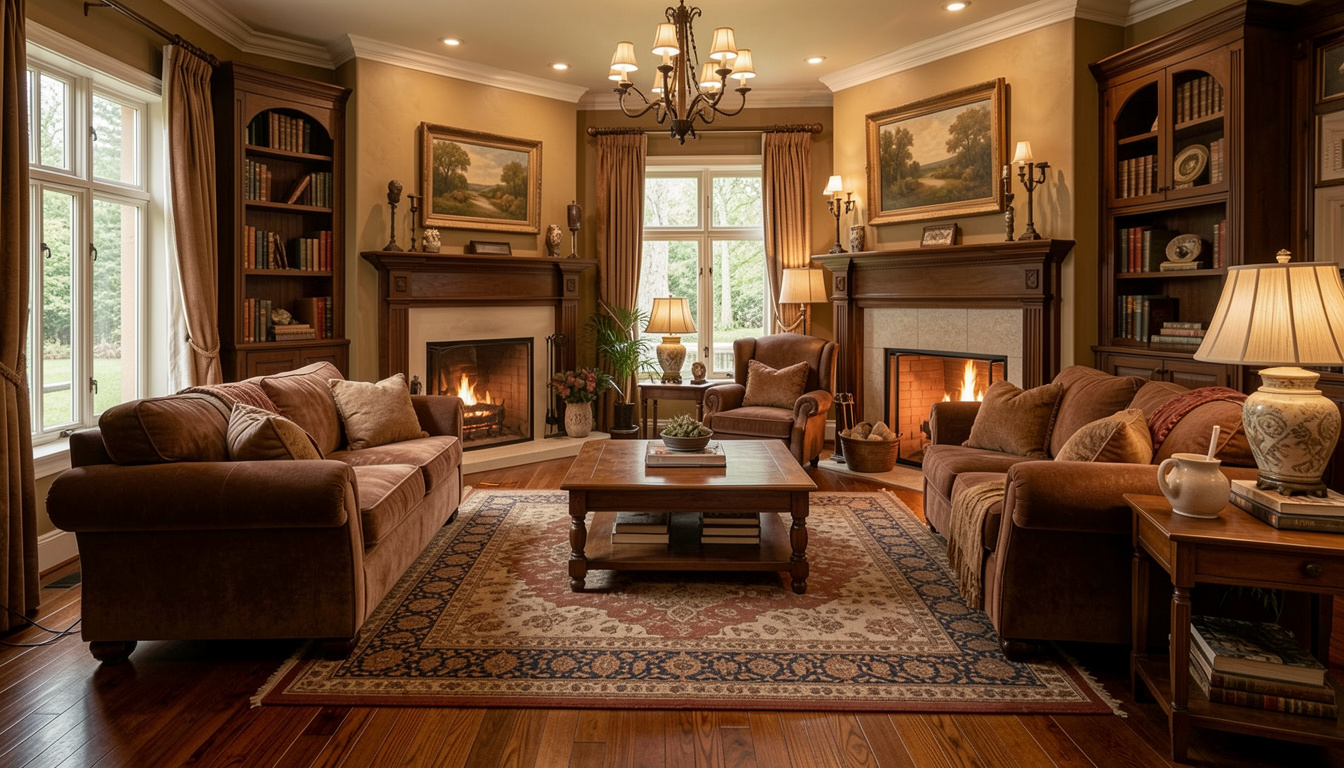
Traditional interiors aren’t decorated, they’re arranged. Every room has a logic to it, and understanding that logic is what separates a home that feels pulled together from one that just has old-looking furniture
- The Entry Hall: Traditional entry halls are designed to set the tone, manage sound, and signal order. Key elements include a console table, a mirror, wall sconces, and an area rug.
- The Living Room: Traditional living rooms anchor furniture to architectural features such as the fireplace or windows rather than to the center.
- The Kitchen: Features include inset cabinetry, plate racks, arched range hoods, rich wood tones, unlacquered brass hardware, and checkerboard tile floors. Traditional kitchens are currently leading in renovation spending.
- The Dining Room: Revival includes properly scaled chandeliers, tables with leaves, upholstered side chairs, and wainscoting or wallpaper. Formal dining rooms are making a strong comeback in residential design.
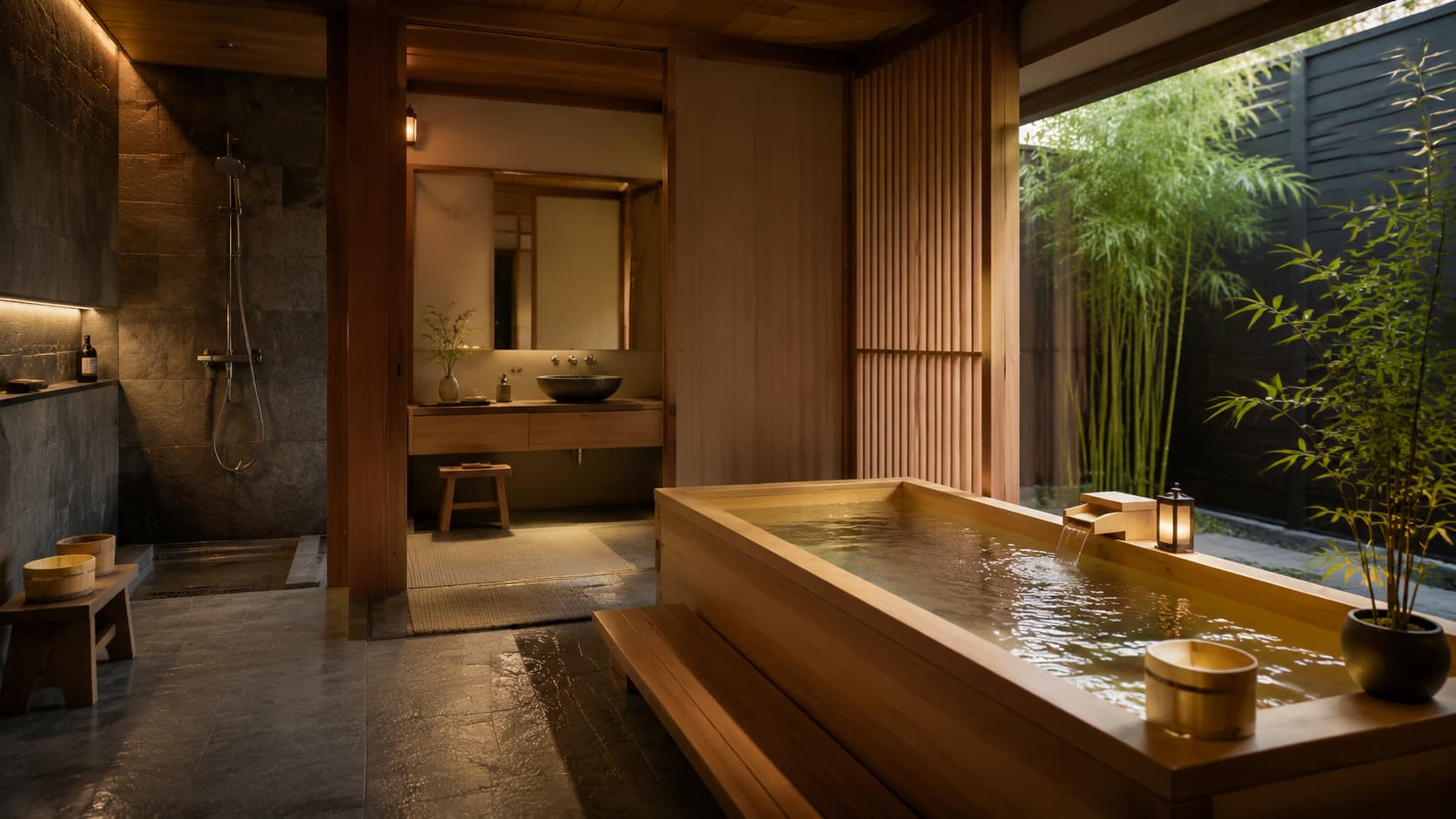
- Bedrooms and Bathrooms: Bedrooms focus on layers with a headboard, side tables with lamps, and an upholstered bench.
Traditional Style Houses with Modern Touch
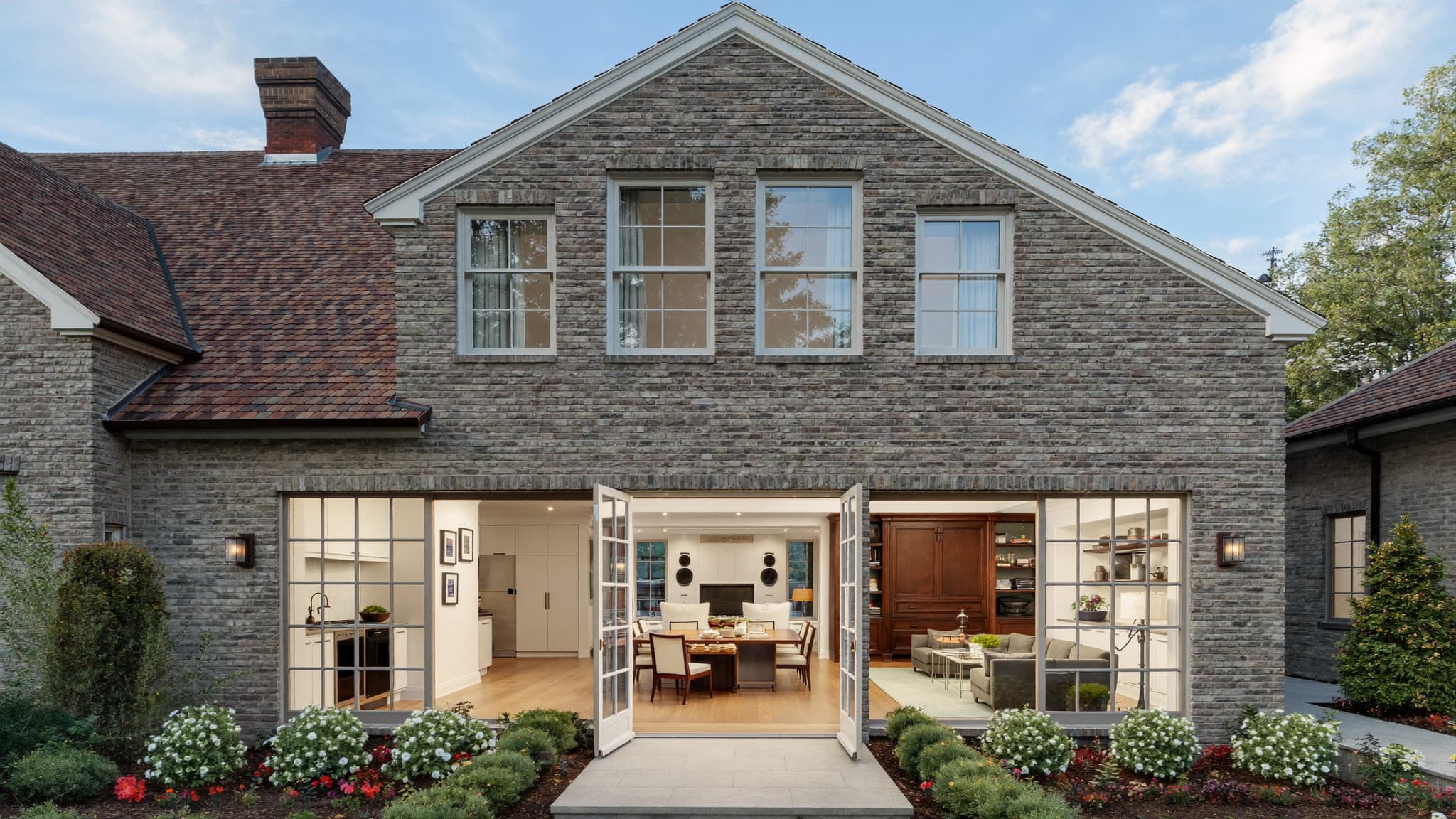
A traditional home doesn’t have to choose between character and function. The two aren’t in conflict, but the integration has to be deliberate.
- Smart Home Technology: Many traditional homeowners hesitate to adopt smart tech, but in-wall speakers, hidden TVs, and discreet switches can seamlessly blend with the decor.
- Energy Performance: Traditional thick-wall systems offer better thermal mass than modern builds. High-performance windows and efficient HVAC can be added while preserving the home’s character.
- Home Office: Traditional floor plans with studies or libraries, once considered unnecessary, now offer a clear advantage over open-concept layouts and are among the most requested features in modern design.
What is Not a Traditional Style House
Getting this wrong costs money. Knowing the differences upfront saves you from renovating in one direction and decorating in another.
1. Traditional is not Transitional: Transitional design blends traditional and contemporary with cleaner lines, softer details, and a neutral palette.
It offers a calmer interior while maintaining classical architecture. Choose based on your desired aesthetic.
2. Traditional is not Farmhouse: Farmhouse design highlights informal elements, while traditional emphasizes symmetry. Both share natural materials, but mixing them without purpose can create an awkward space.
3. Traditional is not Victorian: Victorian is a specific historical period with ornate, asymmetrical, highly decorative features. It sits adjacent to traditional, not inside it.
4. Traditional is not Grandmillennial: Grandmillennial is a contemporary mood that borrows traditional elements and layers them with maximalist, whimsical energy. It’s a styling choice, not an architectural one.
The line between a well-done traditional home and a cluttered one isn’t the age of the furniture. It’s editorial restraint, knowing what to leave out.
The Resale for Traditional Style HousesTraditional style isn’t just a design preference; it’s a reliable asset. Craftsman, Colonial, and Cottage homes consistently rank among the housing styles with the strongest resale value. Traditional architectural style is also one of the most commonly sold in the U.S., which matters because broad buyer appeal protects your investment in ways that niche styles don’t. Transitional homes, the modern evolution of traditional, command some of the highest average sale prices in the country, averaging over $1.7 million across eight states where they top the market. Regional styles vary: Colonial and Georgian in the Northeast, Greek Revival in the South, and Craftsman in the Pacific Northwest. |
Conclusion
Traditional style endures because it was never built around a trend. It was built around how people actually live in rooms with purpose, with materials that age honestly, and with proportions that feel right without explanation.
What’s happening isn’t a revival. It’s a correction. Homeowners are returning to design principles that prioritize comfort, craftsmanship, and permanence over whatever reads well on a screen.
Whether you’re buying your first traditional home, renovating one you’ve lived in for years, or building from the ground up, the principles stay the same. Get the bones right. Choose materials that last.
Design rooms that work. The rest follows naturally.
Frequently Asked Questions
What are Traditional House Characteristics?
Traditional houses are characterized by symmetrical facades, pitched roofs, classic materials such as brick and wood, and detailed architectural elements, including molding, shutters, and decorative trim.
What is the Difference Between a Traditional and a Transitional House Style?
A traditional house style features classic, symmetrical designs with ornate details and rich materials, while a transitional house blends traditional and contemporary elements, offering cleaner lines, softer details, and a more neutral palette.
What Makes a Traditional House Look Dated vs. Timeless?
A traditional house looks dated with oversized trim, vinyl imitations, and mismatched features. It remains timeless with classic elements, quality materials, and subtle, well-proportioned details.