Windows may look simple from the outside, but behind every smooth-moving sash and tight seal is a carefully designed system of interconnected components working together.
A window frame parts diagram shows you exactly how it all fits. Knowing these parts helps when you’re buying new windows, talking to a contractor, or catching a problem before it gets expensive.
This post covers each structural and glass component in plain terms, explains how different window types vary, and includes a quick comparison table for energy-efficient glass options.
By the end, you’ll know your jambs from your sash and why that matters for both repairs and replacement.
Window Frame Parts Diagram
| Component Group | What It Includes | Primary Function |
|---|---|---|
| Structural Frame | Head, jambs, sill | Supports and anchors the window in the wall opening |
| Sash System | Stiles, rails, meeting rail | Holds the glass and enables or restricts movement |
| Glazing Unit | Glass panes, spacers, gas fill, Low-E coating | Controls insulation, light, and heat transfer |
| Hardware System | Locks, handles, tilt latches, balance systems, rollers | Controls operation, security, and movement |
| Protection System | Weatherstripping, weep holes, drip cap, nailing fin, mullions | Manages air sealing, drainage, and installation stability |
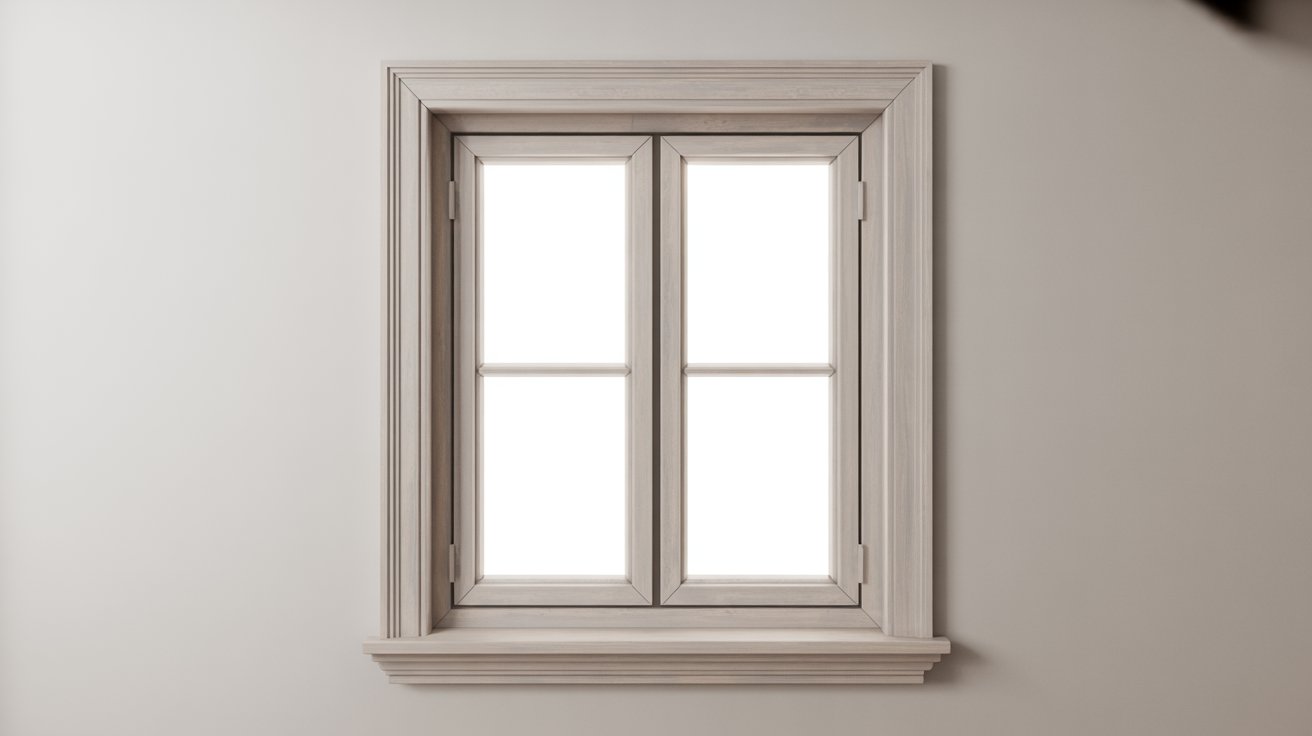
| Finish Components | Trim/casing, stool, apron, grilles | Provides visual finish and interior/exterior completion |
What Is a Window Frame Parts Diagram?
A window frame parts diagram serves as a technical reading map that explains how a finished window is constructed and how each section works together under real conditions.
Instead of only naming parts, it shows how load moves through the frame, how the sash is stabilized by balance systems, and how water is directed away through drainage points to prevent internal damage.
It also highlights structural differences between window types, such as welded vinyl frames versus mechanically joined wood systems, making it easier to trace performance issues to specific components during installation, repair, or replacement.
Core Structural Parts of a Window Frame
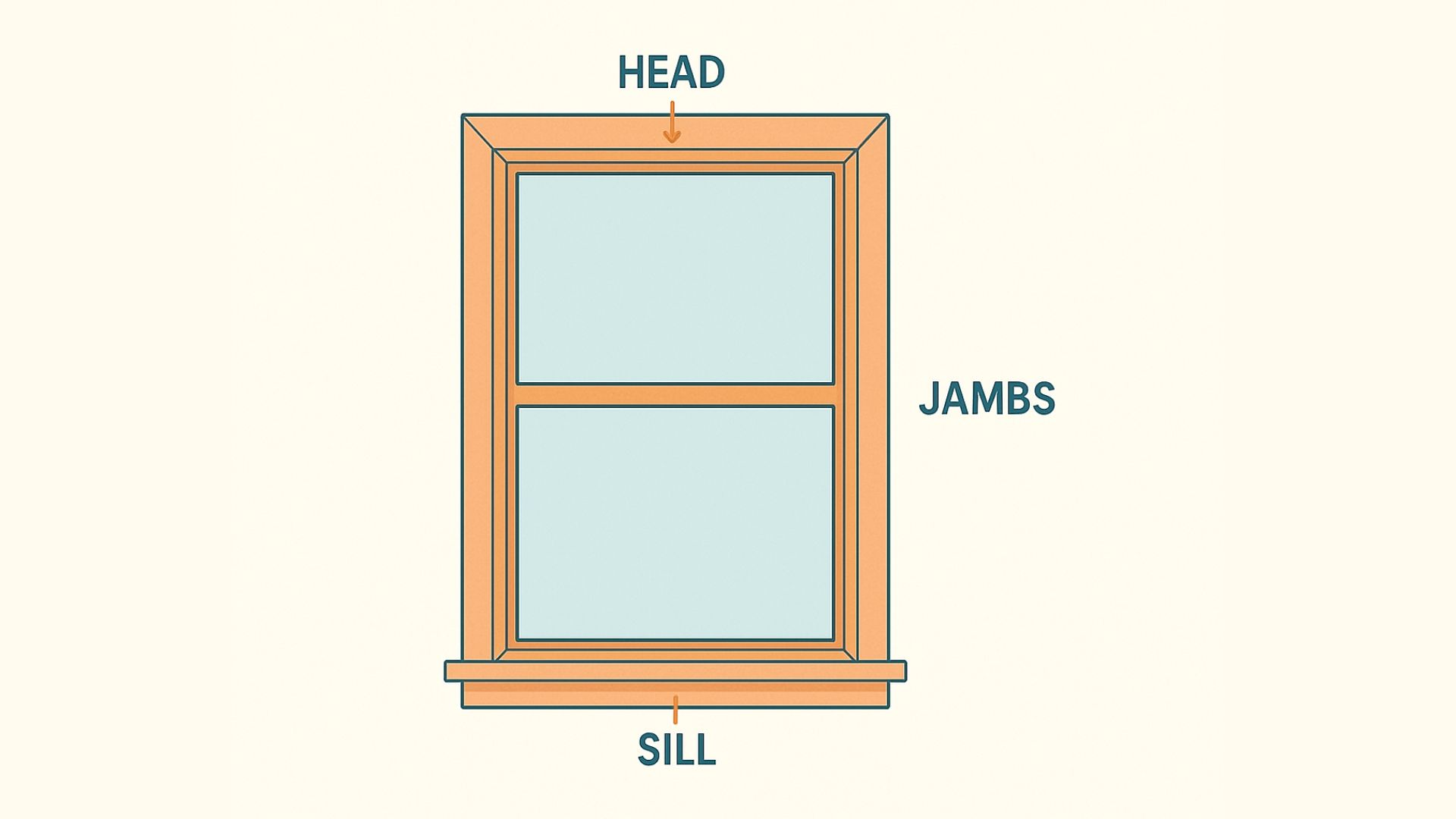
The frame has three main structural parts. Each plays a specific role in keeping your window secure and functional.
Head
The head is the top horizontal section of the frame. It supports structural load from above and helps maintain alignment across the window opening.
Sill
The sill forms the bottom section of the frame. It is shaped to direct water outward, preventing moisture buildup around the window base.
Jambs
Jambs are the vertical side members. They guide movement in operable windows and provide structural stability for the entire frame.
The Sash System (Movable or Fixed Unit)
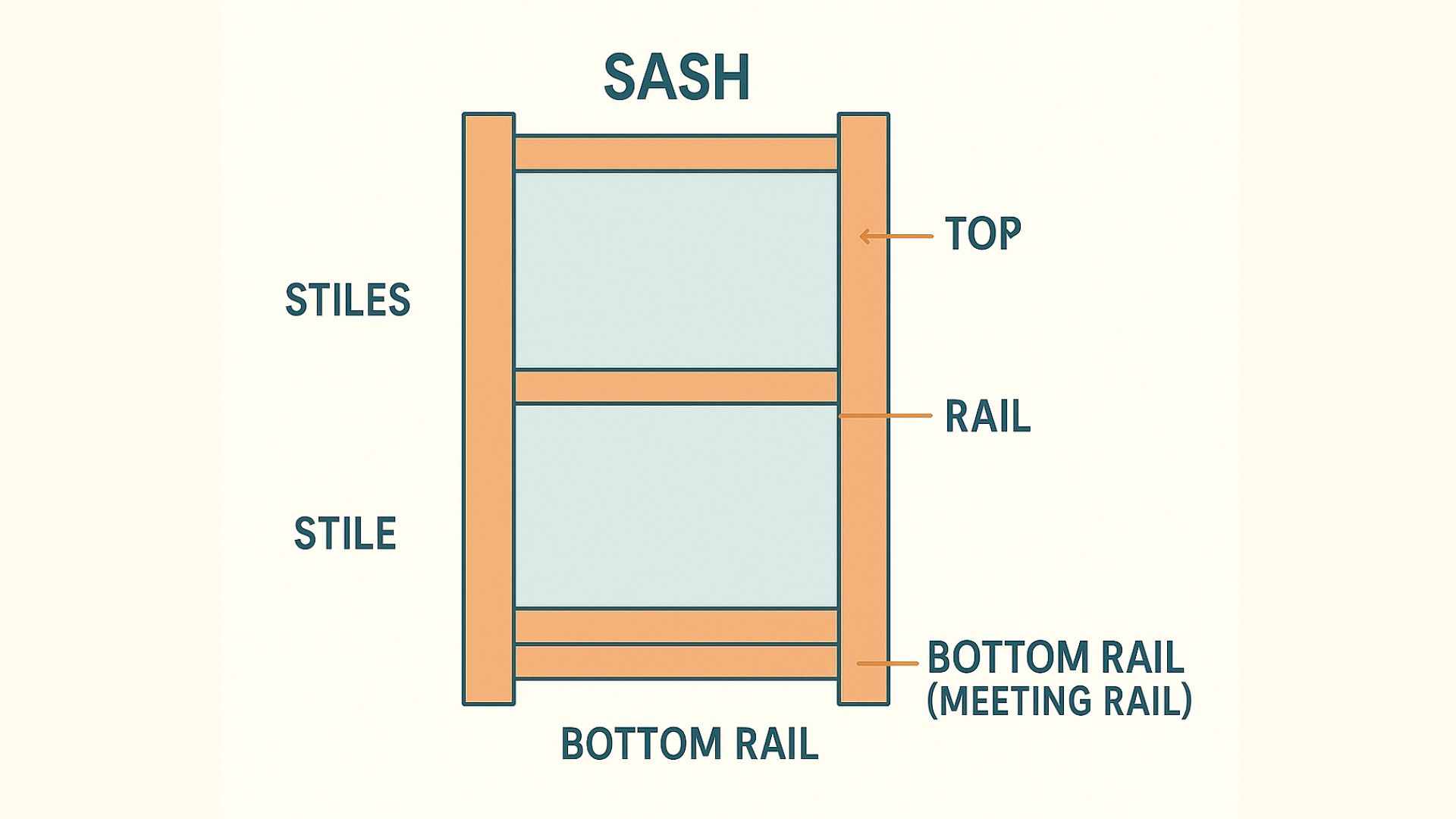
The sash is the part that holds the glass. It can be fixed in place or designed to open. Most windows have one or two sashes.
Stiles
Stiles are vertical pieces on each side of the sash. They give the sash strength and connect to the frame. Sturdy stiles prevent warping and keep glass secure.
Rails
Rails run horizontally across the sash. The top rail sits at the top, and the bottom rail sits at the bottom. Some windows have a middle rail for extra support.
Check Rail (Meeting Rail)
On double-hung windows, the check rail is where the two sashes meet in the middle. This rail often has a built-in lock. When closed, it creates a tight seal against air leaks.
Glass and Glazing System
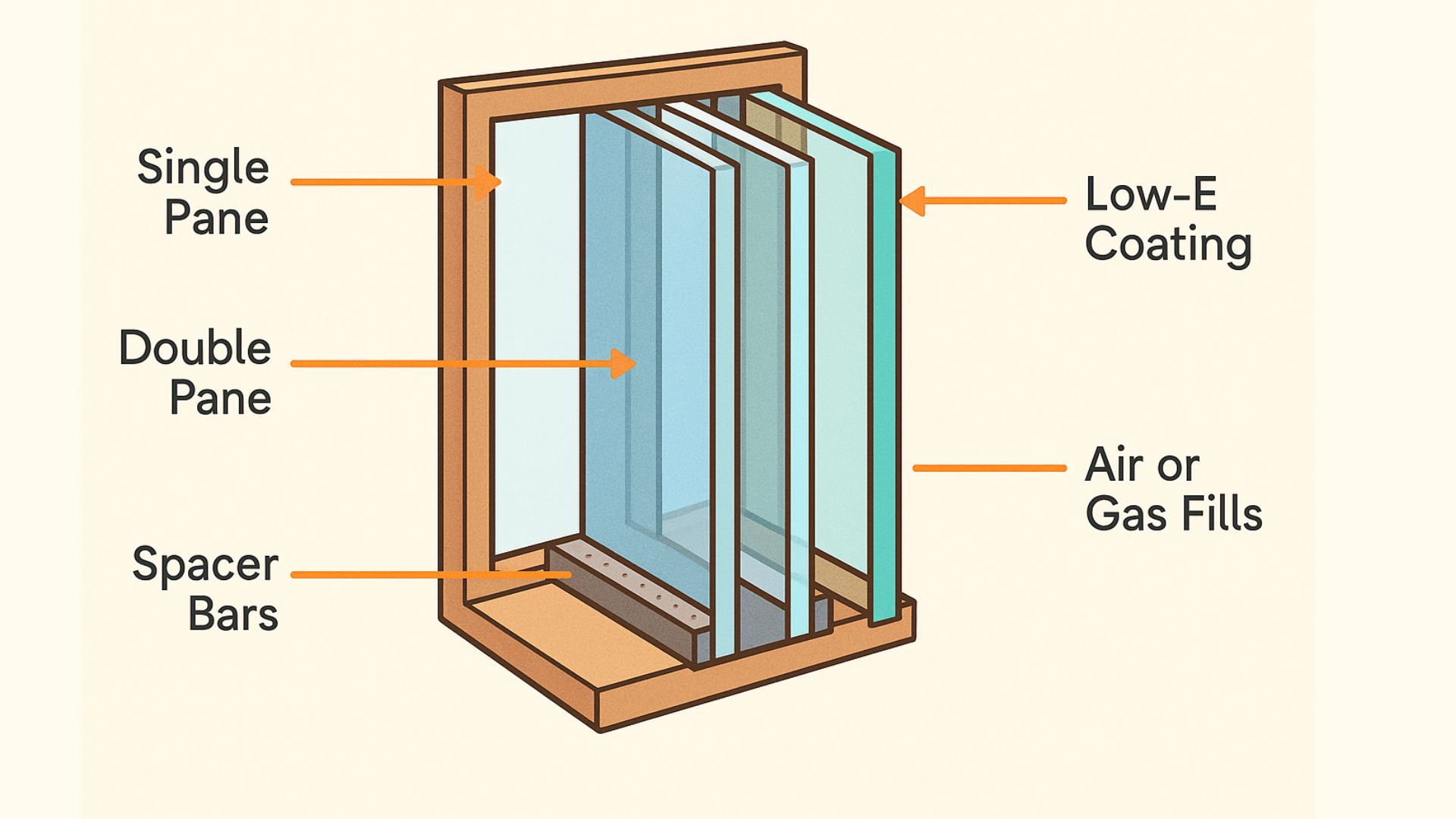
Glazing refers to the glass and its assembly. Modern windows use multiple layers of glass for better insulation.
Single, Double, Triple Pane
- Single pane: One layer of glass with minimal insulation and higher heat loss.
- Double pane: Two layers of glass with a sealed gap, offering better energy efficiency and reduced noise.
- Triple pane: Three layers of glass with two insulating gaps, used for higher insulation needs and colder climates.
Spacer Bars
Spacer bars sit between the glass panes and keep a fixed distance between them. They help maintain the seal and prevent the panes from touching. Better quality spacers also reduce heat transfer and improve long-term performance.
Air or Gas Fills
The space between panes is filled with air or insulating gases like argon or krypton. These gases slow down heat movement more than regular air, improving thermal efficiency and reducing energy loss.
Low-E Coatings
Low-emissivity (Low-E) coatings are thin metal layers applied to the glass surface. They help reflect heat back inside during winter and reduce heat entering during summer. This improves energy efficiency without blocking natural light.
Hardware and Movement Systems
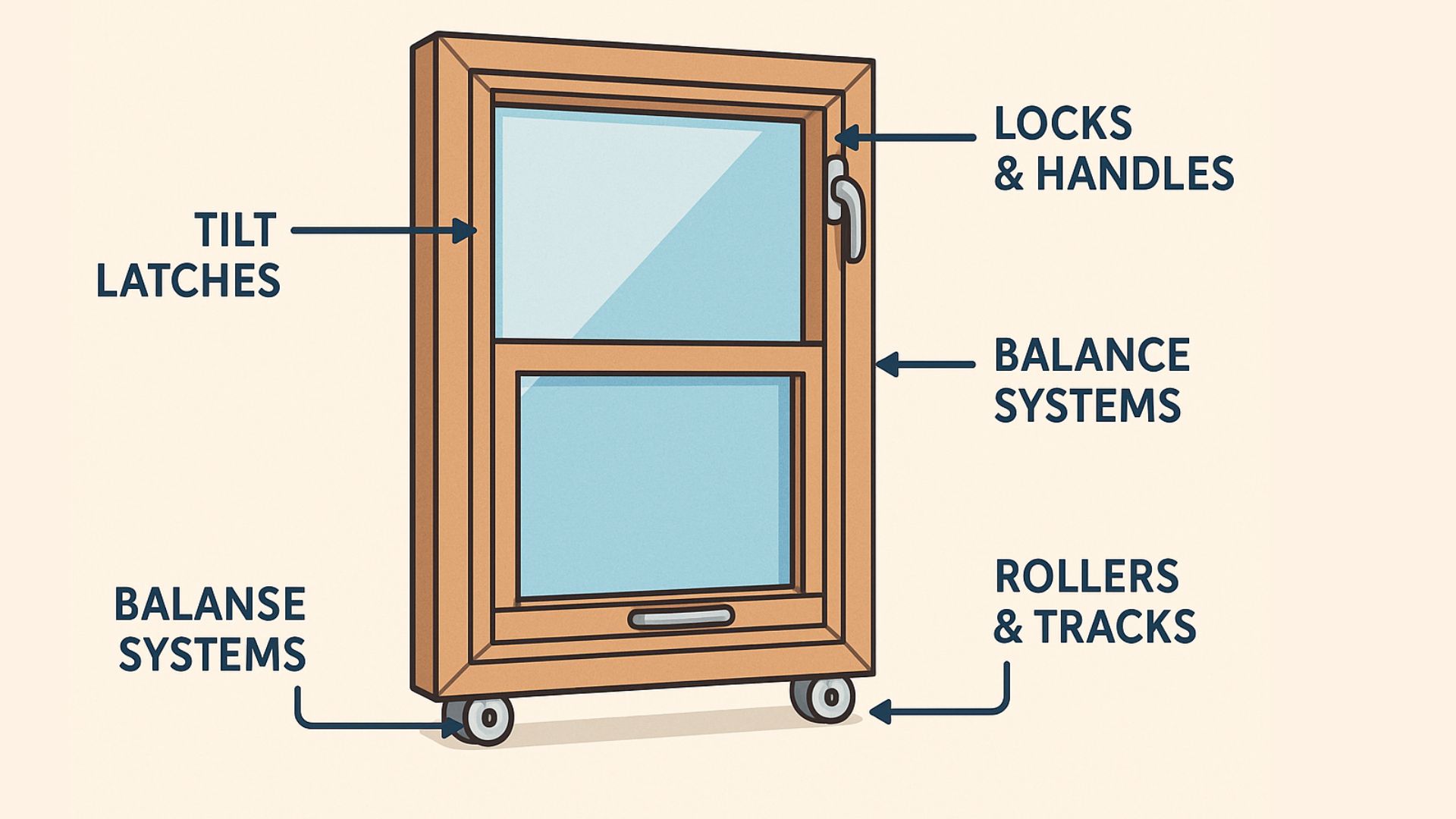
Hardware makes your window functional and secure. Different window types use different mechanisms.
Locks & Handles
Locks keep windows closed and prevent break-ins. Handles let you open and close the window easily. Both should work smoothly and fit comfortably in your hand.
Tilt Latches
These small buttons or levers let you tilt the sash inward. This feature makes cleaning the outside of your window much easier.
Balance Systems
On double-hung windows, balance systems use springs or weights. They hold the sash in place when you open it. Without them, the window would slam shut.
Rollers & Tracks
Sliding windows have rollers on the bottom. These roll along tracks in the frame. Clean tracks and smooth rollers make opening and closing effortless.
Protection and Performance Components
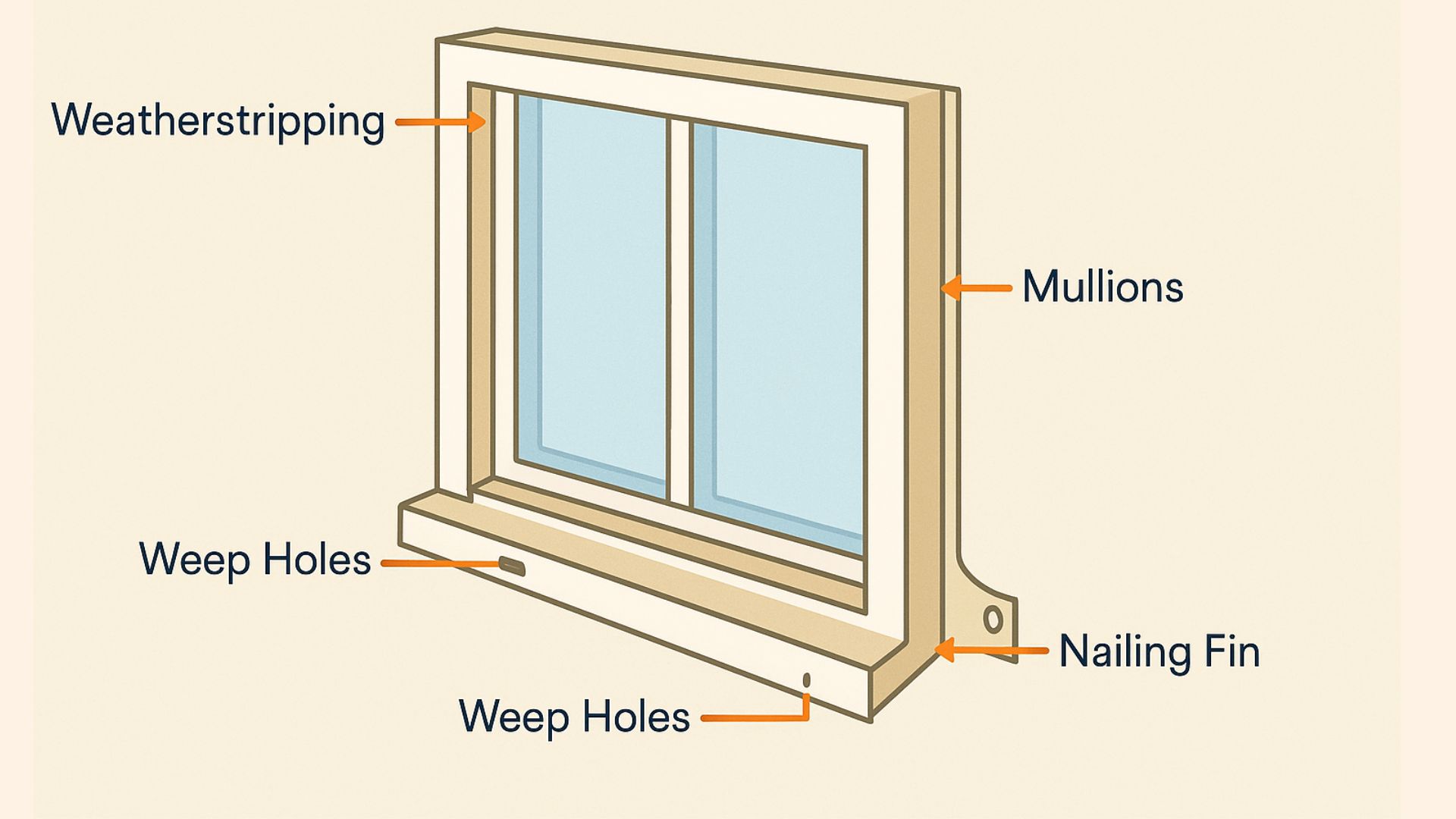
These parts protect your home from the weather and moisture. They’re often hidden but do important work.
Weatherstripping
Weatherstripping seals gaps between the sash and frame. It blocks drafts, dust, and water. Common materials include foam, vinyl, and rubber. Check it yearly and replace it when worn.
Weep Holes
Weep holes are small openings at the bottom of the frame. They let water drain out rather than collect inside. Never block these holes with paint or caulk.
Mullions
Mullions are vertical or horizontal bars that divide glass into sections. They can be structural or decorative. Some mullions separate multiple window units in a single frame.
Nailing Fin
This is a flat flange around the outside of the frame. Installers use it to attach the window to the wall opening. It’s common on vinyl and newer aluminum windows.
Finishing and Interior Elements
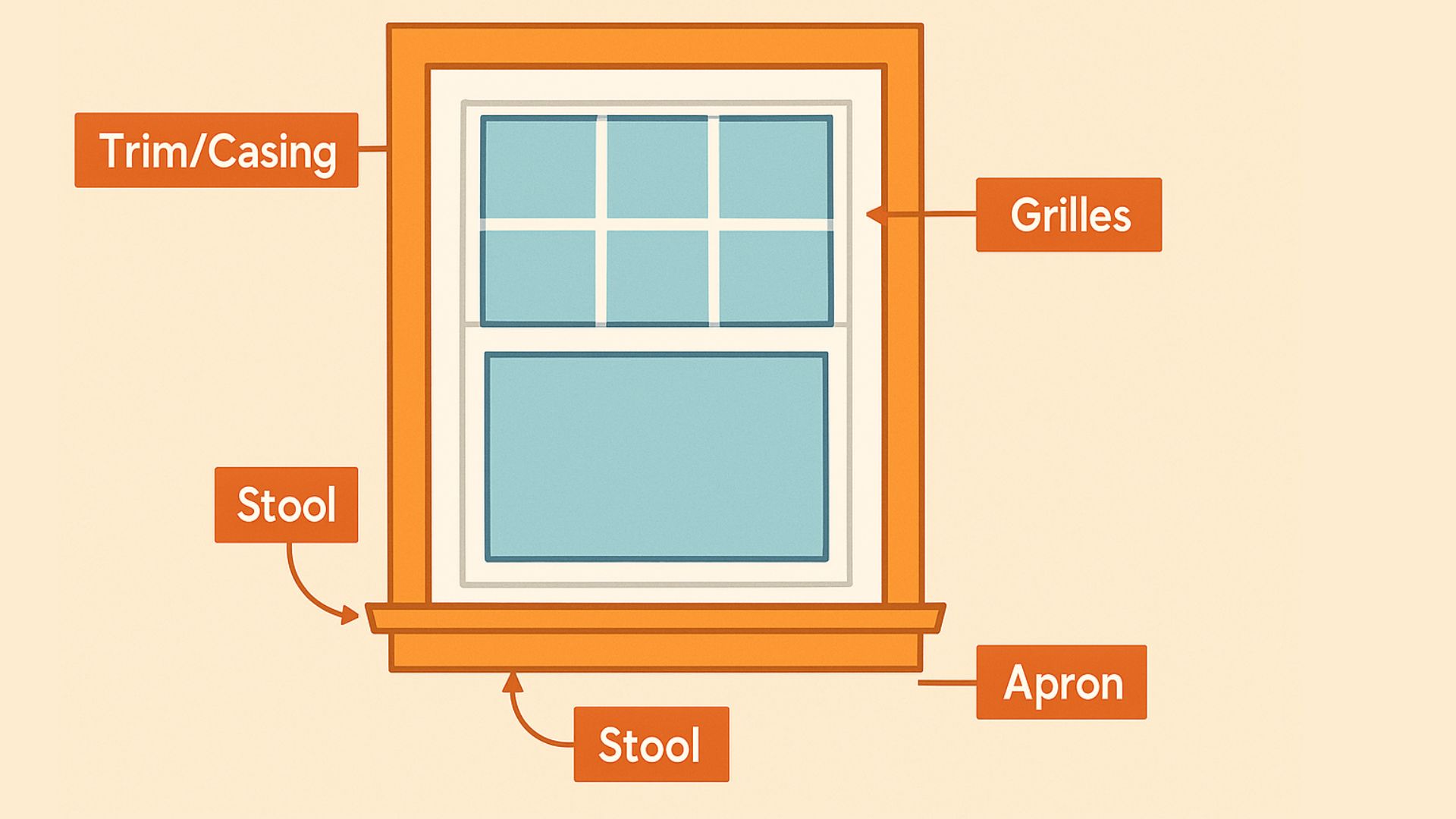
These parts add style and hide installation gaps. They give your window a finished look.
Trim/Casing
Trim is the decorative frame around your window. It covers the gap between the window frame and your wall. You can paint or stain it to match your interior design.
Apron & Stool
The stool is the interior sill surface. It extends into the room and provides a ledge. The apron is a flat piece below the stool. It covers the wall edge and adds detail.
Grilles
Grilles are decorative strips that divide the glass into smaller panes. They can be between glass layers, applied to the surface, or removable. Grilles change the look without affecting performance.
Once familiar with the basic components of a window frame, it’s easier to see how different types of windows and their design variations affect both function and appearance.
Types of Windows & Part Variations
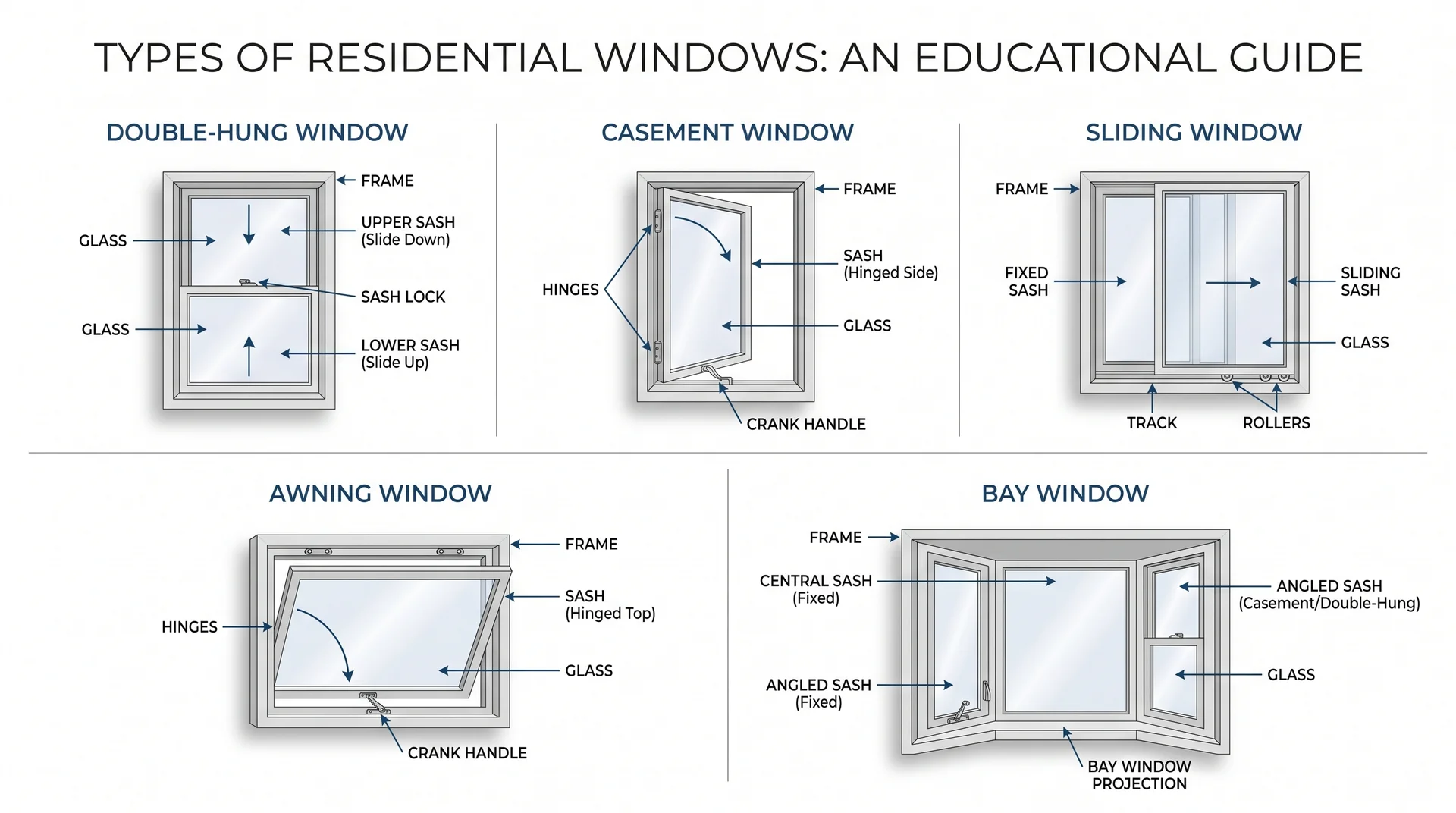
Different window types use different parts and operating systems, but the basic structure (frame, sash, glazing, and hardware) stays the same. What changes is how these parts are arranged and how the window moves or opens.
1. Double-Hung Windows
Both the upper and lower sashes move vertically within the frame. They use balance systems inside the jambs to control movement and keep the sash stable. The meeting rail in the center locks the two sashes together for sealing.
2. Casement Windows
Casement windows are hinged on one side and open outward using a crank mechanism. Instead of sliding parts, they use hinges, operating arms, and locking handles. The sash is usually a single unit that swings open like a door.
3. Sliding Windows
Sliding windows move horizontally along built-in tracks. One sash stays fixed while the other moves using rollers. The frame includes upper and lower tracks instead of balance systems or hinges.
4. Awning Windows
Awning windows are hinged at the top and open outward from the bottom. They use a crank operator and side arms to control movement. The sash stays attached to the frame while opening, which helps with ventilation during light rain.
5. Bay & Bow Windows
These windows are made from multiple window units joined together at angles. Each unit can have its own sash type (fixed, casement, or double-hung). The connecting sections often use mullions and structural framing to support the outward projection.
Common Window Issues by Component
Before getting into fixes and maintenance, it’s important to understand which window problems are linked to each specific component. This helps quickly identify the root cause instead of guessing.
| Component | Common Issues | What It Leads To |
|---|---|---|
| Frame (head, jambs, sill) | Warping, cracks, rot, misalignment | Air leaks, structural instability, water intrusion |
| Sash | Sticking, warping, loose fit | Difficult operation, gaps, poor sealing |
| Glass / Glazing | Fogging between panes, cracks, and seal failure | Heat loss, reduced visibility, and condensation |
| Weatherstripping | Wear, compression, detachment | Drafts, dust entry, energy loss |
| Hardware (locks, hinges, rollers) | Broken locks, stiff movement, worn rollers | Security issues, poor operation |
| Weep Holes | Blockage from dirt or paint | Water buildup, internal moisture damage |
| Nailing Fin | Improper installation or damage | Poor structural anchoring, water leakage |
| Drip Cap | Missing or damaged | Water seepage into frame, rot around top trim |
How Do Window Parts Work as A System?
Window parts work together as a cohesive system, with each component serving a specific function that affects overall performance.
The frame provides structural support and anchors the window to the wall, while the sash controls movement or fixed positioning of the glass. The glazing system manages insulation, light, and noise control, and the hardware ensures smooth operation and security.
At the same time, seals like weatherstripping and drainage features like weep holes control air and water movement to prevent leaks and moisture buildup. When all these parts function correctly together, the window maintains stability, energy efficiency, and long-term durability.
Conclusion
Knowing about every part shown in a window frame parts diagram gives you control over your home’s comfort and efficiency.
From the structural head, sill, and jambs to the glazing that controls temperature, each component serves a purpose.
Knowing how weatherstripping, weep holes, and balance systems work helps you spot problems early and communicate clearly with contractors.
Use this guide as your go-to reference when inspecting existing windows or choosing new ones. The right knowledge prevents costly mistakes and extends your windows’ lifespan.
Have questions about a specific part? Check your window manufacturer’s documentation or consult a certified installer.