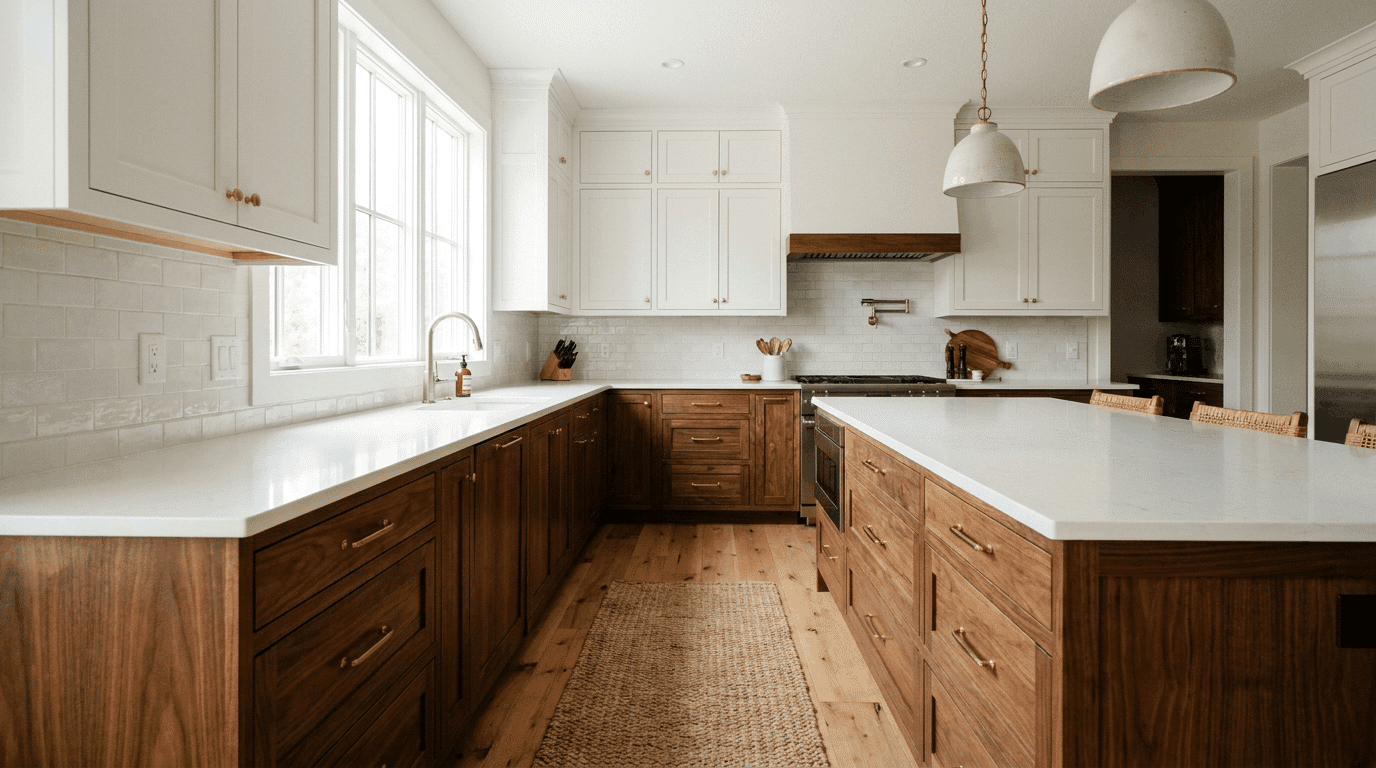
The number on the cabinet spec sheet is not the number that matters.
A 24-inch base cabinet does not take up 24 inches in your kitchen. Once you add the door, the drawer pulls, and the countertop overhang, the real footprint is closer to 26 to 27 inches.
That gap is where most cabinet-planning mistakes occur.
Standard cabinet depth is one of those topics that sounds simple until you are standing in a kitchen that does not work.
Cabinets that are too deep in a narrow space make the aisle impossible. Wall cabinets that are too deep obstruct access to the countertop. Vanity cabinets chosen by guesswork end up fighting the plumbing.
This guide gives you every standard cabinet depth measurement you need. Kitchen base, wall, tall, and bathroom vanity, along with what those numbers mean in a real room.
Why Standard Cabinet Depth Matters More than You Think
Cabinet depth affects three things: how much you can store, whether your appliances fit, and how much of your floor space the cabinets actually consume.
Most people focus on cabinet height and width when planning a kitchen or bathroom remodel. Depth gets treated as a given. That is a mistake.
Get the depth wrong on base cabinets, and your dishwasher will not sit flush with the cabinet face. Get it wrong on wall cabinets and they will either block your countertop workspace or look undersized against the wall.
There is also a measurement gap that almost no one talks about.
The depth number on a product spec sheet refers only to the cabinet box. It does not include the door, the hinges, or the hardware. Here is what gets added in practice:
- Door thickness adds roughly 0.75 to 1 inch
- Cabinet pulls, or knobs, add another 1 to 1.5 inches
So a 24-inch base cabinet box becomes a 26 to 26.5-inch real-world footprint before the countertop. That number is what you should use when calculating aisle clearance, not the box depth.
How Cabinet Depth Affects Appliance Fit
The 24-inch base cabinet standard exists partly because it lines up with built-in dishwashers, slide-in ranges, and standard sinks. But refrigerators are the exception that trips people up.
A standard-depth refrigerator is 30 to 36 inches deep. That means it sticks out 6 to 12 inches past the face of a 24-inch cabinet run.
Wall cabinets installed above the fridge are built at 24 inches deep to match the appliance profile, but base cabinets on either side stay at 24 inches. The result is a planned step-out that most kitchen layouts account for.
Counter-depth refrigerators are shallower, typically 24 to 27 inches deep, and sit roughly flush with 24-inch base cabinets once the door and handles are factored in.
If you are choosing between a counter-depth and a standard-depth fridge, that decision changes how the cabinet run around the refrigerator alcove needs to be planned.
Wall ovens are another fit to verify. Most require a tall cabinet at least 24 inches deep, and some professional-grade models need 27 inches. Always confirm the oven cutout specs before ordering the cabinet.
The Numbers Behind Every Cabinet Type
Cabinet depth is not one-size-fits-all. Base cabinets, wall cabinets, tall cabinets, and bathroom vanities each follow a different standard, and for good reason.
Here is what you need to know for each type before you plan your layout.
1. Base Cabinet Depth
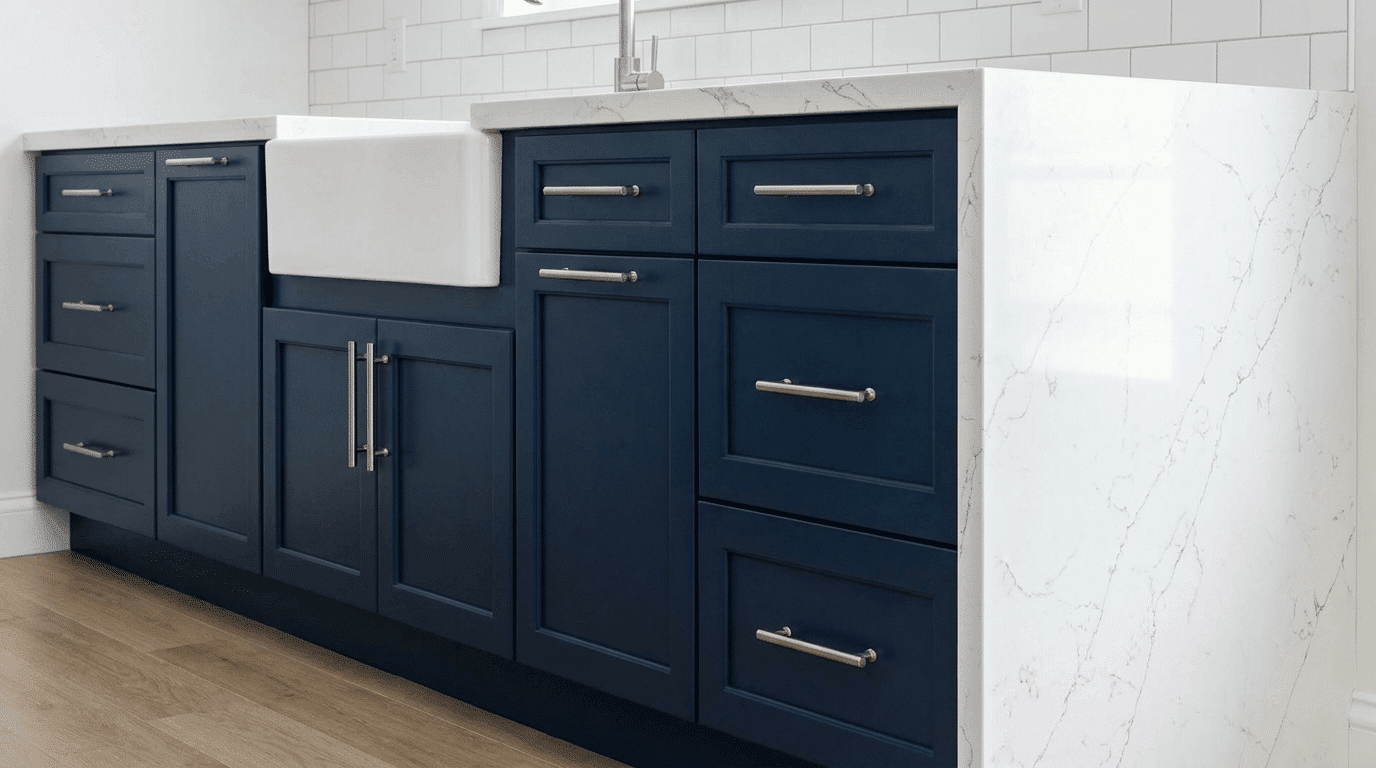
The standard depth for a base cabinet is 24 inches. This is the measurement from the back wall to the front face frame of the cabinet box.
This number is not arbitrary. Base cabinets at 24 inches are sized to fit built-in dishwashers, slide-in ranges, and undermount sinks without needing custom modifications.
Changing the depth and the appliance compatibility becomes a problem.
The toe kick at the bottom of a base cabinet adds another layer to understand. The toe kick is the recessed section at the base of the cabinet where you stand when working at the counter.
It is typically 3 to 3.5 inches deep and 4 inches tall. Because of this recess, the actual floor footprint of a 24-inch cabinet is around 21 inches, not 24.
The countertop sits on top of the base cabinet and overhangs the front face by 1 to 1.5 inches. This brings the total countertop workspace depth to roughly 25-25.5 inches.
Dimension | Measurement |
Standard base cabinet depth (box) | 24 inches |
Total depth with countertop overhang | 25 to 25.5 inches |
Floor footprint with toe kick recess | ~21 inches |
Standard base cabinet height (box) | 34.5 inches |
Total height with countertop | 36 inches |
The standard base cabinet height of 34.5 inches is also worth keeping in mind.
Add a 1.5-inch countertop, and the finished counter height is 36 inches, which is the widely accepted standard for kitchen work surfaces.
2. Wall Cabinet Depth (Upper Cabinets)
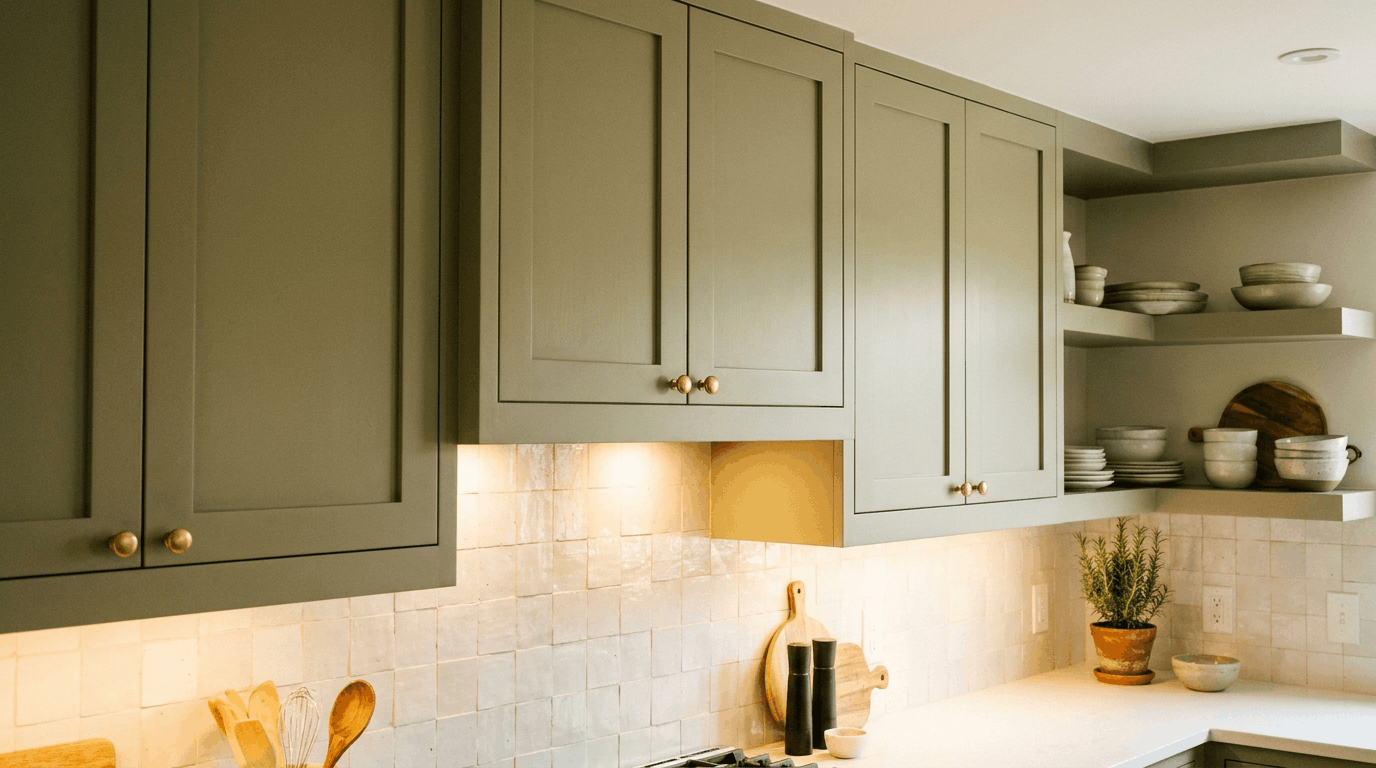
Standard wall cabinets are 12 inches deep. This is shallow by design.
Wall cabinets sit above the countertop workspace.
A depth of more than 12 inches encroaches on that workspace, making items at the back of the countertop harder to reach.
The 12-inch standard keeps the cabinets useful for storage without creating a low ceiling effect over your prep area.
Some configurations use deeper wall cabinets:
- Cabinets above a refrigerator are typically 24 inches deep to align with the appliance profile
- Some designs use 15 to 18 inches for extra storage in specific areas, though this is less common
The clearance between the countertop surface and the bottom of the wall cabinet is a number that many people overlook. The standard clearance is 18 inches.
This is both a practical workspace requirement and a common building code specification. Too little clearance and you lose usable counter space.
Too much, and the wall cabinets start to feel visually disconnected from the kitchen.
Wall cabinet height options are 30, 36, or 42 inches. Height is driven by your ceiling height, not by depth. The two are independent decisions.
Dimension | Measurement |
Standard wall cabinet depth | 12 inches |
Deeper wall cabinet (over refrigerator) | 24 inches |
Deeper wall cabinet (extra storage areas) | 15 to 18 inches |
Standard clearance above the countertop | 18 inches |
3. Tall Cabinet Depth (pantry and Utility Cabinets)
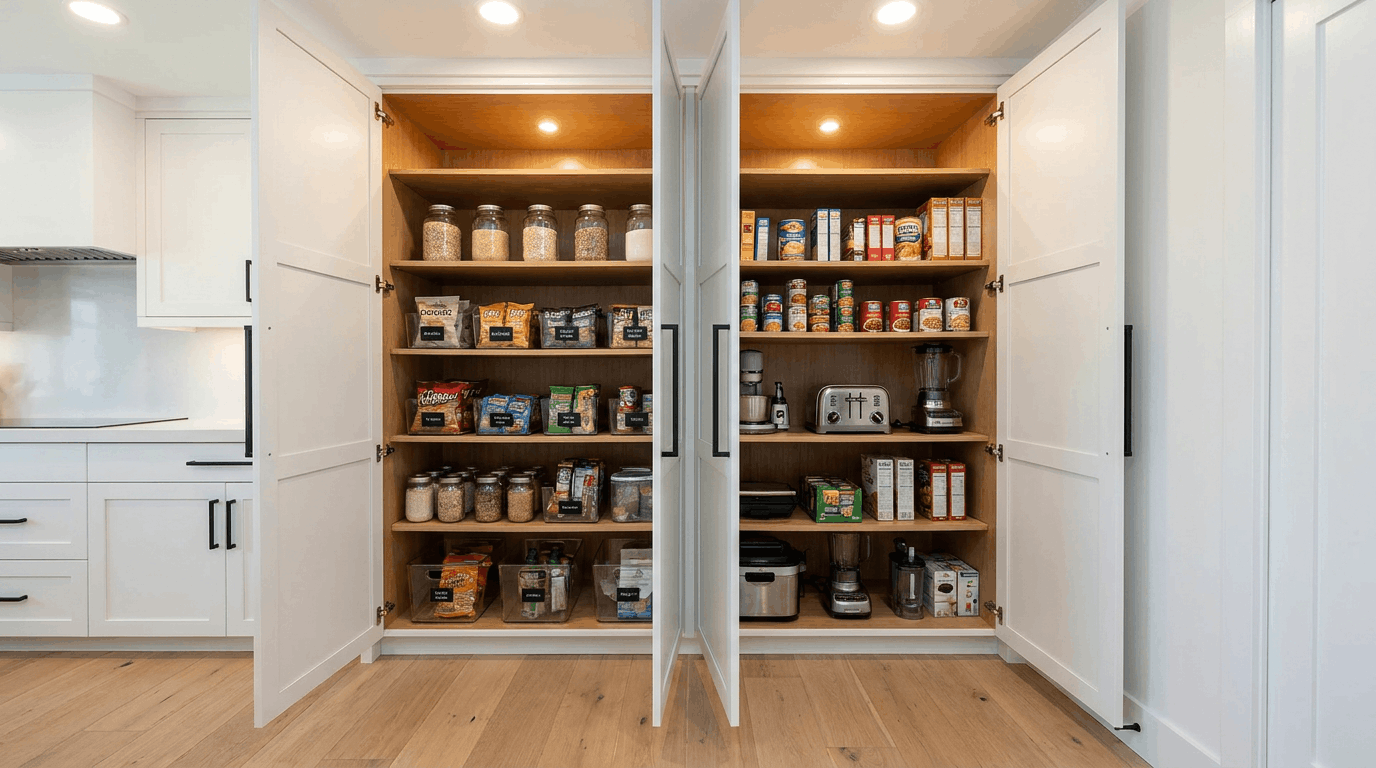
Tall cabinets, also called pantry or utility cabinets, typically match the depth of base cabinets at 24 inches. This keeps them flush with the base run when placed side by side.
Some tall cabinets are built shallower at 12 inches when used for linen storage or broom closets. These sit flush with wall cabinets instead.
Height options for tall cabinets are 84, 90, or 96 inches. As with wall cabinets, height is a ceiling-driven decision. Depth stays the same regardless of how tall the cabinet goes.
One configuration that requires more depth: corner cabinets with a Lazy Susan. These typically need 33 inches of depth to accommodate the rotating shelf mechanism properly.
When planning tall cabinets next to base cabinets, the depths need to align for a flush run.
Mixing a 24-inch tall cabinet with a 21-inch base cabinet creates a step in the cabinet face that looks unfinished and can cause installation problems.
Cabinet type | Standard depth |
Pantry or utility tall cabinet | 24 inches |
Shallow, tall, or linen cabinet | 12 inches |
Corner cabinet with a Lazy Susan | 33 inches |
4. Bathroom Vanity Cabinet Depth
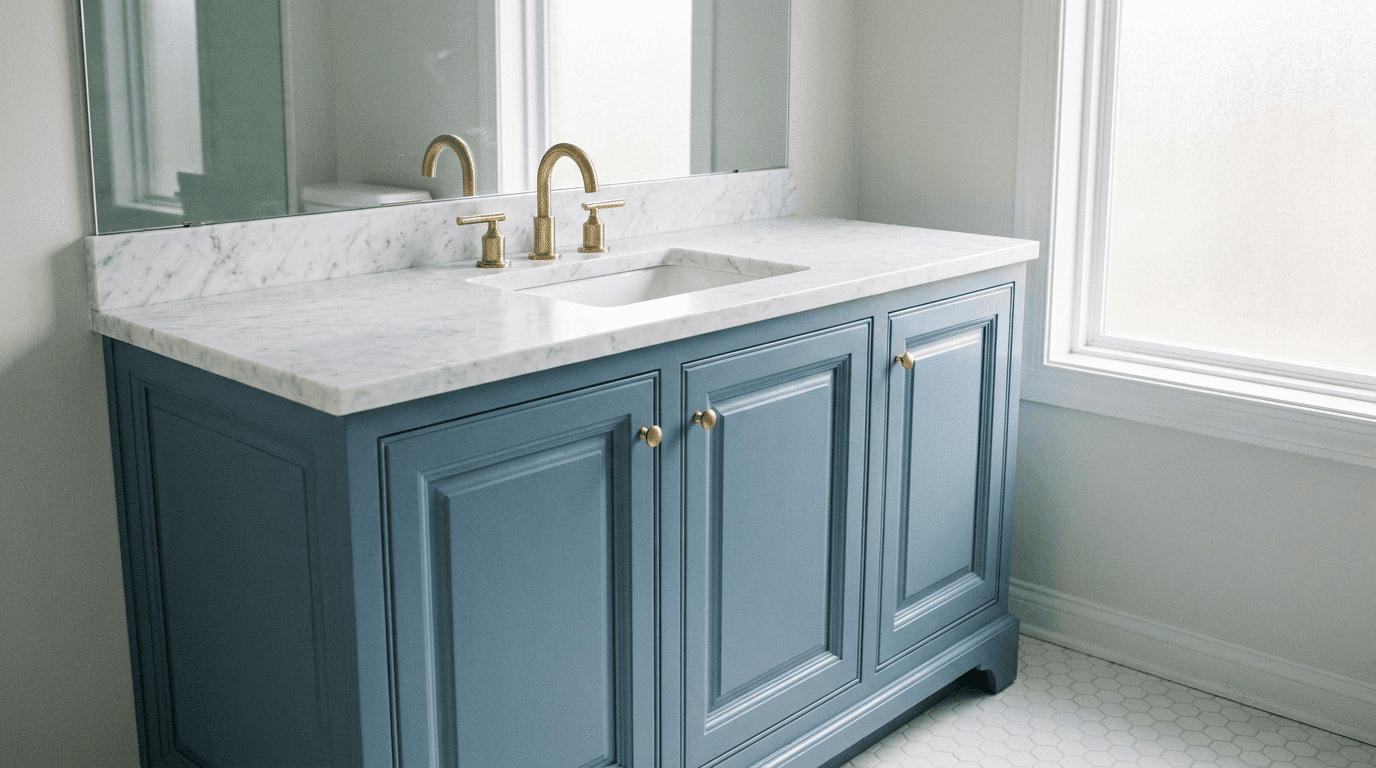
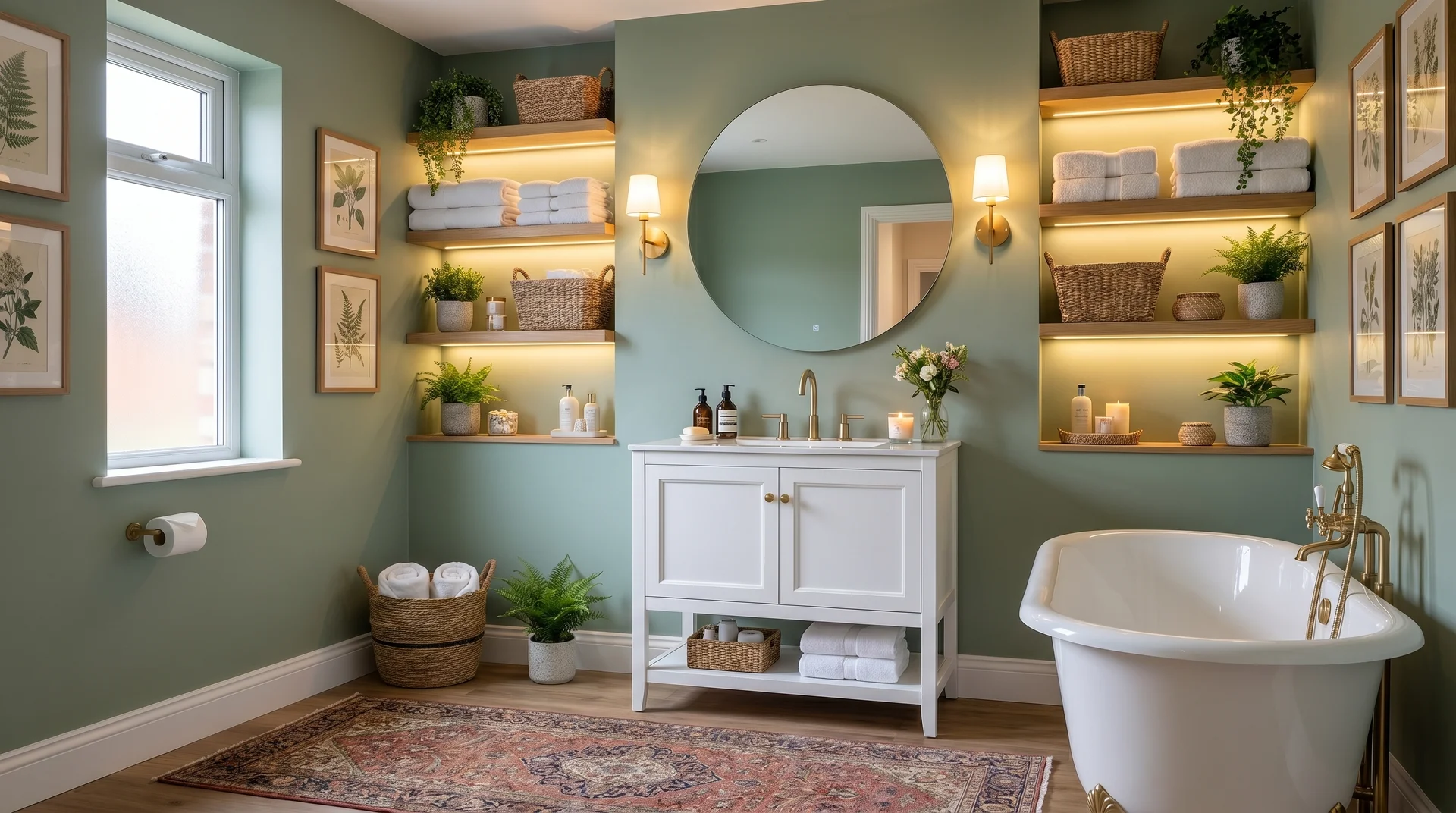
Bathroom vanity cabinets use a different standard from kitchen cabinets. The standard depth for a bathroom vanity is 21 inches for the cabinet box.
The 21-inch dimension is not guesswork. It is sized to house the P-trap, drain assembly, and supply lines behind the sink while keeping the vanity from projecting too far into the room.
A deeper vanity in a small bathroom immediately affects how much open floor space you have for movement, and that matters for both daily comfort and building code compliance.
With a standard countertop overhang of 1 to 1.5 inches, the finished depth from the wall to the front of the countertop is roughly 22 to 22.5 inches.
Different bathroom sizes call for different vanity depths:
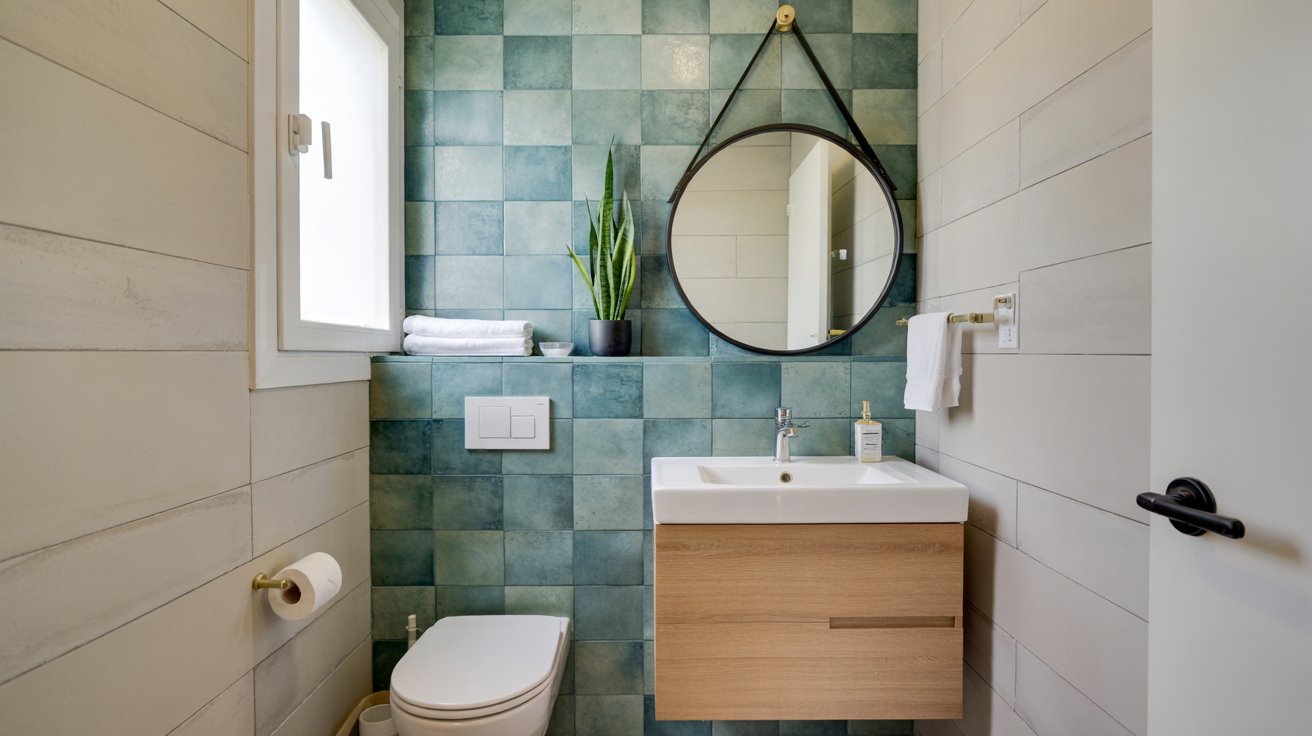
- Powder rooms and small bathrooms: 16 to 18-inch vanities work here because every inch of floor space matters. A shallow vanity also limits faucet type options and backsplash thickness, so factor that in early.
- Standard bathrooms: 21 inches is the right call for most layouts. It accommodates plumbing, gives you usable storage, and leaves comfortable clearance.
- Master bathrooms: 22 to 24-inch vanities are common here, where extra countertop space and storage justify the added depth.
- Wall-mounted floating vanities: These run 8 to 12 inches deep. Plumbing routes through the wall rather than the cabinet box, which allows a much shallower profile.
Per NKBA guidelines, you should leave at least 30 inches of open floor space in front of the vanity for comfortable use.
That clearance requirement is what limits vanity depth in most smaller bathrooms more than anything else.
Vanity Type | Standard Depth |
Standard bathroom vanity | 21 inches |
Powder room or small bathroom | 16 to 18 inches |
Master bathroom or large vanity | 22 to 24 inches |
Floating or wall-mounted vanity | 8 to 12 inches |
What the Depth Label Does Not Tell You?
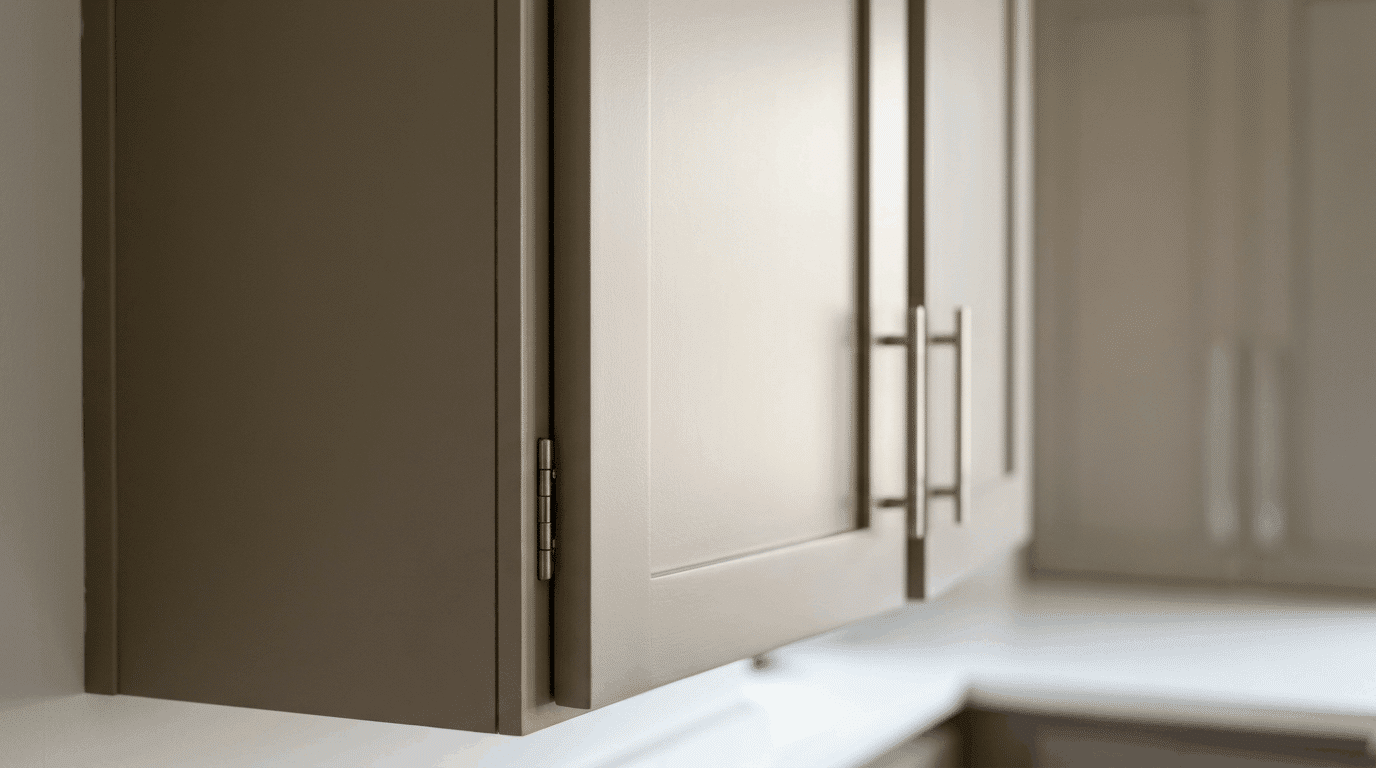
Cabinet depth on any spec sheet refers only to the box. Every installer knows this. Most homeowners find out after the fact.
Here is what the real-world footprint of a standard kitchen base cabinet looks like once everything is accounted for:
- Cabinet box: 24 inches
- Door thickness: add 0.75 to 1 inch
- Hardware pull: add 1 to 1.5 inches
- Total footprint before countertop: 26 to 26.5 inches
That two-inch difference is what matters when you are calculating aisle width.
The standard recommended aisle width in a kitchen is 42 inches for a single-cook kitchen and 48 inches for two people working at the same time.
If base cabinets face each other across a narrow kitchen, you need to use the real footprint of both runs, not the box depths, to find out whether the aisle actually works.
A kitchen with 24-inch cabinets on both sides and a total width of 90 inches sounds fine on paper. The usable aisle is actually closer to 37 inches once the doors and pulls are in place.
That is too narrow.
A reliable rule: add 2 to 2.5 inches to any base cabinet box depth when calculating clearance. Use that number for aisle planning, not the spec sheet depth.
How to Measure Cabinet Depth
Cabinet depth is measured from the front edge of the face frame (or the front edge of the box on frameless cabinets) straight back to the rear panel. Do not include the door, the hardware, or the countertop overhang in this measurement.
If you are measuring existing cabinets, open the door and measure from the inside front edge of the cabinet box to the back wall of the box.
The face frame on framed cabinets typically adds 0.75 inches to that number. On frameless cabinets, the box edge is the front reference point.
When measuring the space for new cabinets, measure from the finished wall surface to the point where you want the front of the cabinet box to land. Then add 2 to 2.5 inches for the door and hardware to get your real-world clearance number.
ADA and Accessibility Considerations for Cabinet Depth
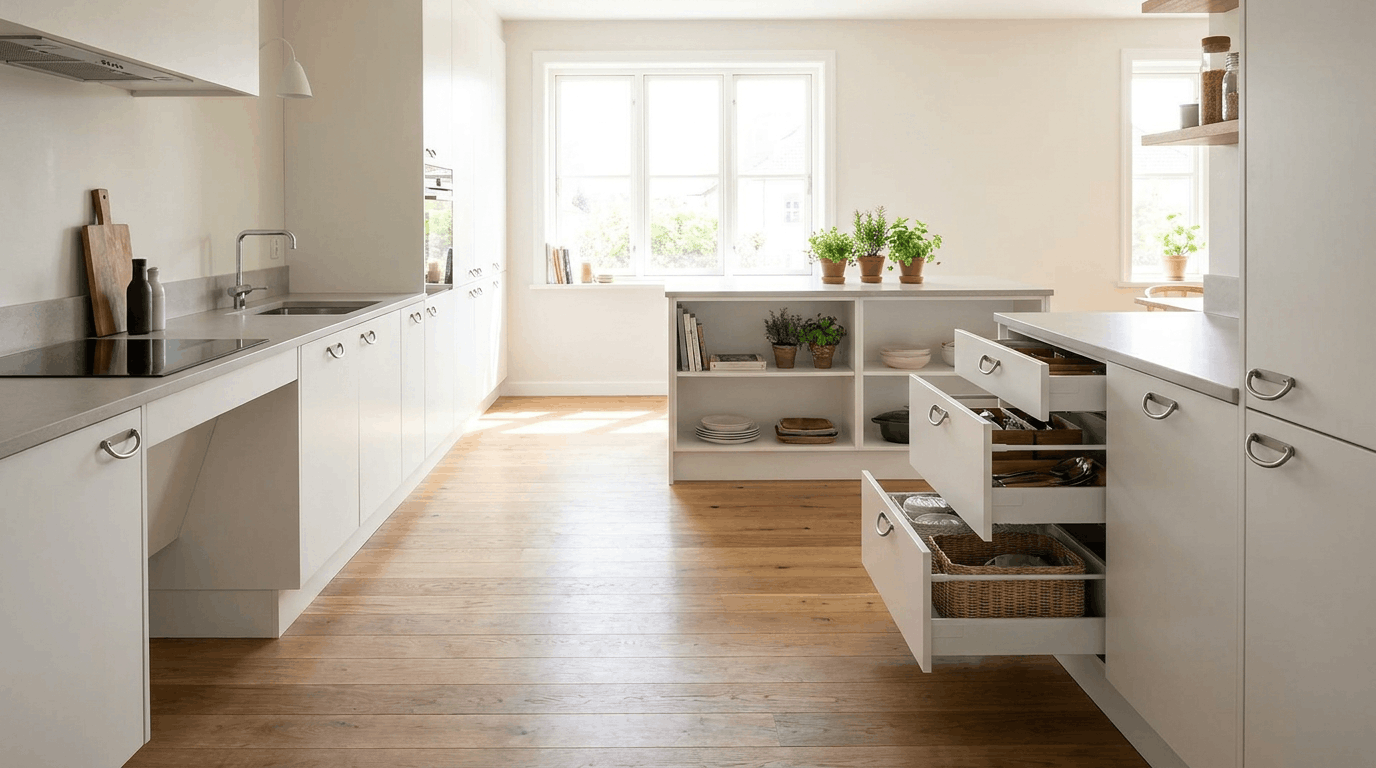
Standard cabinet depths work for most people.
They were not designed with wheelchair users or people with limited reach in mind, and the differences matter if you are planning for accessibility or aging in place.
Standard base cabinets have a toe kick that is 4 inches tall and 3.5 inches deep. ADA guidelines recommend a taller and deeper toe kick: 9 inches high and 6 inches deep.
This allows wheelchair footrests to pass under the cabinet so the user can get closer to the counter without reaching at an awkward angle.
The standard 24-inch base cabinet depth stays the same under ADA guidelines. What changes are the toe kick and the counter height, not the cabinet box itself.
For wall cabinets, lowering the bottom of the cabinet from the standard 18-inch clearance to 15 inches makes the 12-inch depth more accessible.
Pull-down shelf systems inside standard-depth wall cabinets are another option that maintains the cabinet depth while improving reach.
Base cabinets with pull-out drawers work significantly better for accessible kitchens than hinged-door base cabinets. A 24-inch drawer brings the contents forward to the user rather than requiring them to crouch and reach into the back of a dark cabinet.
How Do Standard Cabinet Depth Options Differ?
Not all cabinets offer the same depth flexibility.
Here is how the 3 categories compare before you commit to an order:
Feature | Stock | Semi-custom | Custom |
Base cabinet depth | 24 inches fixed | 24 inches, adjustable in 3-inch increments | Any depth |
Wall cabinet depth | 12 inches fixed | 12 inches, adjustable in 3-inch increments | Any depth |
Depth modification | None | Limited | Full |
Lead time | Shortest | Moderate | Longest |
Cost | Lowest | Mid-range | Highest |
Best for | Standard layouts | Minor clearance issues | Unusual appliance sizes and non-standard footprints |
The practical depth gap between stock and semi-custom is often only 3 to 6 inches.
For a narrow galley kitchen, those inches matter. For an open layout with no clearance constraints, the price jump to semi-custom rarely pays off.
Start with stock, move up only when the layout genuinely demands it.
Conclusion
Standard cabinet depth comes down to a handful of numbers worth committing to memory.
Base cabinets and tall pantry cabinets are 24 inches. Wall cabinets are 12 inches. Bathroom vanities are 21 inches in most bathrooms, and shallower in powder rooms.
What makes those numbers useful is understanding what they do and do not include.
The spec sheet depth is the box. The door, hardware, and countertop overhang add inches before you have the real footprint.
Plan from the real number, and your layout will work. Plan from the box depth alone, and something will not fit.
Get the depths right before you order, and the rest of the planning falls into place much more smoothly.
Have a question about a specific layout or an appliance clearance situation? Drop it in the comments, and we will work through it.
Frequently Asked Questions
Does Cabinet Depth Include the Door?
No. Spec sheet depths refer only to the box. The door adds 0.75 to 1 inch, and hardware adds another 1 to 1.5 inches to the real footprint.
Can You Get Shallower Base Cabinets?
Yes. Semi-custom and custom cabinets can be built at 18 to 21 inches for tight spaces. Stock cabinets are fixed at 24 inches with no depth modification available.
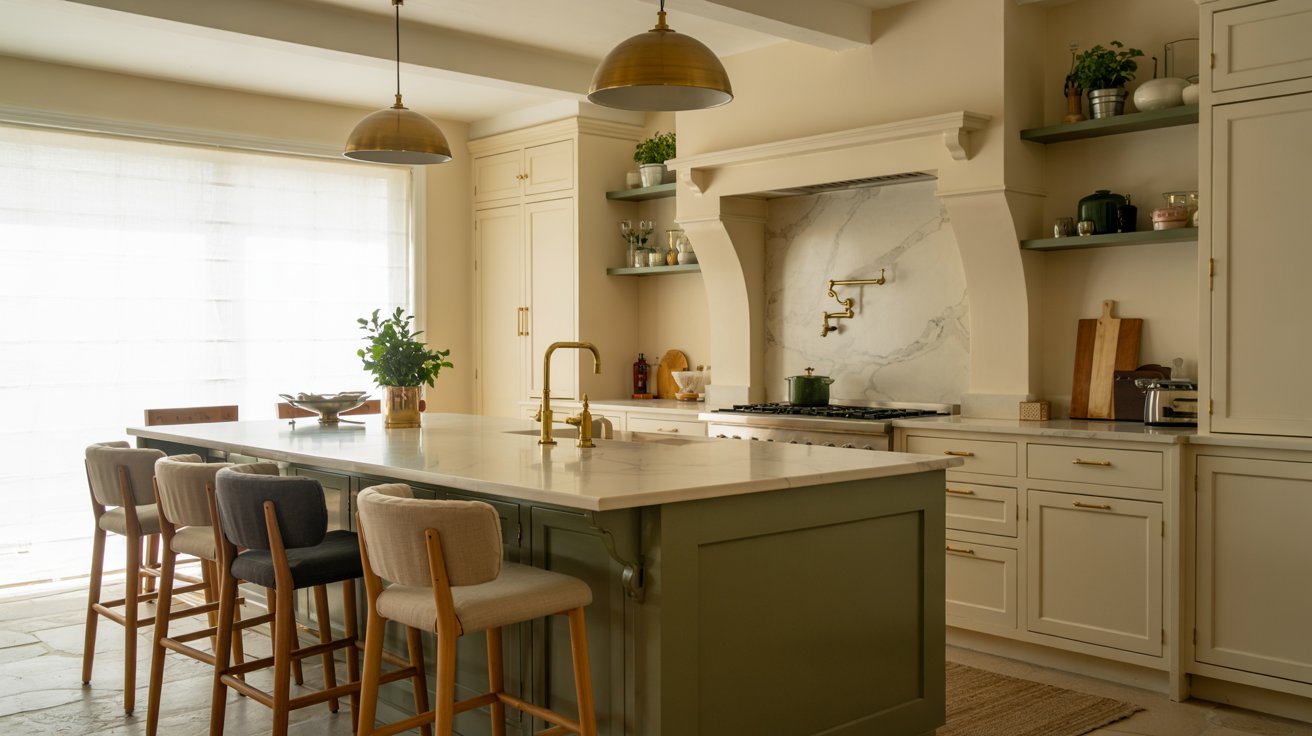
What Depth Should Kitchen Island Cabinets be?
Standard kitchen island cabinets are 24 inches deep on each side. Two-sided islands can reach 48 inches total across both sides.