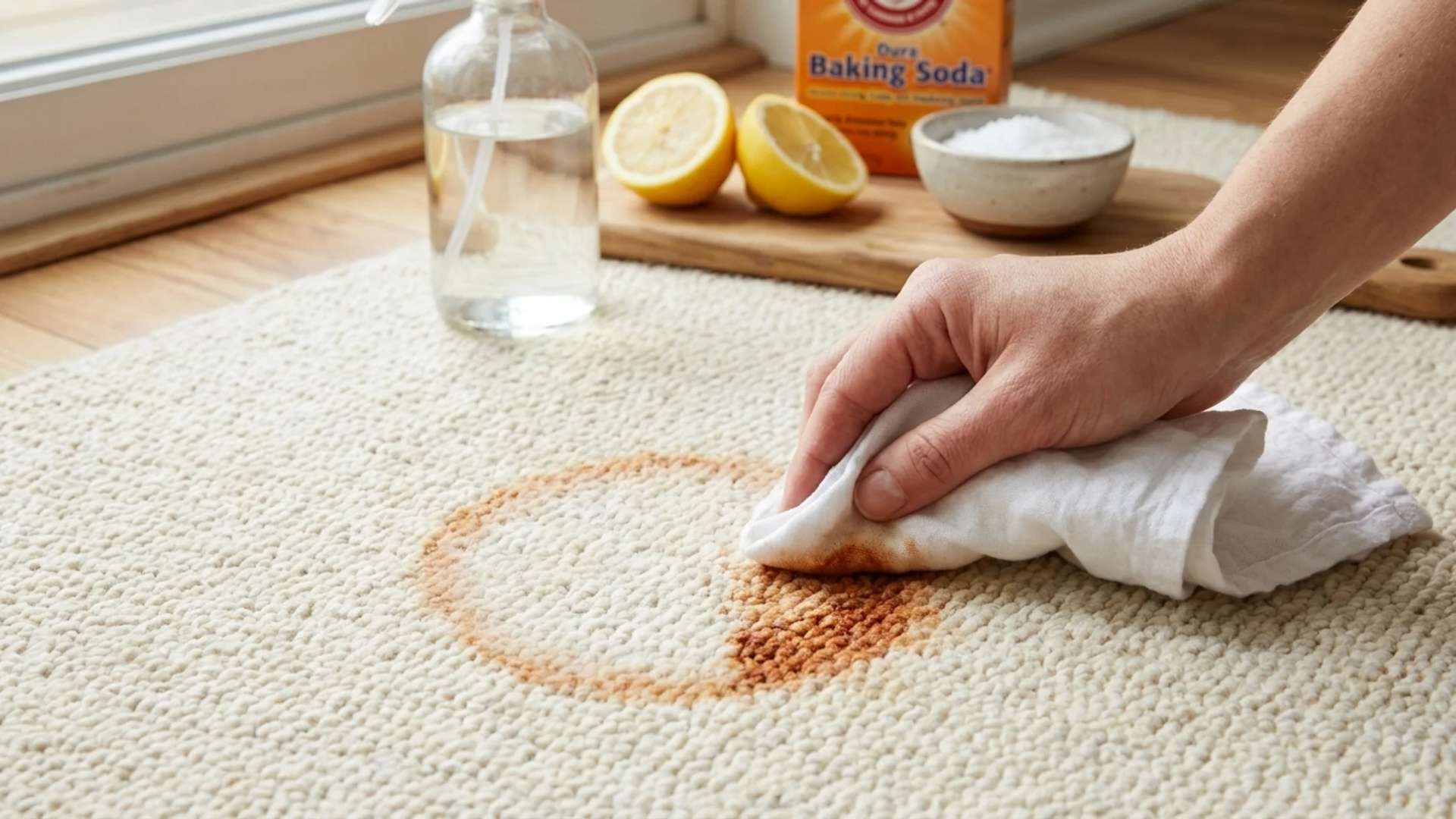
A rust stain on your carpet is one of those problems that makes you stop and stare. You grab your regular carpet cleaner, spray it, scrub it, and nothing happens.
The orange-brown mark sits there. That is because rust is not like other stains. It is iron oxide, and it bonds to carpet fibers in a way that soap and water cannot break.
But you do not need to call a professional right away or rip out the carpet. A few items from your kitchen can do the job.
This post covers tested methods to get rust out of carpet using things you probably already own.
What Causes Rust Stains on Carpet?
Rust forms when metal comes into contact with moisture and oxygen. It is a chemical reaction that forms iron oxide, the reddish-brown substance you see on old nails and metal furniture legs.
On carpet, rust stains usually come from a few common sources. Metal furniture legs sitting on damp carpet are one big culprit.
Wet cans, tools left on the floor, leaking pipes near carpeted rooms, and even old carpet tack strips can leave marks over time.
What makes rust tricky is its sticky quality. Once iron oxide particles land on your carpet fibers, they cling tightly. Standard carpet shampoo is not acidic enough to break that bond.
That is why you need an acid-based approach, which is exactly what the methods below use.
What You Need Before You Start
Gather your supplies before you begin working on the stain. Having everything ready saves time and prevents the stain from sitting longer.
Before you do anything else, remove the object that caused the rust. If a metal table leg or plant stand is still sitting on the carpet, move it to a hard surface or place a protective pad underneath. Leaving it in place will only add to the stain while you work on cleaning it.
Here is your quick checklist:
- Clean white cloths or white paper towels (colored cloths can bleed dye onto wet carpet)
- A butter knife or plastic scraper
- Vacuum cleaner
- Spray bottle
- White vinegar
- Fresh lemons or bottled lemon juice
- Baking soda
- Table salt
- Dish soap (Dawn or similar, no bleach, no lanolin)
- 3% hydrogen peroxide (for light carpets only)
- Household ammonia
- Rubber gloves
One more thing. Always spot test any cleaning solution on a hidden area of your carpet first. Even mild, natural cleaners can change the color of certain dyes. Wait for the test spot to dry before you move on.
How to Get Rust Out of Carpet: 7 DIY Methods
Each method below uses a different household ingredient. Pick the one that matches your stain type and carpet material, then follow the steps.
Method 1: White Vinegar and Salt Paste
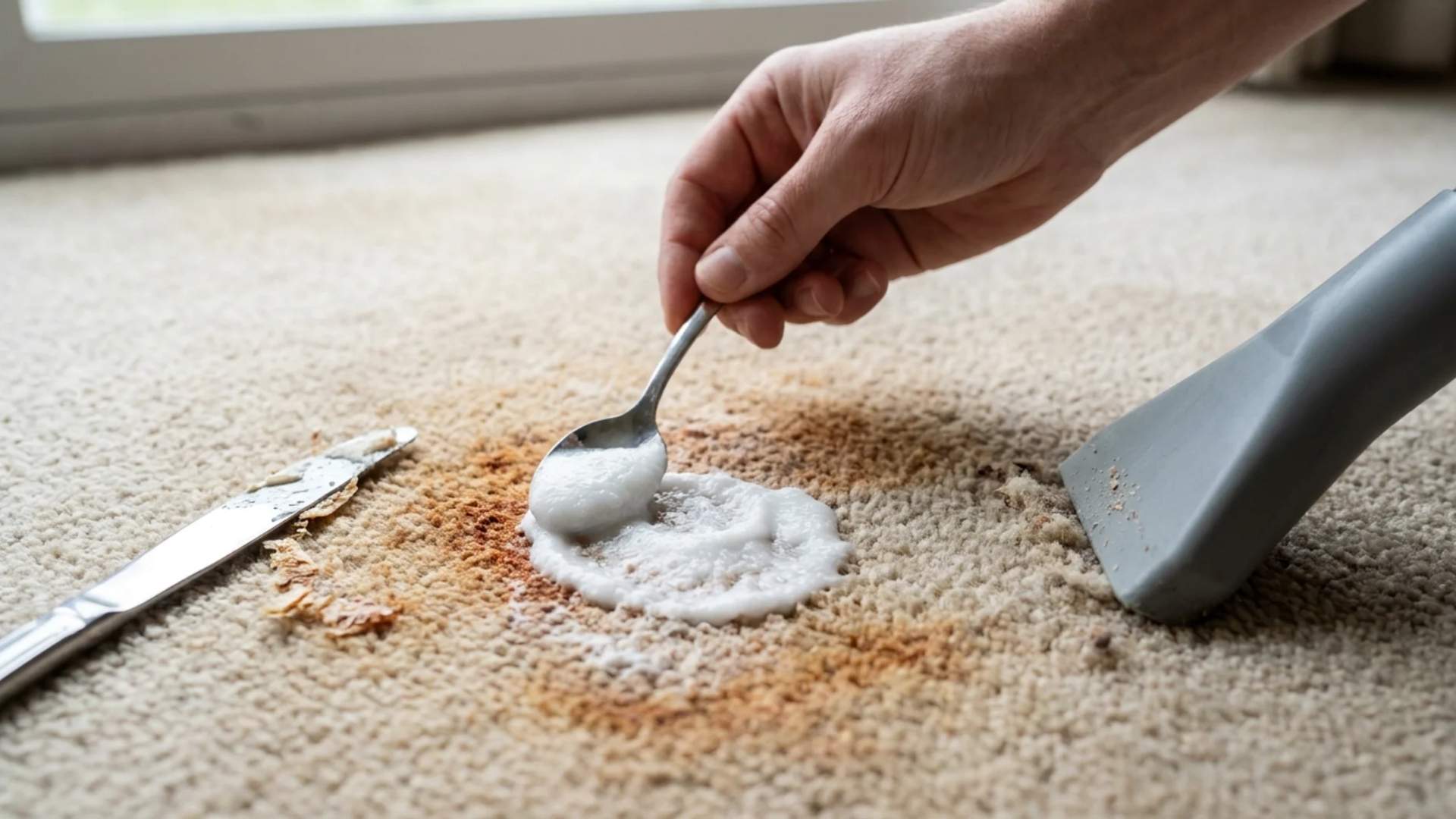
This is the most popular method, and for good reason. Mix white vinegar with table salt until you get a thick paste. Spread it directly over the rust stain.
Let it dry completely. Once dry, scrape it off with a butter knife and vacuum the area. The vinegar breaks down the iron oxide while the salt provides a gentle scrubbing action. Repeat if needed.
Works best for: Small to medium stains on synthetic carpets.
Method 2: Lemon Juice and Salt
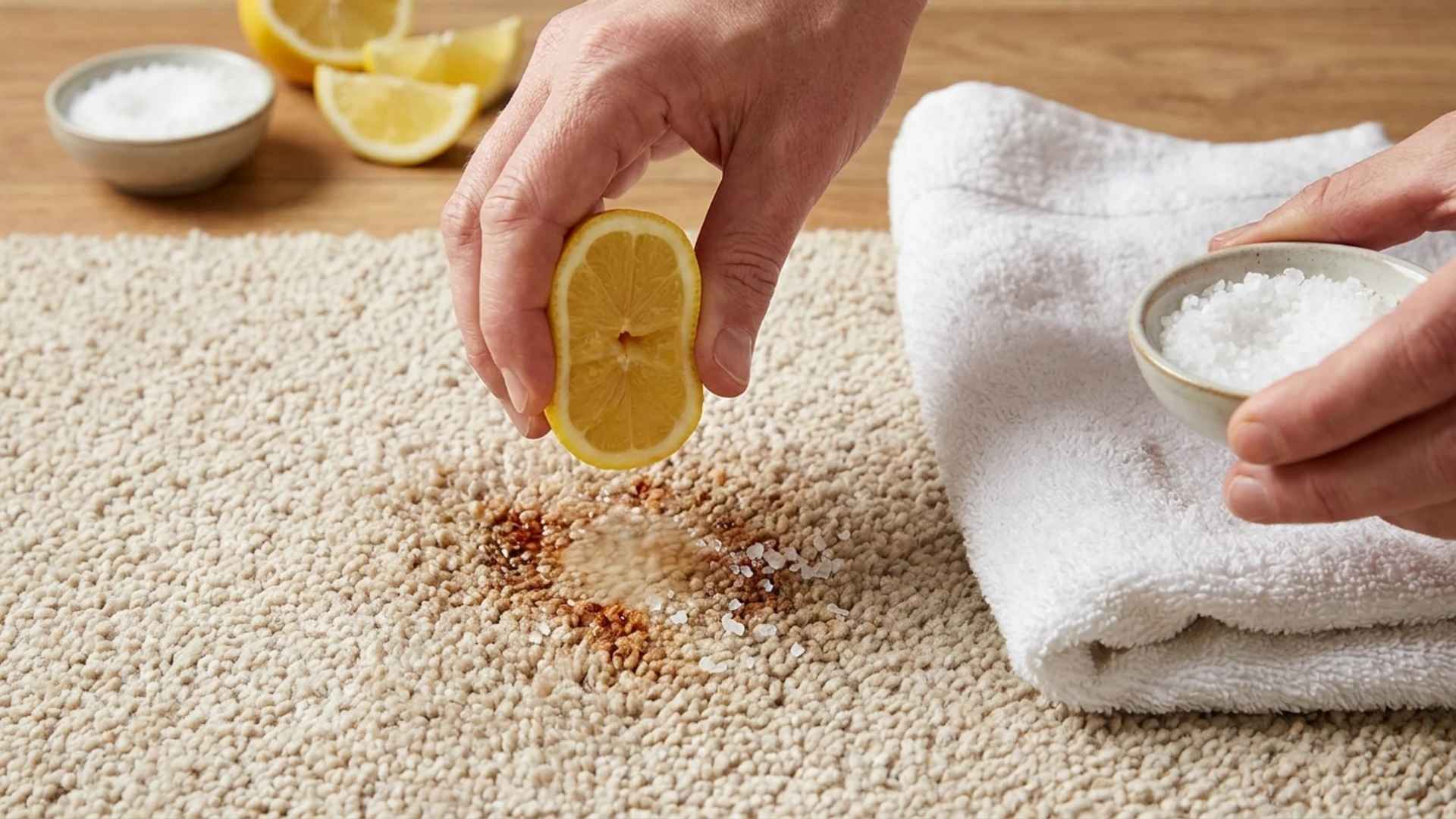
Squeeze fresh lemon juice onto the stain and sprinkle a generous amount of salt over it. Let this sit for about 30 minutes.
Then blot the area with a clean, damp cloth. Rinse with cold water and let it air dry. The citric acid in lemon juice breaks apart the rust particles.
Works best for: Fresh stains and light colored carpets. Lemon also helps brighten dull spots naturally.
Method 3: Baking Soda and Vinegar
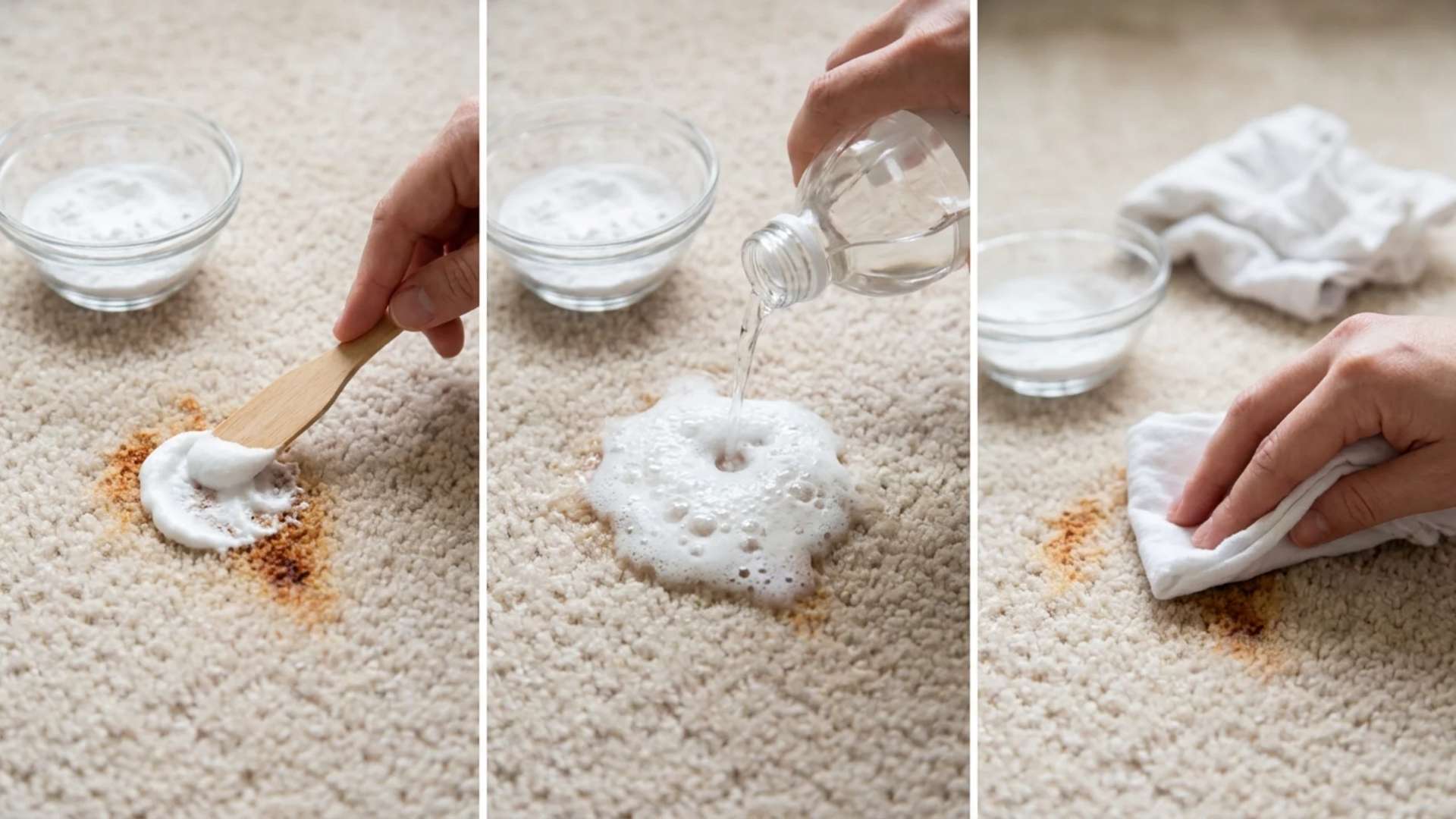
Mix baking soda with a few drops of water to make a paste. Apply it to the stain. Then pour a small amount of white vinegar over the paste. You will see it fizz.
That reaction is breaking down the rust. Let it work for 15 to 20 minutes. Blot with a clean cloth and rinse with cold water.
Works best for: Older or stubborn stains that did not respond to a single treatment.
Method 4: Dish Soap
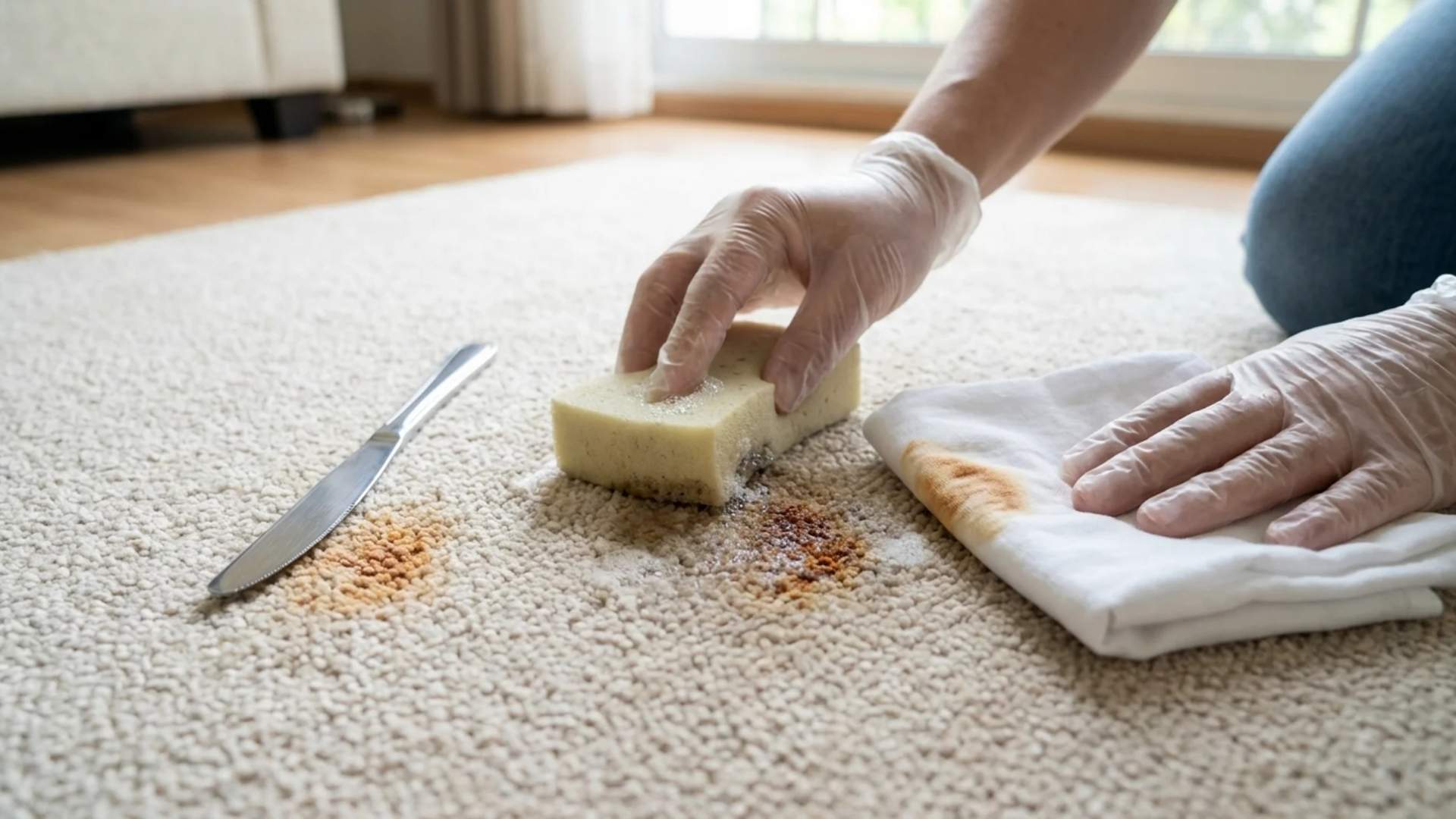
Start by gently scraping any loose rust off the surface with a butter knife. Be careful not to pull or tear the carpet fibers.
Put a drop of dish soap on a damp sponge and blot it onto the stain. Let it soak for about 5 minutes. Then press a white cloth into the stain repeatedly. You should see the rust transfer onto the cloth.
Works best for: Fresh, surface-level rust marks where the stain has not set deep.
Method 5: Hydrogen Peroxide (Light Carpets Only)
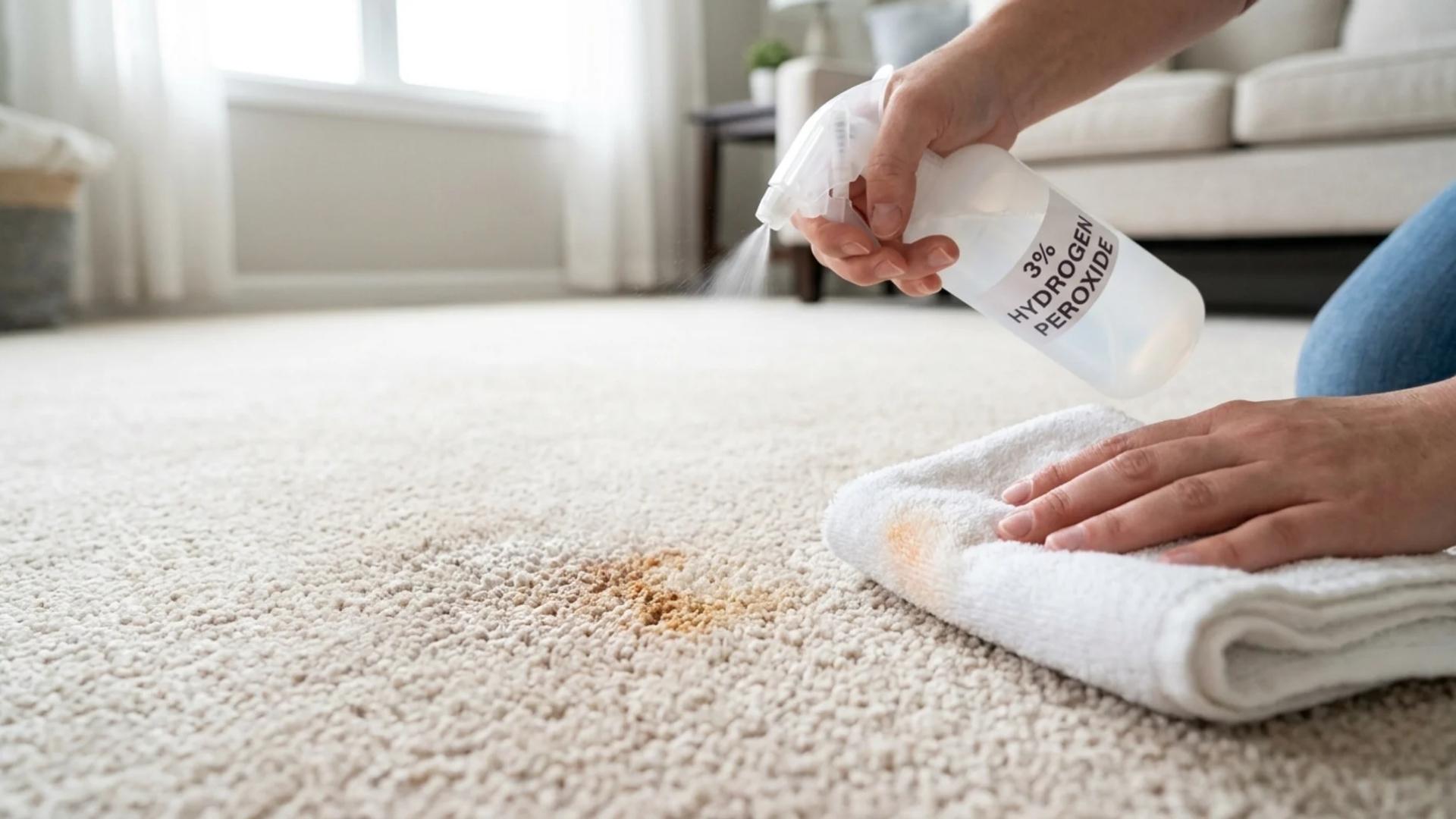
Pour 3% hydrogen peroxide into a spray bottle and spray it directly on the rust stain. Let it sit for about one hour. Blot with a clean cloth and repeat until the stain lifts. This method works well on white, cream, or beige carpets.
Use with caution: Hydrogen peroxide can lighten darker carpet colors. Always spot test first.
Method 6: Ammonia and Water
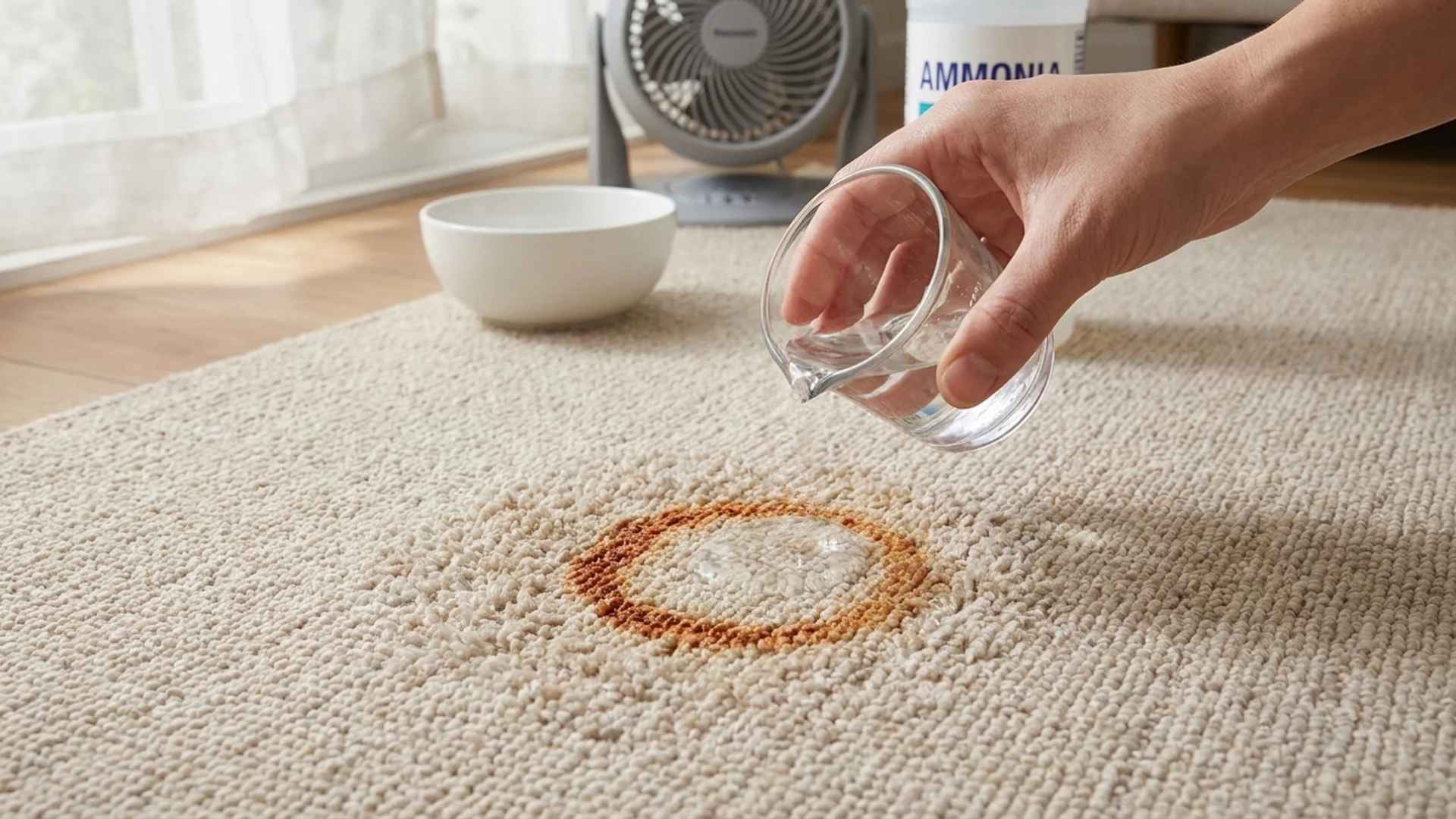
Mix 2 cups of warm water with 1 tablespoon of household ammonia. Pour this directly onto the stain and let it sit for 5 minutes—Blot with a clean white cloth.
Make sure you have good air flow in the room when you use ammonia. Open a window or turn on a fan. Never mix ammonia with bleach.
Works best for: Stains that vinegar or lemon could not fully remove.
Method 7: The Triple Mix (Vinegar + Lemon Juice + Salt)
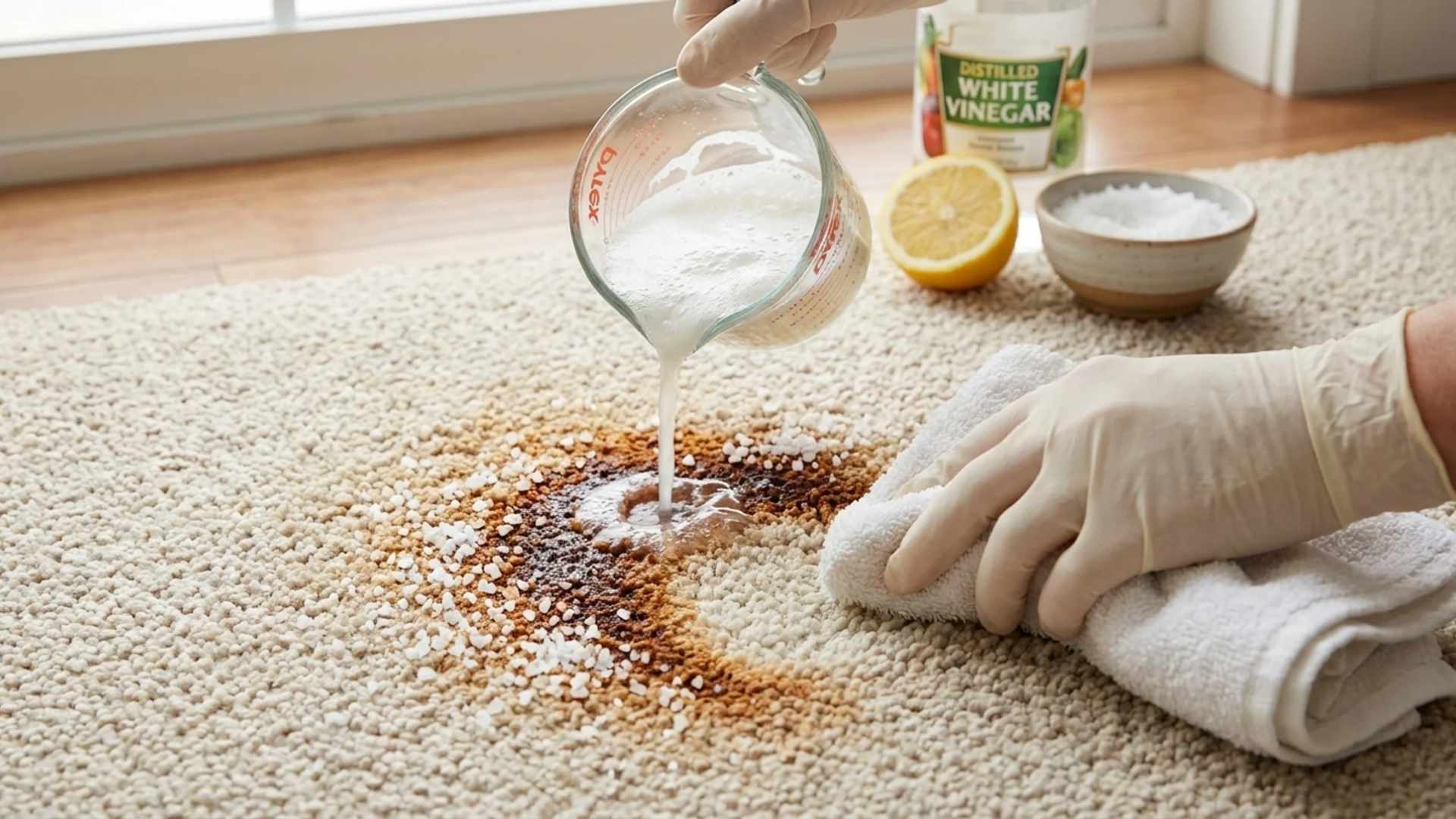
When nothing else works, combine all three. Mix white vinegar, lemon juice, and salt. Pour the mixture directly onto the stain until the area is fully soaked.
Let it sit for 2 hours. Then blot with a damp towel. The double acid action, paired with salt, gives this method serious cleaning power.
Works best for: Deep-set stains or long-standing marks on the carpet.
When to Use a Commercial Rust Remover
If you have tried multiple DIY methods and the stain is still visible, a store-bought rust remover made for carpets may be your next step.
Products containing oxalic acid are the most common choice for carpet-safe rust removal. You can find them at most hardware stores and large retailers.
When using a commercial product, read the label before you apply it. Some formulas are not safe for wool or natural fiber rugs.
Apply sparingly, blot rather than scrub, and rinse the area thoroughly with cold water once the stain lifts. Leftover residue from these products can attract dirt or leave a rough texture on the carpet if not rinsed out completely.
Rust Stain Removal by Carpet Type
Not all carpets react the same way to cleaning solutions. Here is a quick breakdown:
- Synthetic (Nylon, Polyester): These are the most forgiving. You can safely use vinegar, lemon, baking soda, and most DIY methods listed above.
- Wool: Wool is sensitive to acid. Use cold water and a wool-safe detergent first. If you try lemon juice, dilute it with water (1 part lemon juice to 3 parts water). Avoid heavy scrubbing.
- Silk or Blended Rugs: Skip the DIY route. Acidic solutions can permanently damage silk fibers. Call a professional for these.
- Berber or Loop Pile: Be gentle when scraping loose rust. A butter knife can catch and pull loops if you press too hard.
Common Mistakes to Avoid
You can make a rust stain worse by using the wrong approach. Here are the biggest mistakes people make when trying to remove rust stains from carpet:
1. Using bleach: Chlorine bleach does not remove rust. It actually sets the stain permanently into the fibers. Avoid it completely.
2. Rubbing the stain: Rubbing pushes the rust deeper and spreads it outward. Always blot instead.
3. Using hot water on synthetic carpet: Heat can lock the stain into synthetic fibers. Stick with cold or lukewarm water.
4. Skipping the spot test: Even vinegar can change the color of certain carpet dyes. Test first every time.
5. Over-wetting the carpet: Too much liquid soaks through to the padding below. That can cause mold and a musty smell. Use only enough to cover the stain.
How to Prevent Rust Stains on Carpet
Once you have dealt with a rust stain, the last thing you want is another one. A few small changes can keep your carpets rust-free going forward.
Place plastic or felt pads under all metal furniture legs, especially in rooms with any moisture exposure. Check the feet of chairs, tables, bed frames, and floor lamps.
If the metal furniture already shows signs of corrosion, sand off the rust and apply a coat of clear sealant to the base before setting it back on the carpet.
Keep metal cans, tools, and gardening equipment off carpeted floors. If you store anything metal near carpet, set it on a tray or mat. In rooms with high humidity or near plumbing, run a dehumidifier or fix any slow leaks before they create new stains.
Old carpet tack strips near baseboards can also rust over time, so keep an eye on those areas during your regular cleaning routine.
Rinse and Dry the Carpet After Every Treatment
Whichever method you use, always rinse the treated area with plain cold water after the stain is gone. Leftover cleaning residue, even from vinegar or lemon juice, can attract dirt and leave a sticky patch on your carpet over time.
After rinsing, press a thick dry towel into the spot to pull up as much moisture as possible. If you have a fan, point it at the area to speed up drying.
Do not walk on the damp section until it is fully dry. A wet carpet that stays damp for too long can develop mold underneath, creating a whole new problem.
Conclusion
Rust stains look permanent, but they rarely are. The key is to use the right acid-based method for your carpet type and act before the stain sets in deeper.
Start with the gentler options like vinegar and salt or lemon juice. Work your way up to stronger methods like ammonia or the triple mix only if needed.
And remember, blot the stain. Never rub it. If you have tried everything two or three times and the mark is still there, a professional cleaner can take it from here.
Have a rust removal trick that worked for you? Drop it in the comments and help someone else out.
Frequently Asked Questions
Does Vinegar Really Remove Rust?
Yes, vinegar really does remove rust. Thanks to its natural acetic acid, it breaks down the chemical structure of the rust so that it can easily flake or wipe off.
Does Dawn Dish Soap Remove Rust Stains?
Dawn dish soap alone cannot chemically dissolve or remove rust, as it lacks the acidic or reactive properties needed to break down oxidized metal.
What Is the Best Homemade Rust Remover?
The most effective homemade rust remover is a solution of citric acid and washing soda.