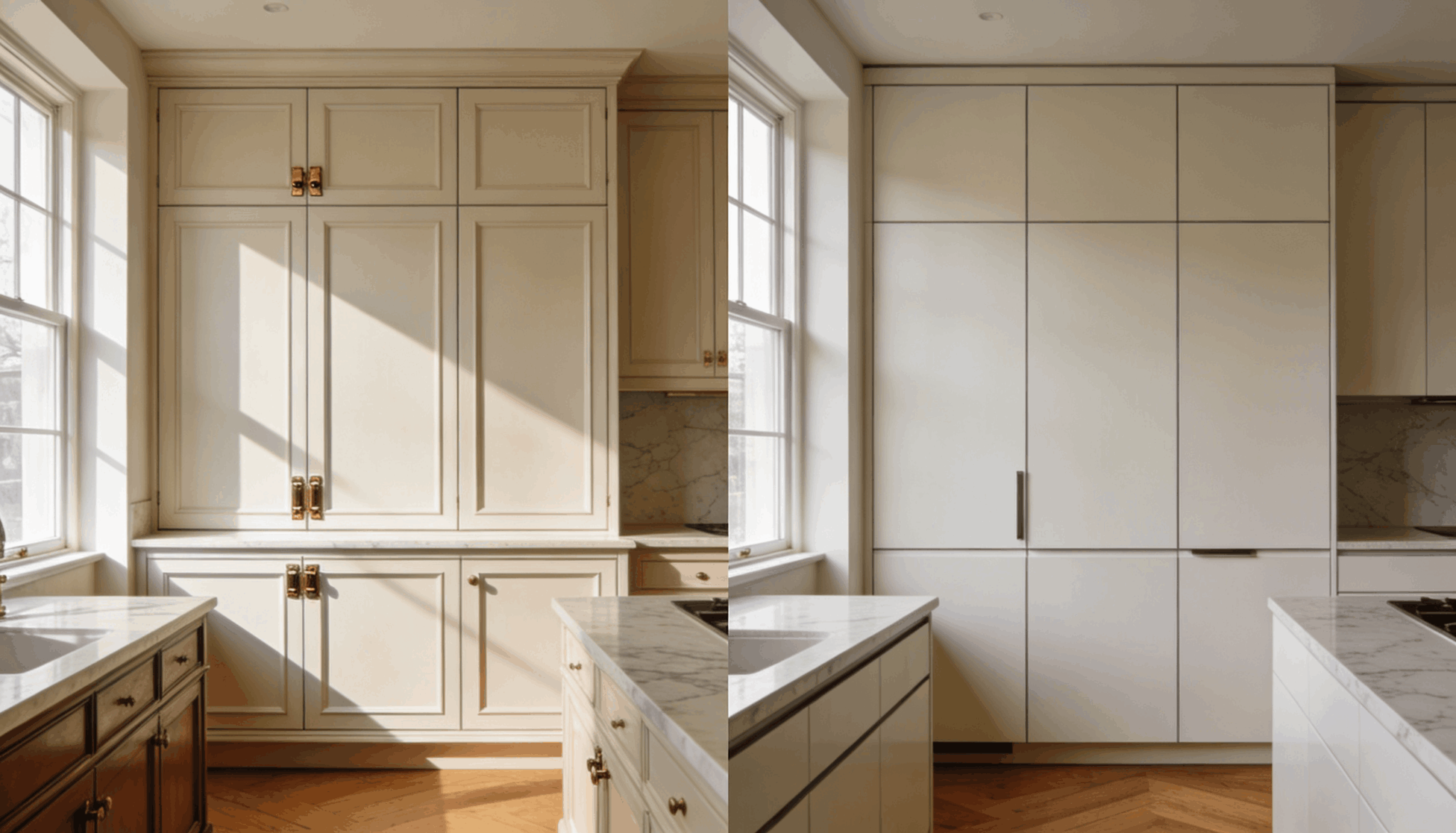
Walk into a kitchen with inset cabinets and something feels different.
The doors sit flush with the frame. The entire run appears as a single continuous surface rather than a collection of boxes.
It is hard to put your finger on why it reads as more considered. But it does.
That feeling has a name and a cost. Inset vs. overlay cabinets is one of the most consequential decisions in a kitchen renovation, and it is also one of the most glossed-over.
This post covers every comparison dimension you need: what each style is, what it costs, which one fits which kitchen, and a clear framework for making the final call.
What Are Inset Cabinets?
Inset cabinets have doors and drawer fronts that sit inside the cabinet face frame rather than on top of it.
When the door closes, the surface is flat across the entire door, with the door face and frame face at the same depth, and a tight reveal of roughly 1/8 inch around the edge.
That 1/8-inch gap is the whole point of the inset cabinets. Everything must align precisely. This is why inset construction costs more: every door is fitted individually, by hand, with no margin for error.
The technique dates back to pre-industrial cabinet making.
This is where the “furniture-like” description comes from. Inset is literally a furniture-making technique applied to fixed cabinetry.
Styles available: Shaker, raised panel, mission, and beaded inset.
Before you decide, here is what inset cabinets get right and where they fall short:
| Pros | Cons |
|---|---|
| Flat, flush appearance across the entire cabinet run | 15 to 50% more expensive than the overlay |
| Reads as custom and furniture-grade | Every door is fitted individually, with longer lead times |
| Works across traditional, transitional, and historic styles | Slightly less interior storage due to the frame |
| Strong resale value signal in premium markets | Humidity can cause doors to rub or stick seasonally |
| Exposed or concealed hinge options add design flexibility | Requires high-precision installation, less forgiving of box variation |
What Are Overlay Cabinets?
Overlay cabinets are the most common cabinet construction in the United States.
The doors and drawer fronts sit on top of the face frame rather than inside it. Because the door mounts on the outside of the frame, overlay construction is easier to install and significantly less expensive than an inset.
Hinges have more room to adjust. Cabinet boxes can vary slightly in dimension without the variation becoming visible. That manufacturing flexibility is the main reason overlay cabinets cost less and arrive faster.
How much of the frame the door covers determines which overlay type you have.
- Full overlay: Doors cover nearly the entire face frame, leaving only a small gap between adjacent doors. The most popular cabinet style in the US. Requires concealed hinges and hardware to open.
- Partial overlay: Doors cover about half the face frame, leaving a visible strip between each door. This is builder-grade territory, common in homes from the 1980s to early 2000s, and it reads that way.
- Frameless: Worth a brief mention because it gets confused with full overlay. In frameless construction, there is no face frame. Doors mount directly to the cabinet box. Maximum interior access, fully flush look.
Before you decide, here is what overlay cabinets get right and where they fall short:
| Pros | Cons |
|---|---|
| Most affordable cabinet construction | Frame visible between doors on partial overlay |
| Easier and faster to install | Does not read as custom or premium |
| Maximum interior storage access | Partial overlay looks dated in most new work |
| Lower humidity sensitivity, doors rarely stick or rub | Frameless can feel cold or clinical in traditional spaces |
| Wide range of styles and finishes available | Full overlay concealed hinges limit some hardware choices |
Key Differences Between Inset vs Overlay Cabinets
| Metric | Inset | Overlay |
|---|---|---|
| Door position | Inside the frame | On top of the frame |
| Surface appearance | Flat, flush | Clean, minimal gap |
| Cost | 15 to 50% more than the overlay | Standard |
| Interior storage | Slightly less | Maximum |
| Installation | High precision required | Moderate |
| Humidity sensitivity | Higher | Lower |
| Maintenance | Occasional hinge adjustment | Minimal |
| Best design fit | Traditional, transitional, historic | Modern, transitional, contemporary |
| Hinge type | Concealed or exposed | Concealed |
| Resale value signal | Premium, custom | Broad appeal |
Inset vs Overlay Cabinet Cost Breakdown
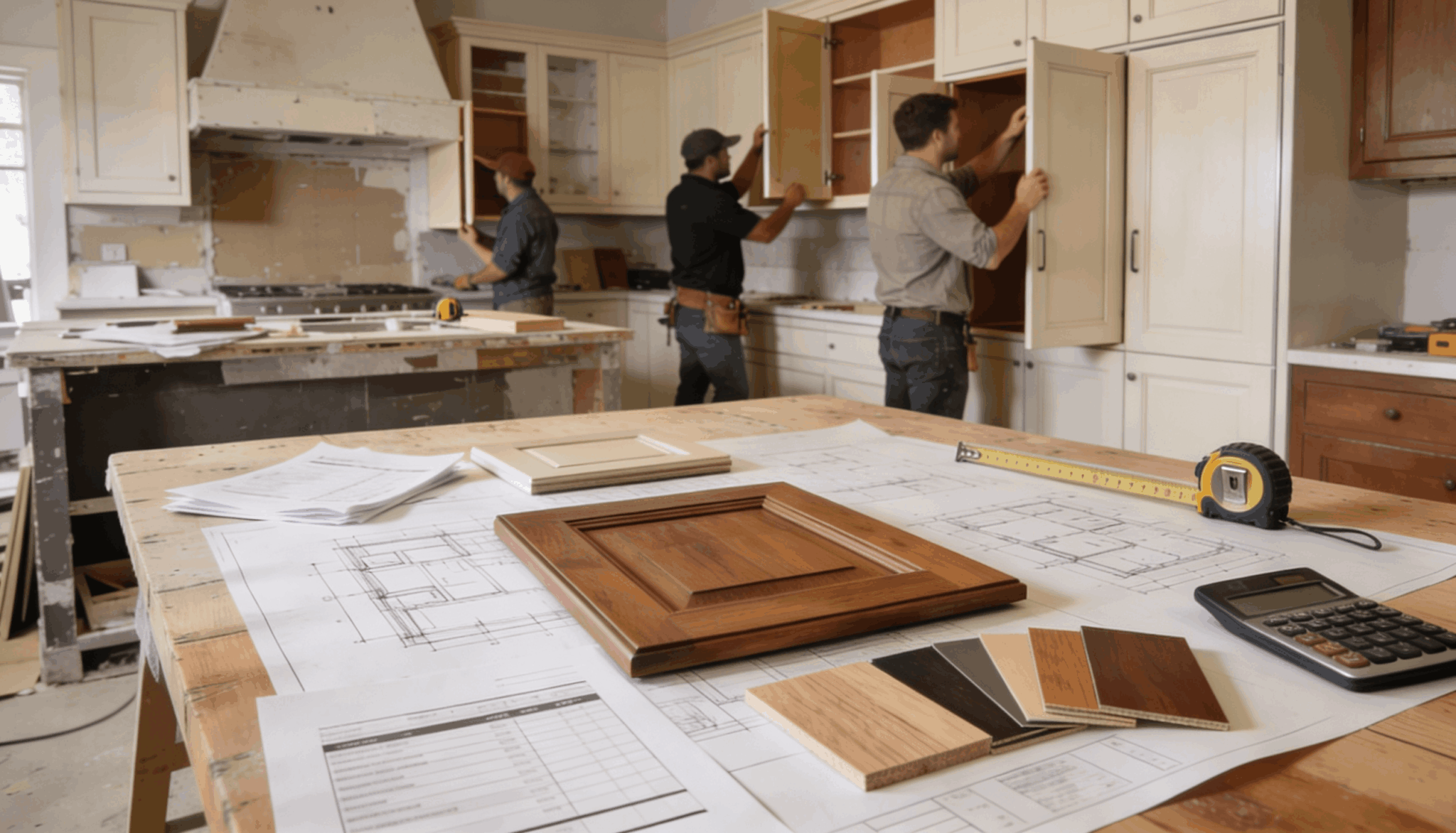
Inset cabinets cost 15–50% more than overlay cabinets. The range is wide because it depends on the cabinet brand, construction quality, and installation complexity.
Why does an inset cost more to install? Every door is fitted individually to its specific opening, with tighter tolerances, more skilled labor, and a more time-intensive installation.
There are no batch production shortcuts, the way there are with overlay.
Real dollar ranges per linear foot, installed:
- Partial overlay: $100–$300 stock; $400–$700 semi-custom
- Full overlay: $150–$400 stock; $500–$900 semi-custom
- Inset: $400–$600 semi-custom entry level; $1,200+ custom
For a standard 20-linear-foot kitchen, switching from semi-custom full overlay to semi-custom inset can add $4,000–$12,000 to the cabinet budget.
That is before the longer installation time. Not a reason to avoid the inset. A reason to know what you are deciding.
Which Is Easier to Maintain Between Inset and Overlay Cabinets
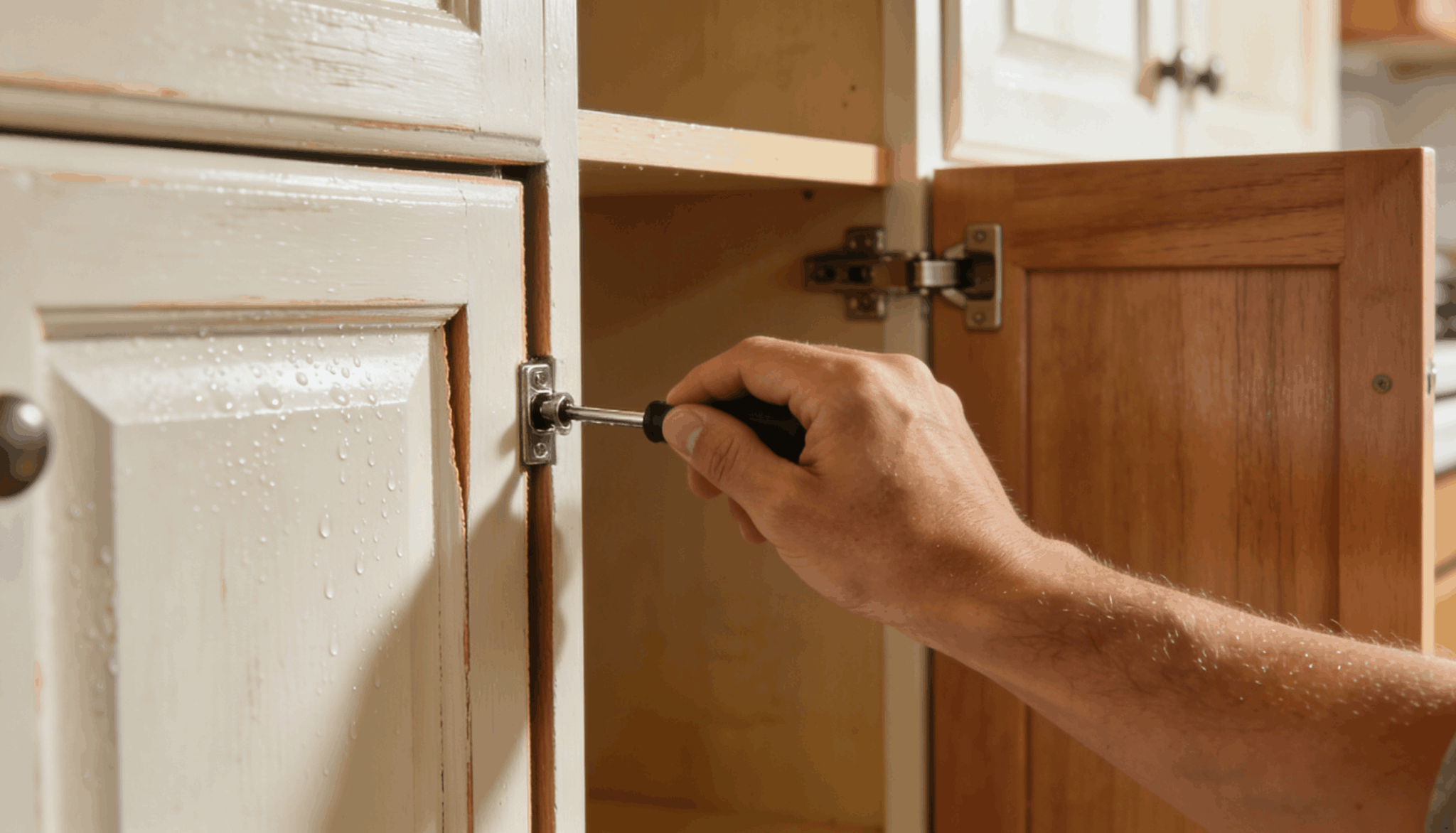
Overlay cabinets are easier to maintain.
Wood expands and contracts with the seasons. In inset construction, each door sits inside the frame with roughly 1/8-inch clearance on all sides.
That gap is tight enough that summer humidity can cause doors to rub or stick against the frame.
The fix is simple: a hinge adjustment, a few minutes with a screwdriver. But it is a recurring task that overlay cabinets never ask of you.
How often this happens depends on where you live and how your kitchen is ventilated.
In high-humidity climates such as the Pacific Northwest and coastal areas, seasonal movement is more pronounced. Kitchens near steam sources without good ventilation see it more often, too.
In moderate climates with decent air circulation, it is rarely a significant issue.
Overlay cabinets sidestep this entirely.
The door sits on top of the frame rather than inside it, so seasonal wood movement has no effect on the fit. The main upkeep task is cleaning grease buildup from door edges, which is straightforward with any degreaser.
If low maintenance is a priority, overlay is the cleaner choice. If you live in a dry or temperate climate and do not mind the occasional hinge tweak, the inset is manageable.
How to Match Your Cabinet Style to Your Kitchen
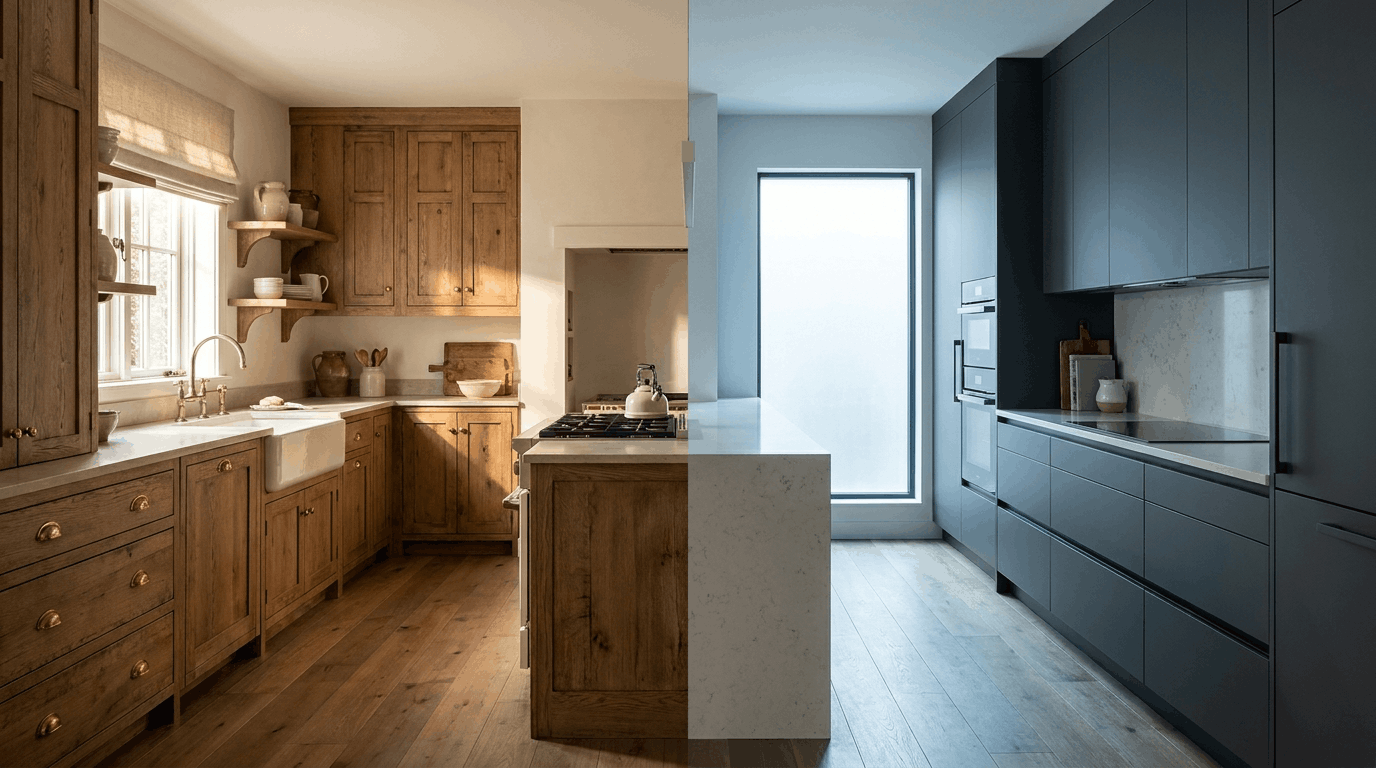
Inset looks most at home in traditional, farmhouse, and transitional kitchens where the furniture-like quality fits the space. Historic homes and high-end custom builds are its natural territory.
Full overlay works across more design directions. Contemporary and minimalist kitchens are where it belongs most naturally, but a well-specified full-overlay Shaker kitchen reads as considered across most price brackets.
Partial overlay is worth being honest about. That visible strip of frame between the doors is a period tell. It looks like the 1990s, regardless of when it was installed.
For new work, full overlay in stock cabinets almost always delivers more for the same or lower cost.
Hardware note: Both inset and full overlay require pulls or knobs. There is no exposed edge to grip. A partial overlay can be opened without hardware, since the visible frame provides a gripping edge.
How to Get the Inset Look Without the Inset Price Tag
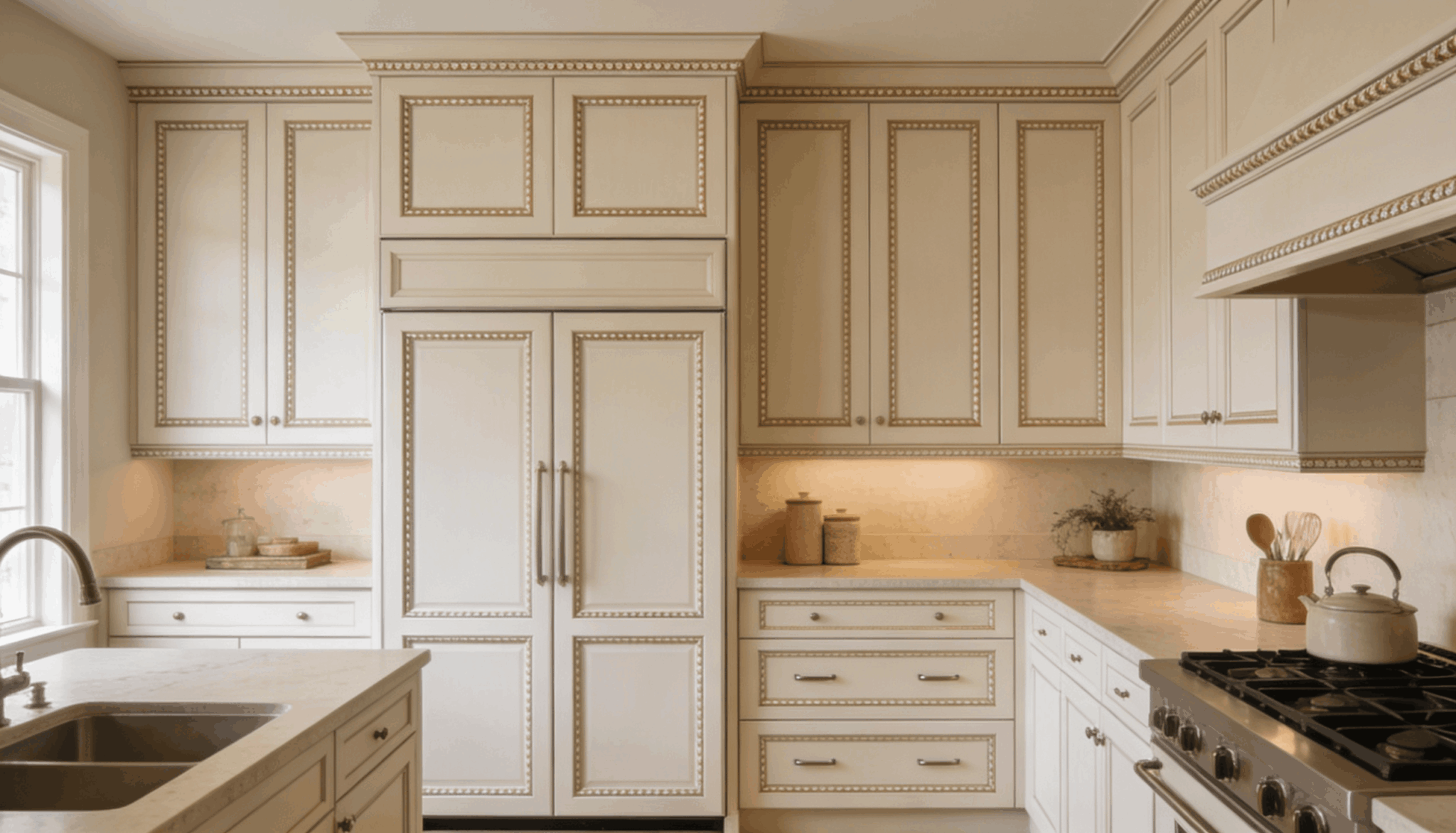
The in-frame effect is a design approach in which standard full-overlay cabinets are styled to visually suggest an inset.
The doors sit on the frame in overlay construction, but the face frame has a decorative shadow-line detail that mimics the look of an inset from a normal viewing distance.
Some versions use integrated beading. Others use a molded profile around the door opening.
Cost: similar to full overlay. No inset premium. No humidity maintenance concern because the door is not sitting inside the frame.
Trade-off: up close, it is not a true inset. The shadow line profile is different. A kitchen designer or a serious buyer who knows the difference will see it.
But in most homes, at most viewing distances, the effect is convincing enough that most people won’t notice.
Can You Mix Inset and Overlay in the Same Kitchen?
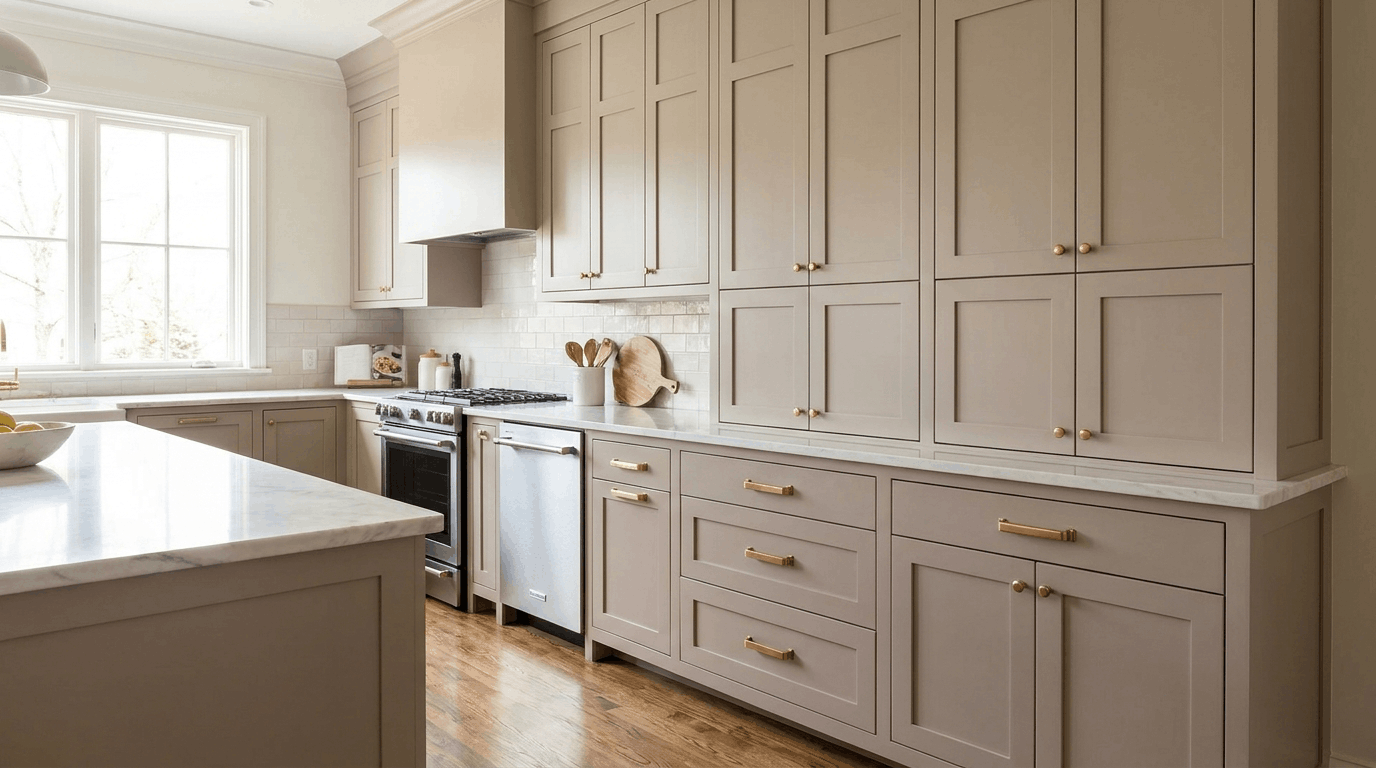
Yes. And more people do this than you might expect.
The most common version: inset upper cabinets and full-overlay lower cabinets. The uppers are the visual anchor.
They are at eye level, highly visible, and the first thing you read when you walk into the room. The lowers sit below the countertop line, partially obscured by appliances and the counter overhang.
They carry less visual weight.
Inset uppers deliver the look where it matters most. Full-overlay lowers provide maximum storage and easier maintenance in the zone where storage is most critical. And you cut the premium cabinet cost roughly in half.
For this to work:
- Same door profile on both. Shaker-on-shaker throughout, raised panel on raised panel. Mixing profiles is what looks wrong, not mixing construction types.
- Same finish and paint color throughout. The colors must match exactly, which means ordering from the same supplier in the same run.
- Same hardware throughout. One pull design, one finish, top and bottom. Visual continuity comes from the hardware as much as anything else.
Which Should You Choose?

Choose inset if: the budget allows it (add 20–35% to the cabinet line item), the home is traditional or historic, the climate is moderate, and this is a long-term renovation.
Choose full overlay if: budget is a real constraint, the kitchen is modern or transitional, storage and low maintenance matter, or the climate is high-humidity.
Consider the in-frame effect: if you want the inset look without the inset cost or maintenance.
Consider mixing if: the inset look matters, but the budget cannot cover it throughout. Inset uppers and overlay lowers are the most practical version.
Conclusion
Inset and overlay are not a better-or-worse comparison. They are a fit comparison.
Inset fits homes where craftsmanship is the brief, where the budget can absorb the premium, and where climate is not a constant humidity battle.
Overlay fits homes where storage matters most, where the design is modern, and where the money is better spent elsewhere.
The choice most people make is a partial overlay: specifying it because it is cheaper than a full overlay, without realizing how quickly it dates a kitchen.
In almost every case, a full overlay in stock cabinets is a better investment than a partial overlay in semi-custom.
Which way are you leaning, and what is making you hesitate? Drop a comment below.
Frequently Asked Questions
Can Inset Cabinets be Retrofitted Into an Existing Kitchen?
Rarely. Inset cabinets require precise frame dimensions from the start. Retrofitting existing boxes almost always means replacing the entire cabinet structure, not just the doors.
Do Inset Cabinets Affect how Appliances Fit?
No. Appliance fit depends on base cabinet depth and height, not door construction type. Inset or overlay, the box dimensions stay the same.
Is an Inset a Good Choice for A Rental Property or Investment Flip?
No. The cost premium does not return well in rentals or flips. Full overlay stock cabinets deliver a cleaner look at a fraction of the price.