Your kitchen cabinets take up more visual space than almost anything else in the room. So when the color feels off, the whole kitchen feels off. The good news? You do not need to rip out your cabinets to fix it.
Painting them costs a fraction of what replacement would, and the results can be just as striking.
Over the past decade, working with homeowners on kitchen redesigns, I have seen a fresh coat of paint do more for a kitchen than a full gut renovation.
This guide covers painted kitchen cabinet ideas, along with the finish types and hardware pairings that actually hold up in real life.
How to Pick the Right Color for Your Cabinets Before You Start
You might have jumped straight to color swatches. Skip that for a minute.
Your cabinet color affects every other material in the room. Countertops, backsplash, flooring, and hardware all follow from that one decision.
I have seen people pick a color they loved, only to realize it clashed badly with their existing countertops. Getting the order right matters.
Here is what to look at first:
- Your kitchen’s light source: North-facing kitchens with little natural light need lighter shades. Dark cabinet colors in those spaces can make the room feel heavy and closed in.
- The size of your kitchen: Light colors visually push walls back. Dark colors pull them in. Small kitchens generally do better with lighter paint.
- Your lifestyle: White cabinets look great in photos. In a busy family kitchen, they show every fingerprint and splash. Medium tones hide daily marks far better.
- Your existing materials: Start with your countertops and flooring. Let those guide the direction rather than fighting them.
Once you have those answers, picking a color becomes much easier.
13 Painted Kitchen Cabinet Ideas
Most kitchens need a refresh, not a renovation. The right paint color on your cabinets can do more than you expect.
1. Classic White Cabinets
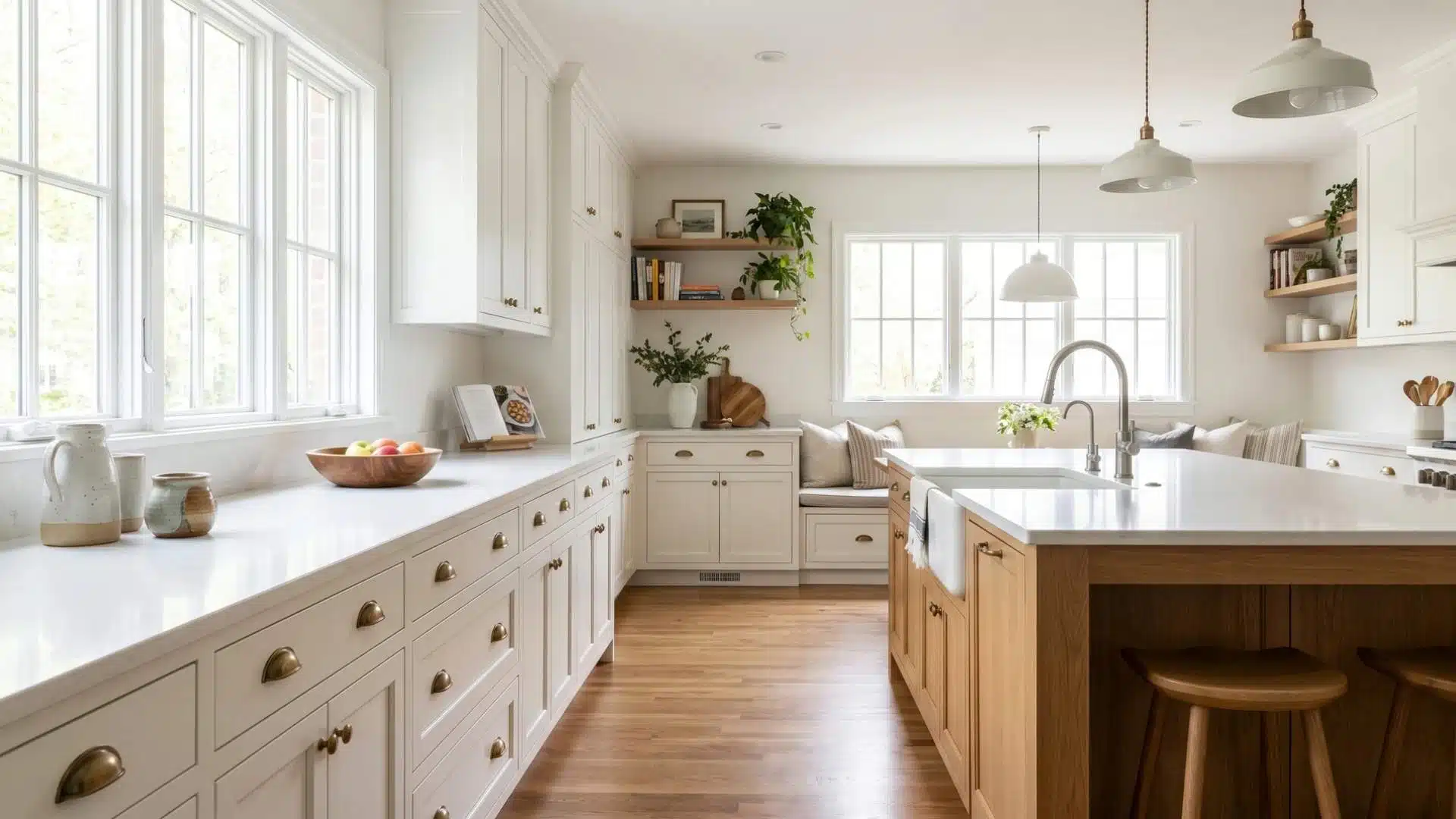
White is the most requested color I see in kitchen projects, and for good reason. It reflects light, makes small kitchens feel more open, and works with almost every countertop and backsplash material out there.
The main trade-off is maintenance. White shows grease, water, and fingerprints quickly, so it needs more frequent wiping down. In a family kitchen with young kids, that is worth thinking about before you commit.
- Best finish: Satin or semi-gloss for easy cleaning
- Hardware that works: Brushed nickel, matte black, or brass all pair well
2. Warm Cream and Off-White Cabinets
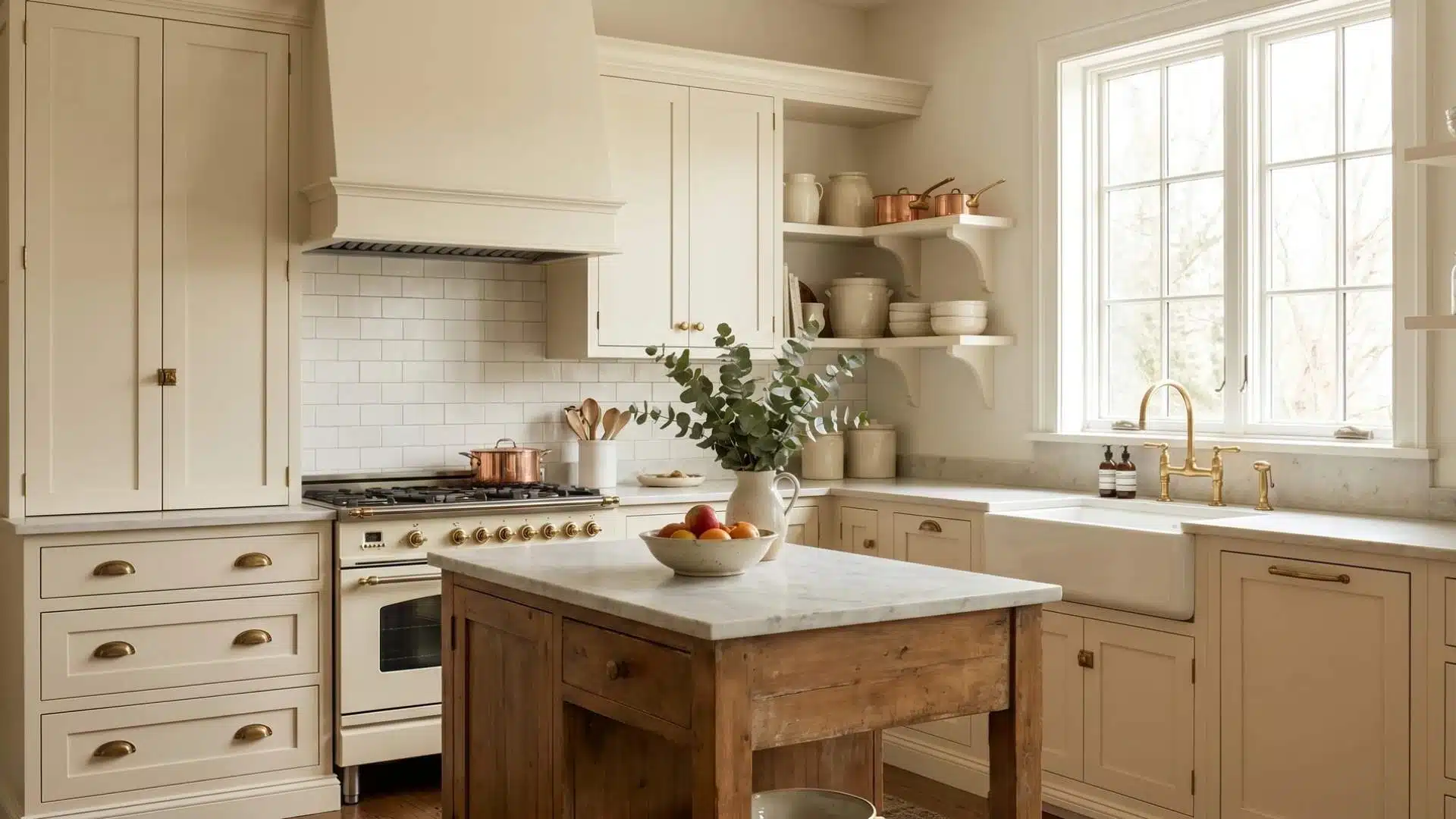
Warm cream sits between bright white and beige. It feels relaxed rather than stark, and it is a smart choice if your flooring or countertops have any warm undertones.
Cream cabinets also tend to read very well in kitchens that will go on the market. Interior designers often include this color on their shortlist for resale updates because it pairs well with so many materials without competing with them.
- Best finish: Satin
- Hardware that works: Brass, brushed nickel, or matte black
3. Navy Blue Cabinets
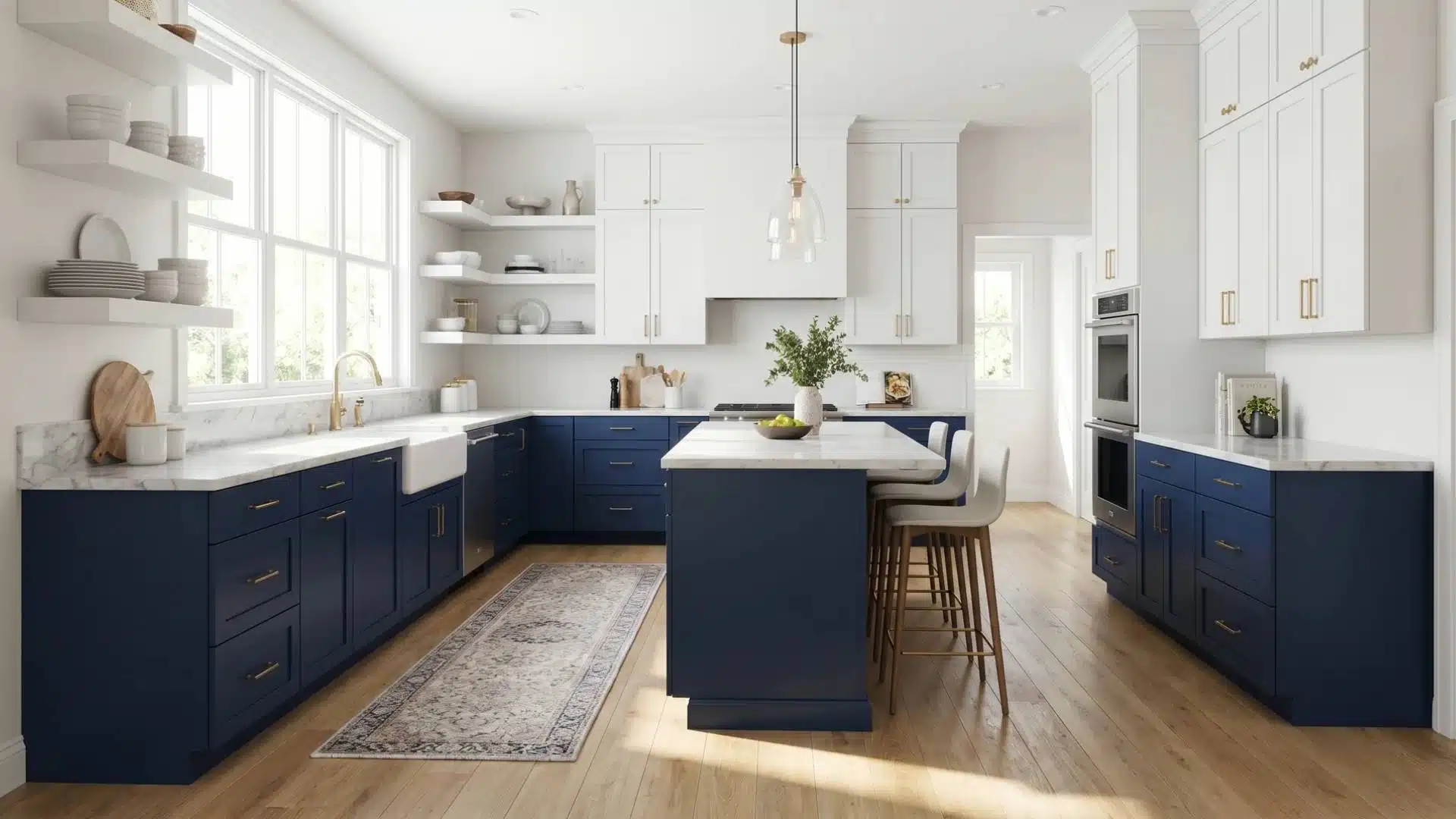
The Navy is bold, but it is not as hard to live with as people think. The key is placement. On lower cabinets with white or cream uppers, it looks sharp without darkening the whole room.
Pair Navy with brushed brass or aged bronze hardware, and the result is one of the most timeless color combinations in kitchen design. Avoid it in small, low-light kitchens unless you are keeping the upper cabinets light.
- Best finish: Satin
- Hardware that works: Brushed brass or aged bronze
4. Forest Green Cabinets
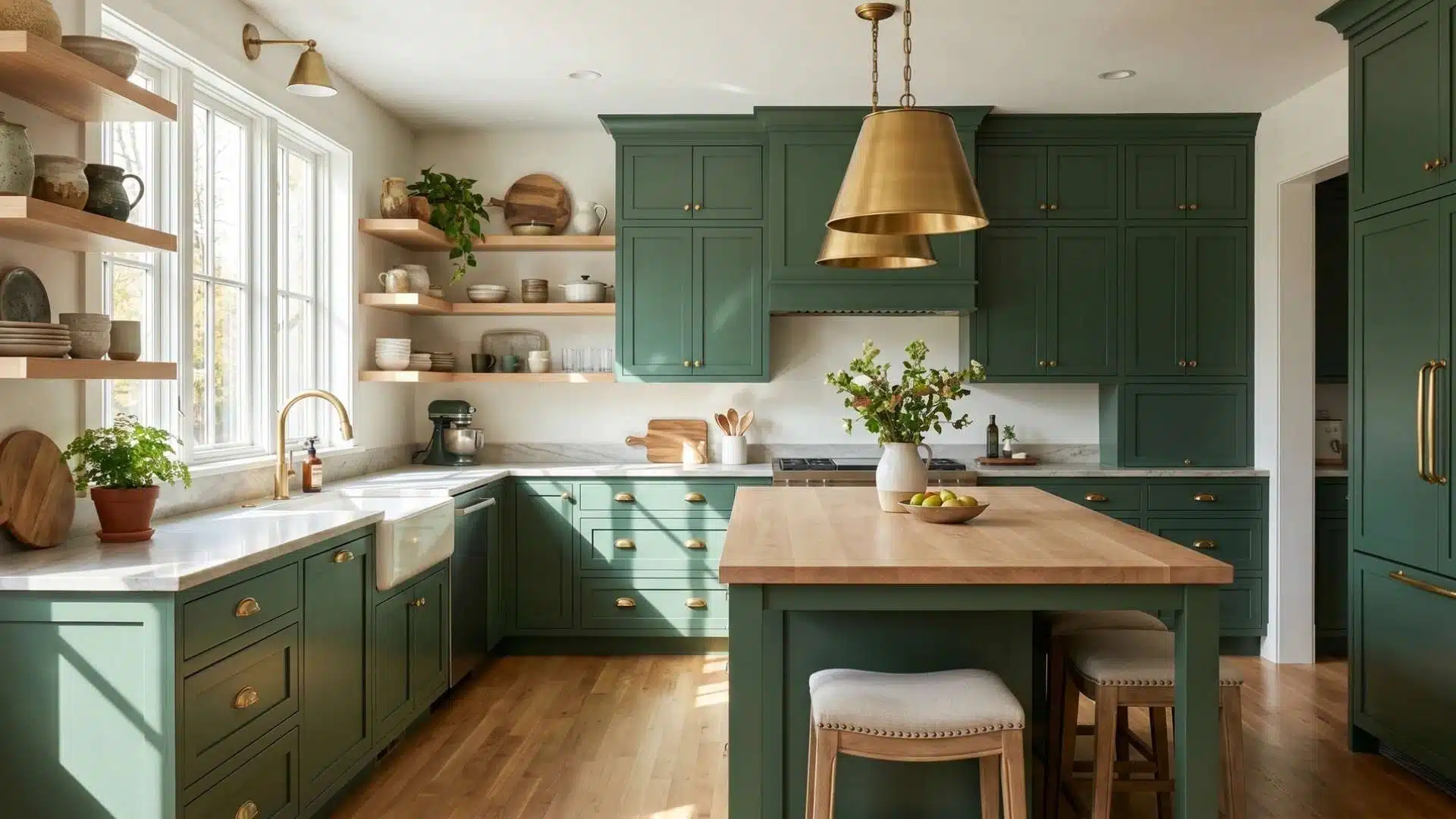
Deep forest green has been one of the most consistent performers in kitchen design over the past few years.
Major paint brands included smoky jades and grounded greens in their color-of-the-year selections, and homeowners are paying attention.
It works best in kitchens with natural light, wood accents, and stone backsplashes. Pair it with brass hardware and light countertops to keep the space from feeling too heavy.
- Best finish: Satin or eggshell
- Hardware that works: Brass or gold pulls and knobs
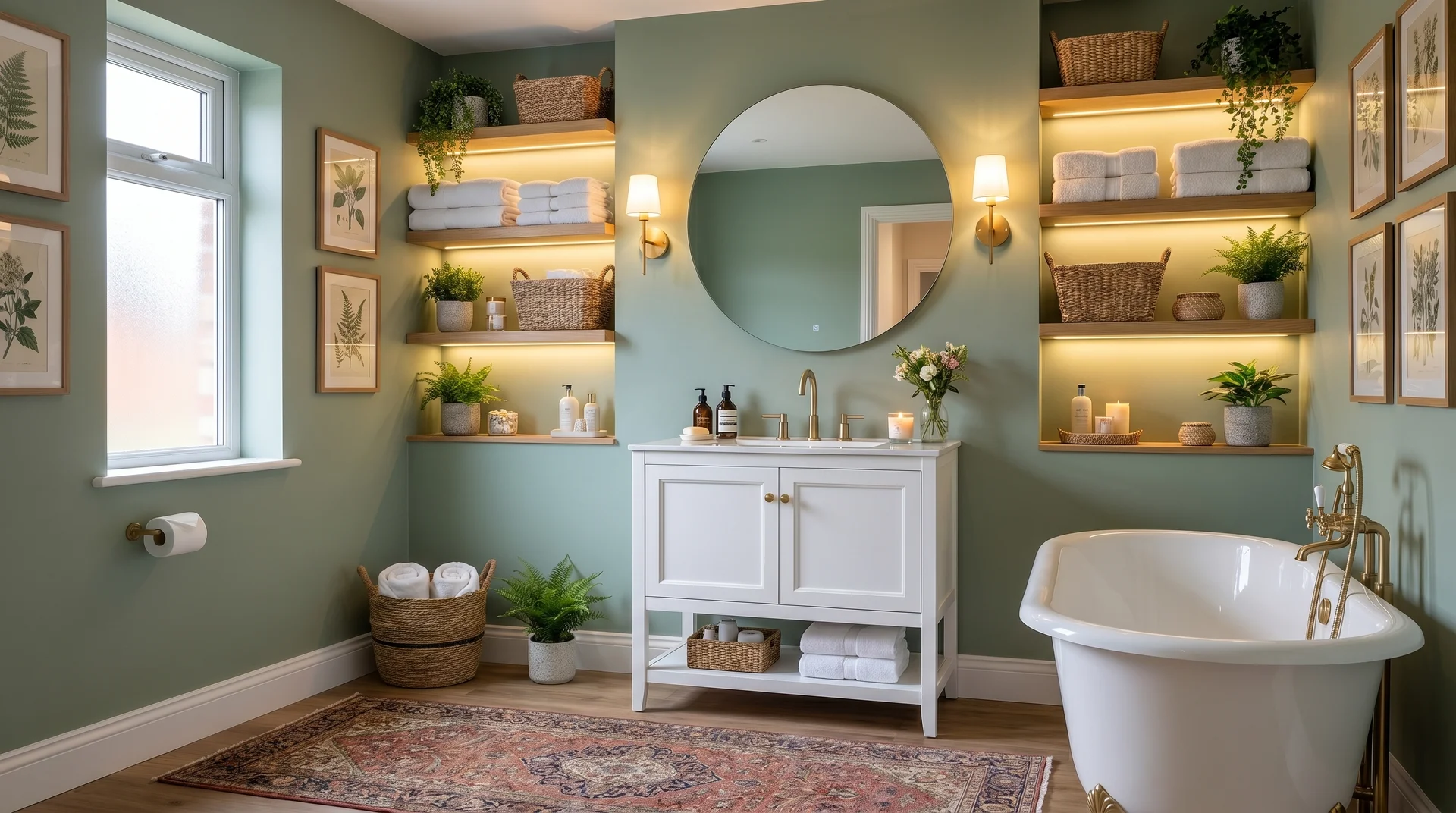
5. Sage and Soft Green Cabinets
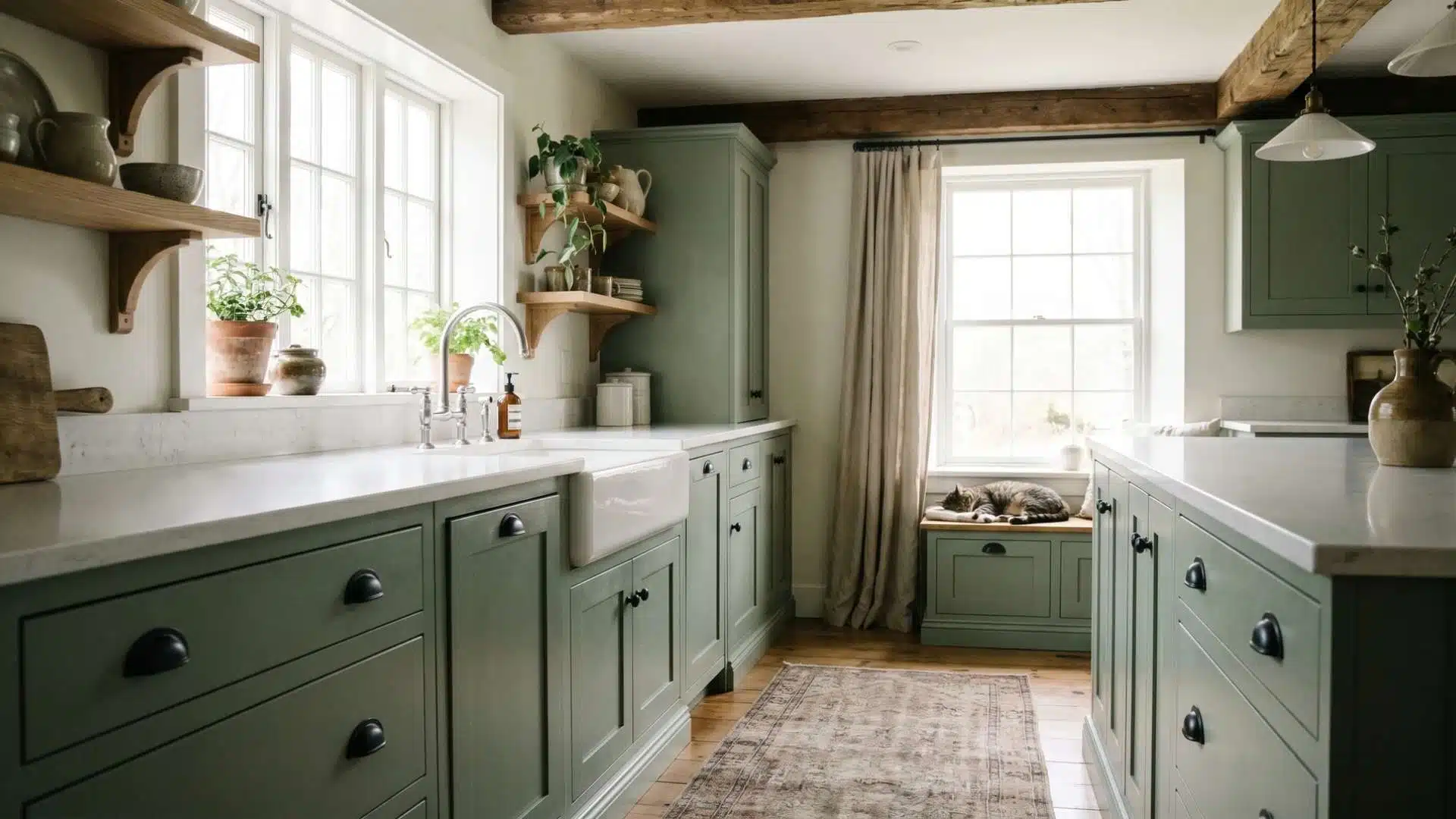
If forest green feels too strong, sage is a quieter option. It sits somewhere between blue and green with a soft gray cast that keeps it calm rather than loud.
Sage works as a full-kitchen color or just on the lower cabinets. It fits naturally in farmhouse and transitional kitchens, and it handles changes in natural light well without looking washed out.
- Best finish: Satin
- Hardware that works: Matte black or brushed nickel
6. Soft Gray Cabinets
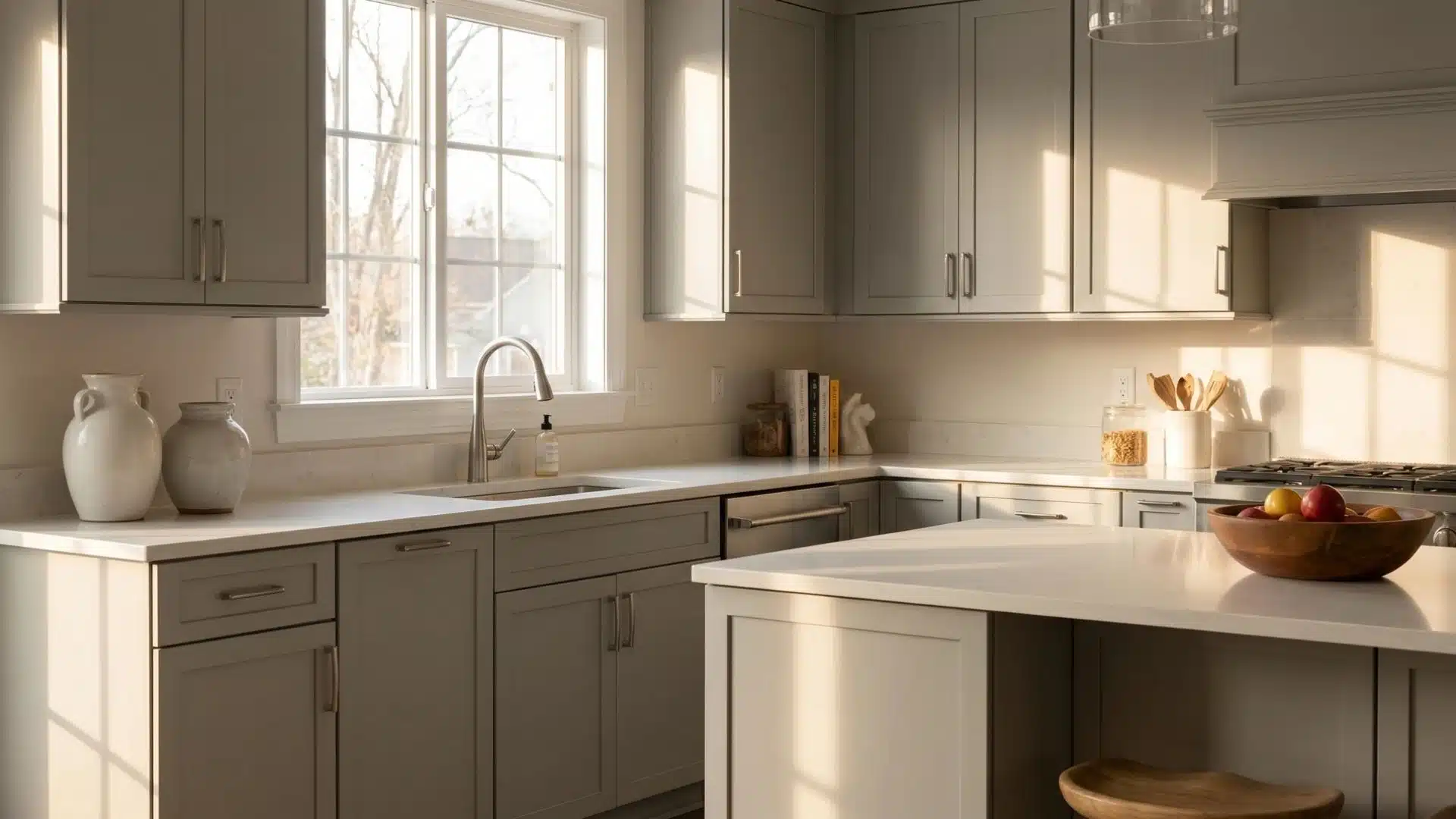
Gray is still one of the most versatile options for kitchen cabinets. It reads modern without demanding much from the rest of the room.
One thing worth knowing: cool-toned grays can feel cold in north-facing kitchens. If your kitchen does not get much direct light, look for a gray with warm undertones rather than a blue-leaning one.
That small shift makes a real difference in how the space feels.
- Best finish: Satin
- Hardware that works: Brushed nickel, chrome, or matte black
7. Two-Tone Cabinets
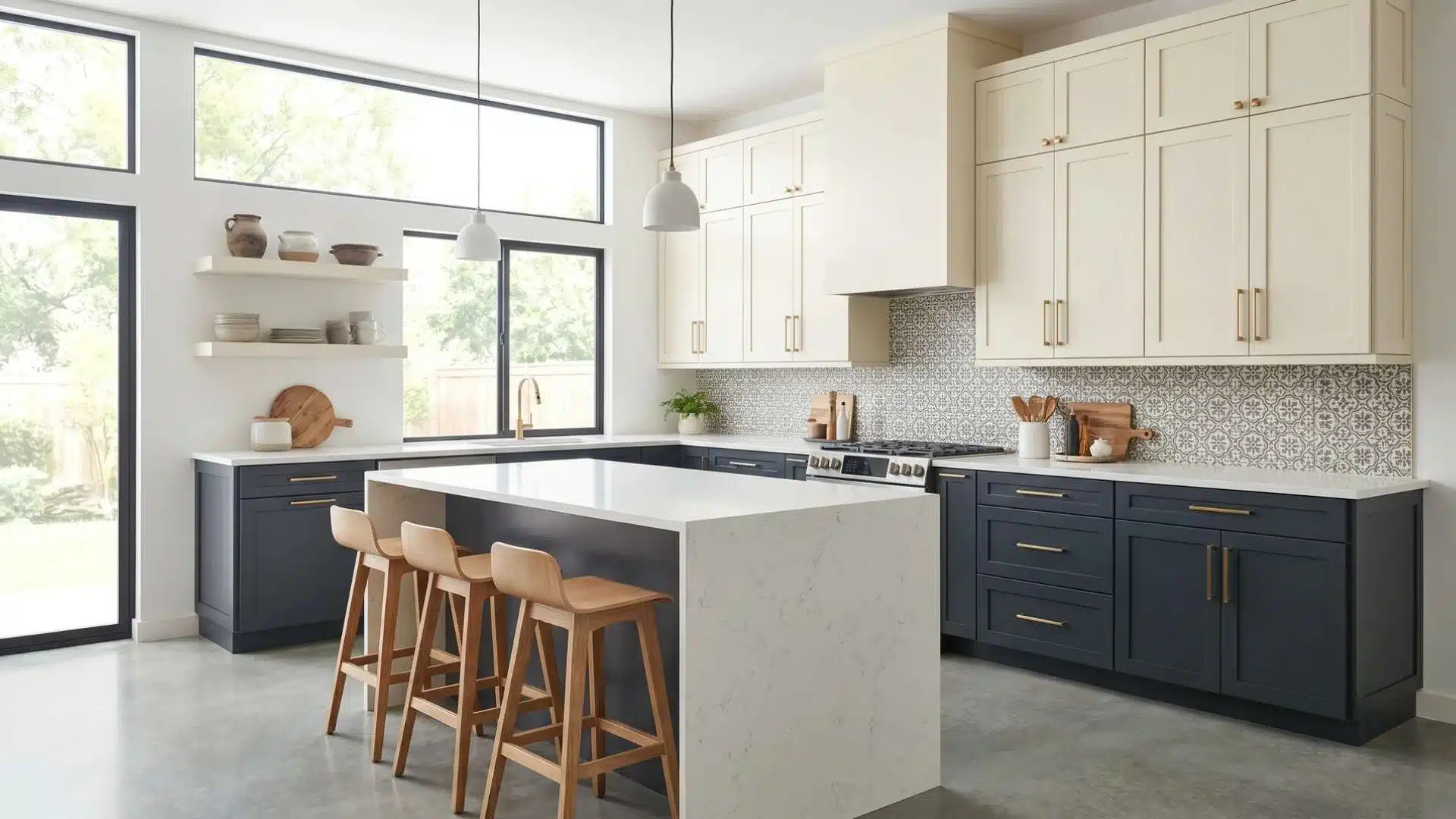
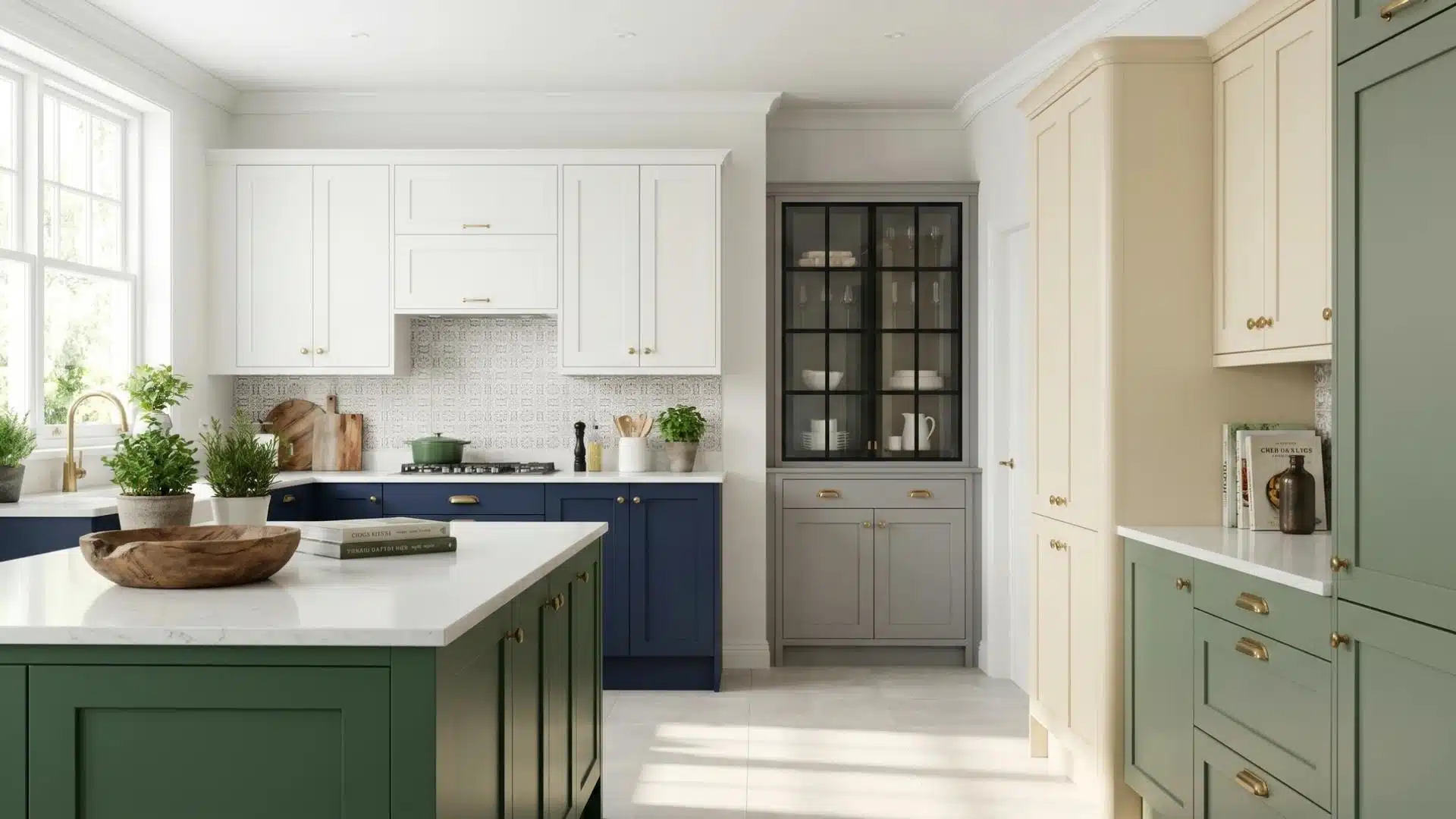
Two-tone cabinets are among the most searched-for kitchen cabinet styles right now, and they work because they solve a real problem. You get depth and contrast without committing to a single bold color throughout.
The rule that holds up in real kitchens: lighter color on top, darker on the bottom. This keeps the space feeling grounded and open at the same time.
Popular combinations include white upper with Navy lower, cream upper with forest green lower, and gray upper with charcoal lower.
Keep the hardware finish consistent across both tones so the two colors feel intentional rather than mismatched.
8. Charcoal and Dark Gray Cabinets
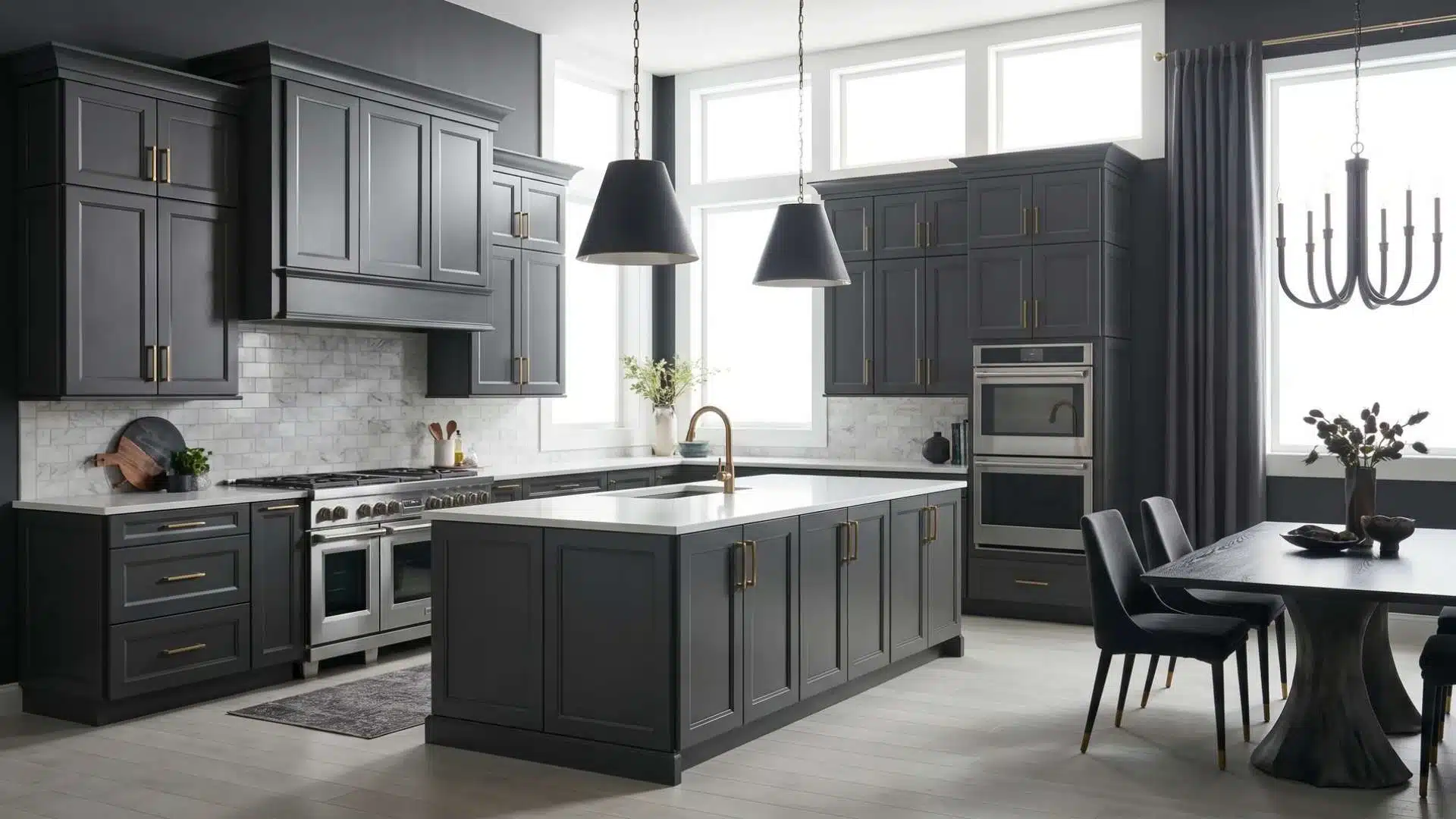
Charcoal is the middle ground between gray and black. It adds weight and drama without the full commitment of a true black cabinet.
It works well in larger kitchens with light countertops and backsplashes. If you go charcoal, let the countertops and walls carry the brightness. The cabinets will do the rest.
- Best finish: Satin
- Hardware that works: Brushed gold or matte black
9. Black Cabinets
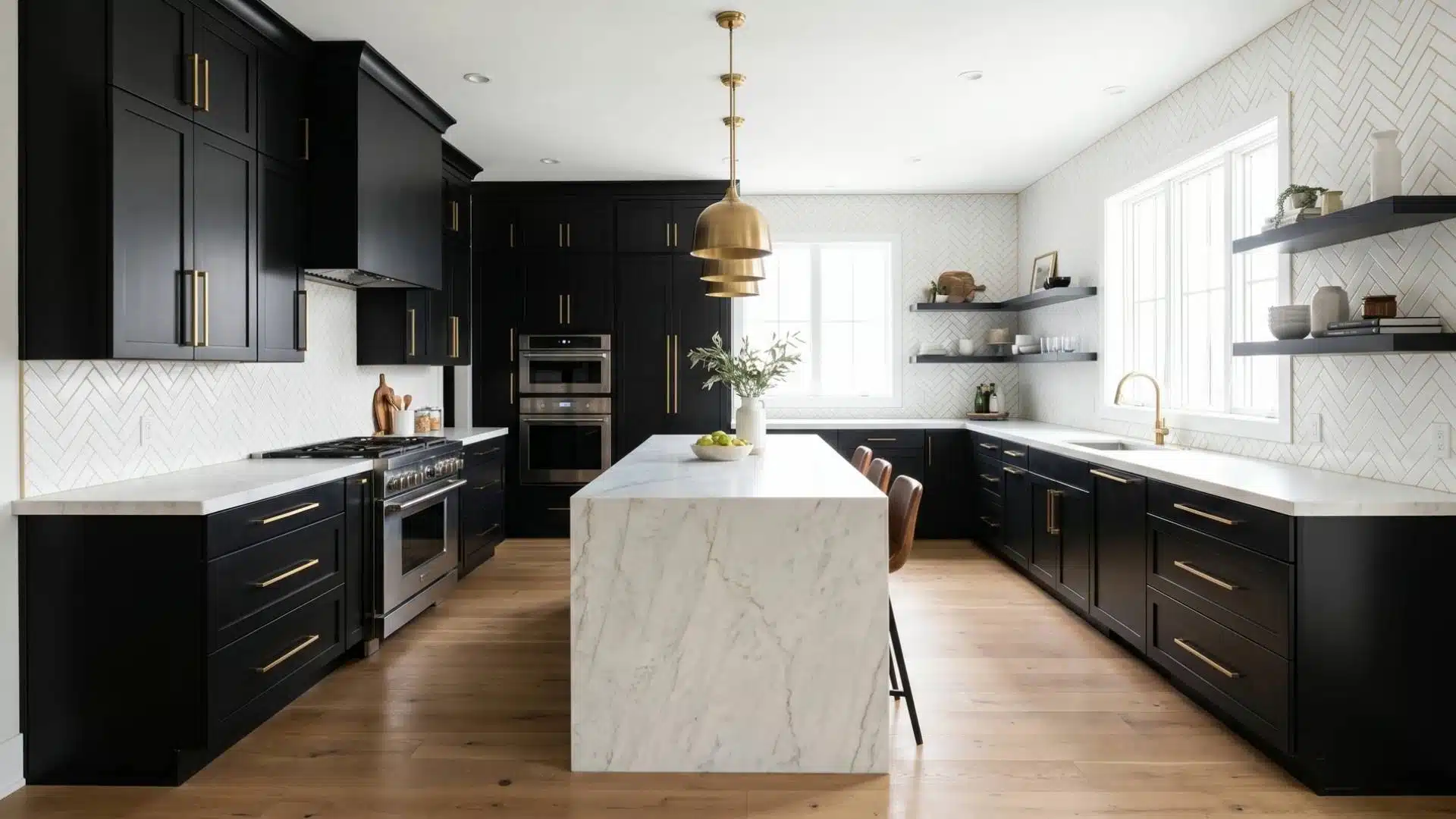
Black cabinets get a lot of side-eye from homeowners, but they are easier to pull off than most people expect. The key is contrast.
Light countertops, a bright backsplash, or open shelving above the black lower cabinets keep the space from feeling dark.
One practical note: satin finish on black hides smudges better than a high-gloss finish. High-gloss looks clean in a showroom. In a working kitchen, it shows every watermark and fingerprint by the end of the first week.
- Best finish: Satin
- Hardware that works: Brushed gold, polished chrome, or matte silver
10. Dusty Blue and Coastal Blue Cabinets
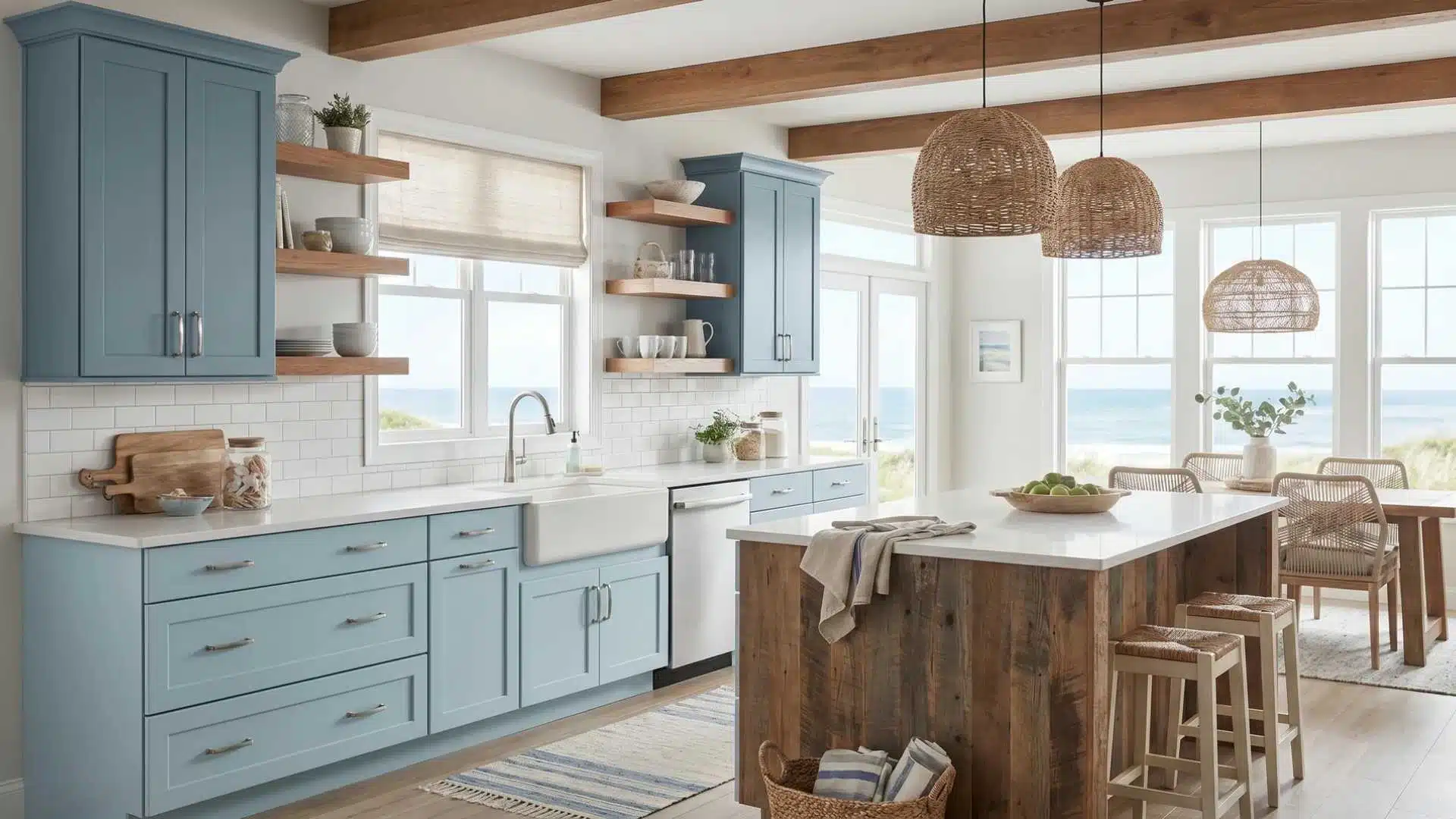
Dusty blue is not the same as cobalt or Navy. It is softer and quieter, with a muted quality that reads as calm rather than bold. It works well in coastal, farmhouse, or cottage-style kitchens.
Pair it with white countertops and warm wood accents. Copper or brushed nickel hardware fits this look without overpowering the softness of the color.
- Best finish: Satin
- Hardware that works: Brushed nickel or copper
11. Greige (Gray-Beige) Cabinets
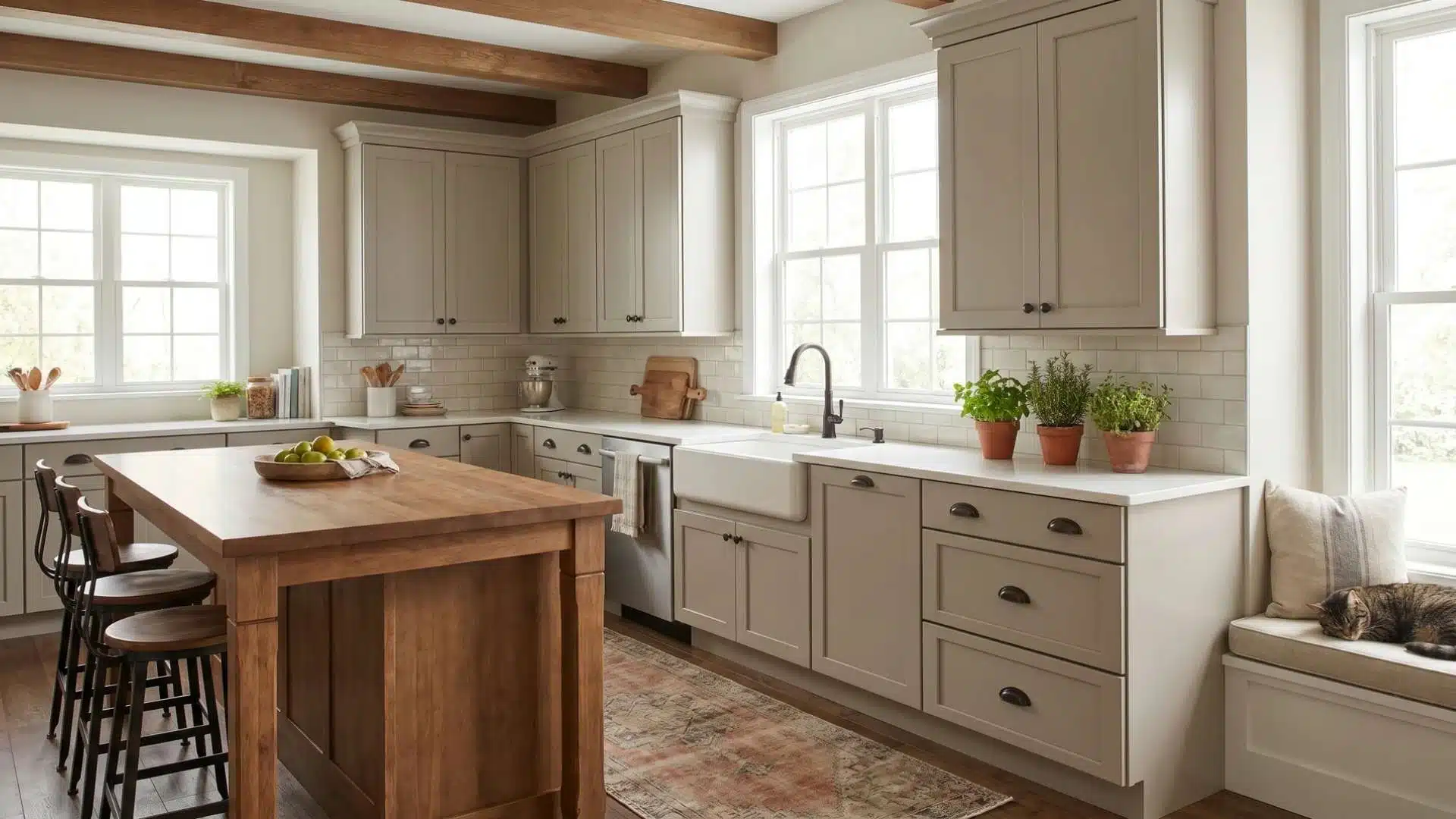
Greige is what happens when gray and beige meet in the middle. It is warm enough to feel welcoming but neutral enough to work with almost any countertop material.
From a practical standpoint, greige is one of the better choices for busy kitchens. The warmth of the tone hides minor dirt and smudges well, so you are not wiping the cabinets down every day to keep them looking clean.
- Best finish: Satin
- Hardware that works: Oil-rubbed bronze or warm gold
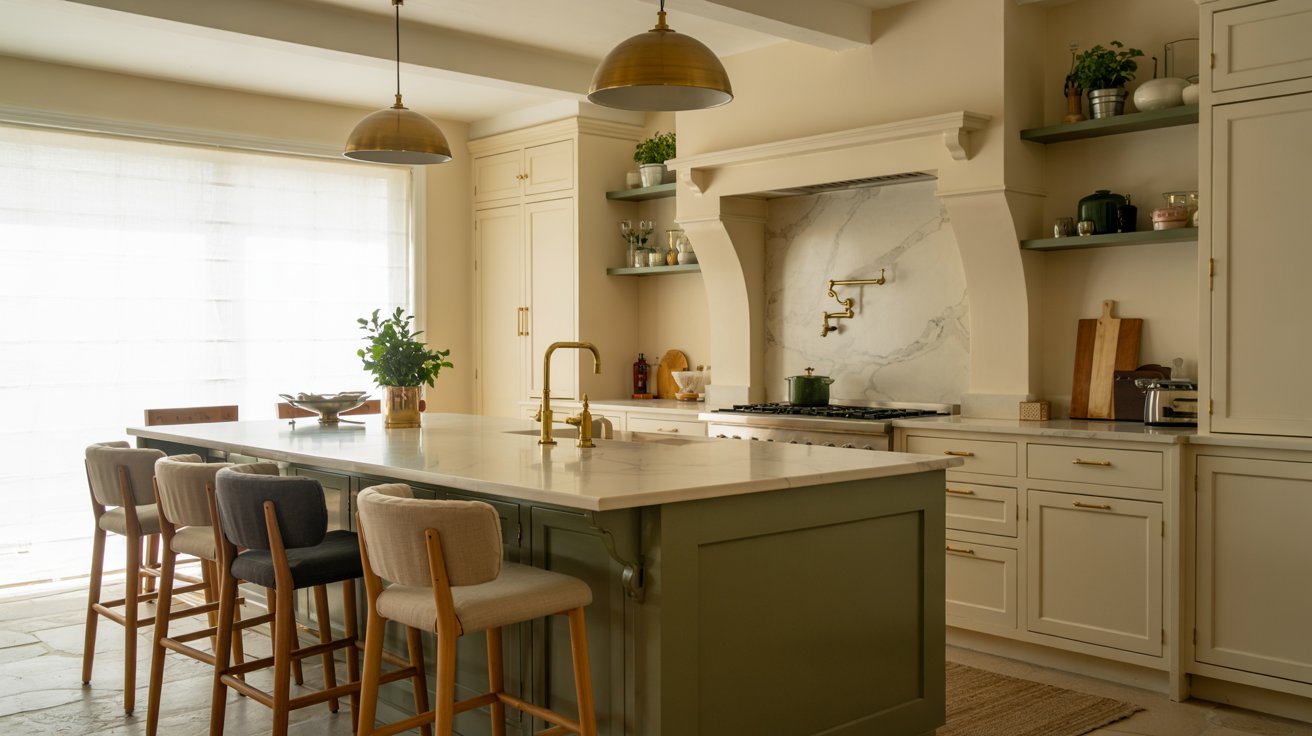
12. Painted Kitchen Island in a Contrasting Color
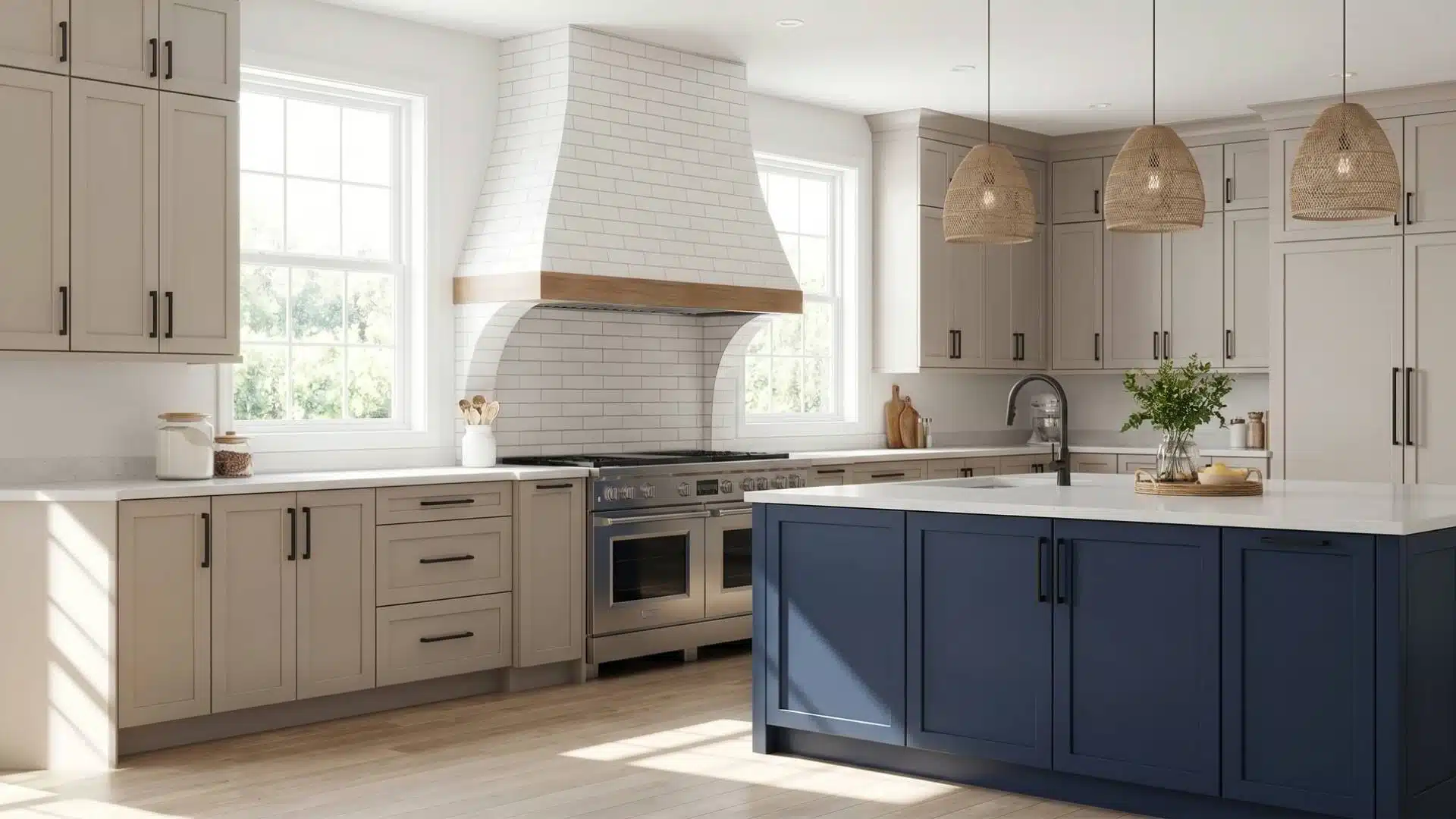
Not every painted cabinet idea has to involve the whole kitchen. One of the most flexible approaches is painting just the island in a contrasting color while keeping the perimeter cabinets neutral.
This gives you a focal point without overwhelming the room. Navy, forest green, black, or a rich warm yellow all work well as island colors when the surrounding cabinets are white or cream.
Keep the hardware finish consistent between the island and the main cabinets so the contrast reads as a design choice.
13. Glass-Front or Open-Shelf Cabinets with a Bold Color
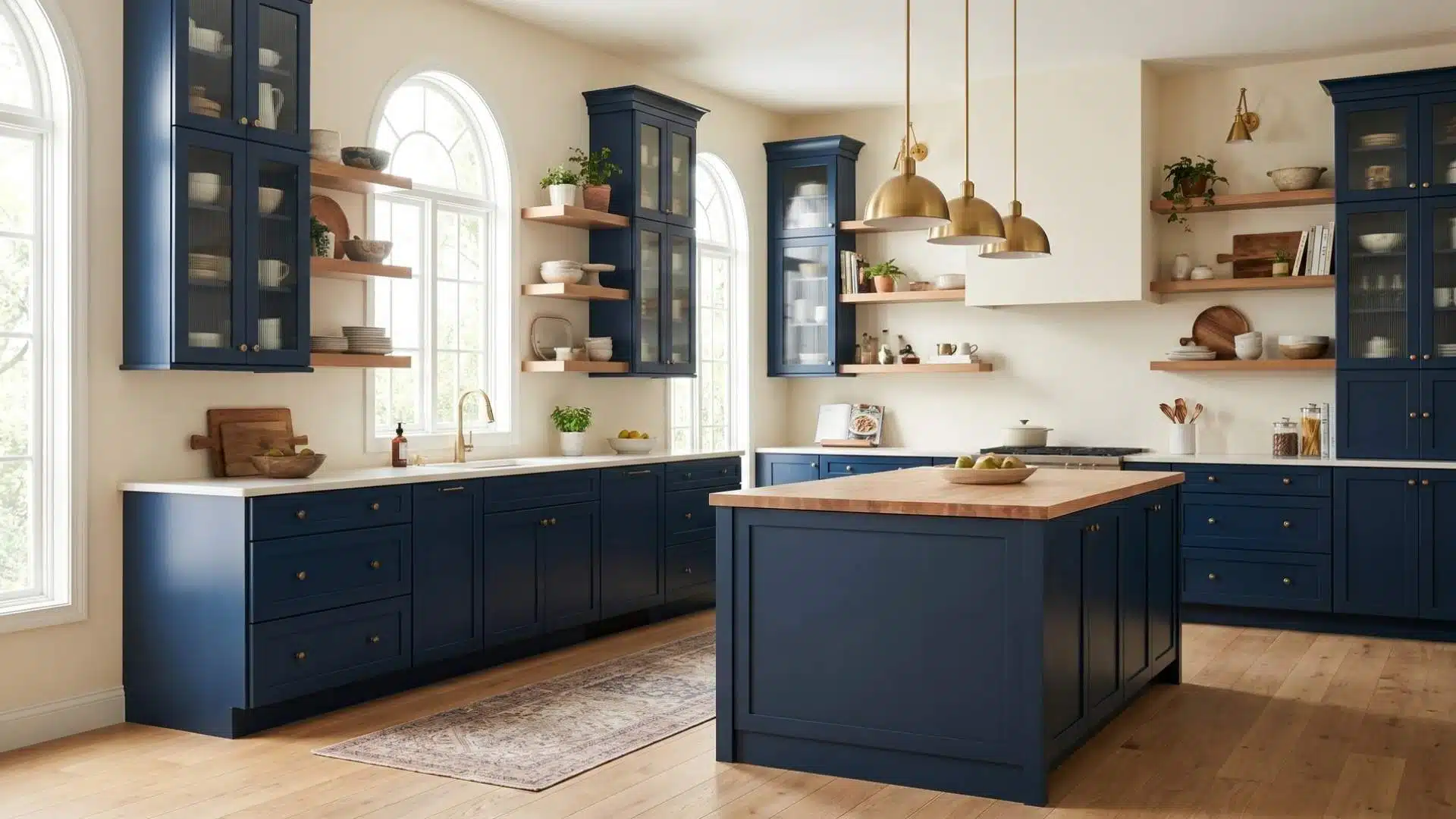
Open shelving and glass-front cabinets give you a chance to use color more intentionally. Paint the cabinet frames or box in a bold shade, and the color shows through the open fronts rather than just sitting on solid doors.
Navy, forest green, and deep charcoal all work well here. The painted frame creates a backdrop for whatever you display, so your dishware and kitchen items become part of the look.
Choose items with colors that complement the cabinet paint for a pulled-together result.
The Paint Finish Your Kitchen Cabinets Actually Need
Color gets all the attention, but finish determines how long your cabinets look good. This is one of the most often skipped parts of kitchen cabinet planning, and it often causes regret.
Here is a straightforward breakdown:
| Finish | Sheen Level | Best For |
|---|---|---|
| Matte | Very low | Walls only, not cabinets |
| Eggshell | Slight sheen | Light-use storage areas |
| Satin | Medium | Most kitchen cabinets |
| Semi-gloss | Higher | High-use cabinets are easy to wipe |
| High-gloss | Very high | Modern kitchens show every mark |
Satin is the most practical choice for kitchen cabinets in most homes. It holds up to daily cleaning, does not show every mark, and still looks finished. Semi-gloss works well on drawers and doors that get heavy use.
Avoid matte on cabinets. It soaks up grease and moisture, making it very hard to clean without damaging the surface.
Conclusion
Painted kitchen cabinets can change how a kitchen looks, feels, and even seems. Color, finish, and hardware all work together. Get one wrong, and the others suffer.
But when they line up, the result is a kitchen that feels like it was designed with a clear idea behind it.
If you are planning a cabinet painting project, start with your existing materials before you fall in love with a color swatch.
What cabinet color from this list are you leaning toward? Share it in the comments below.