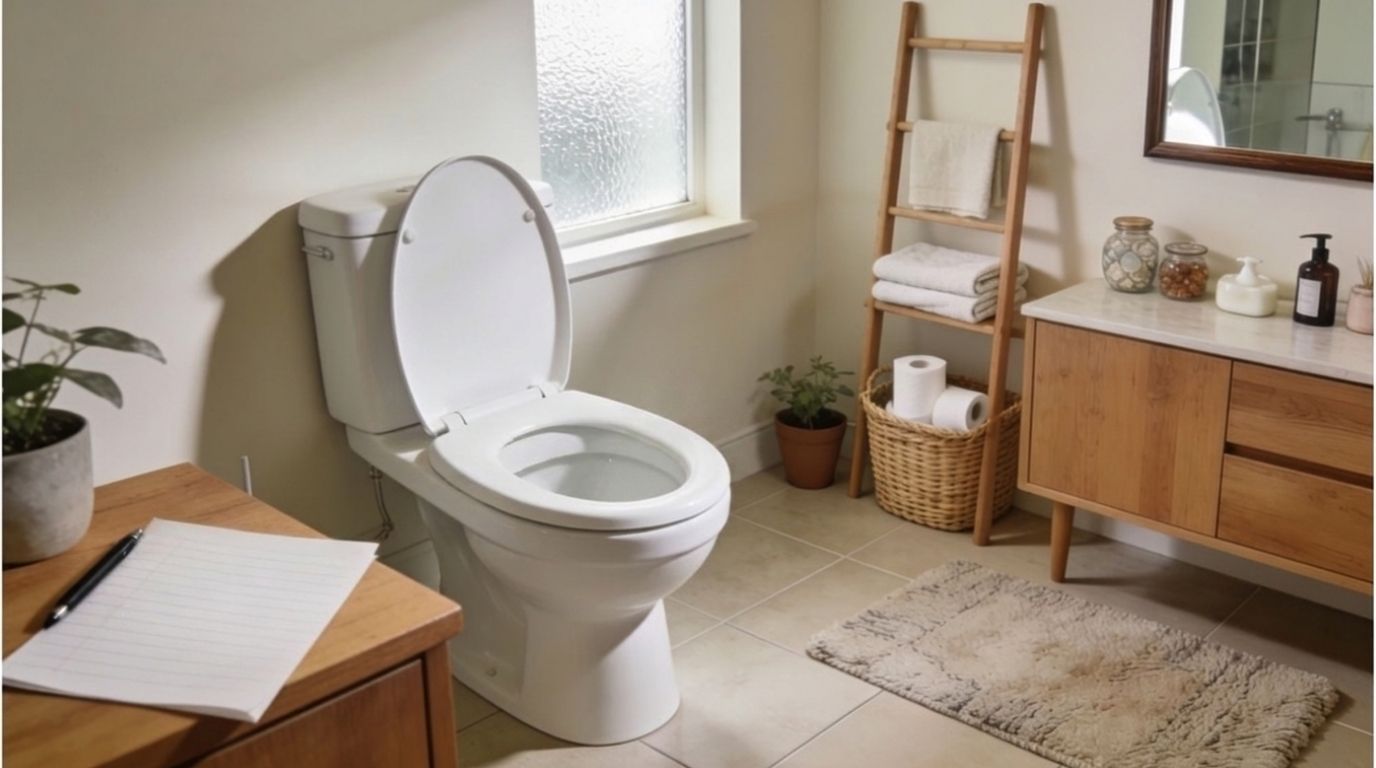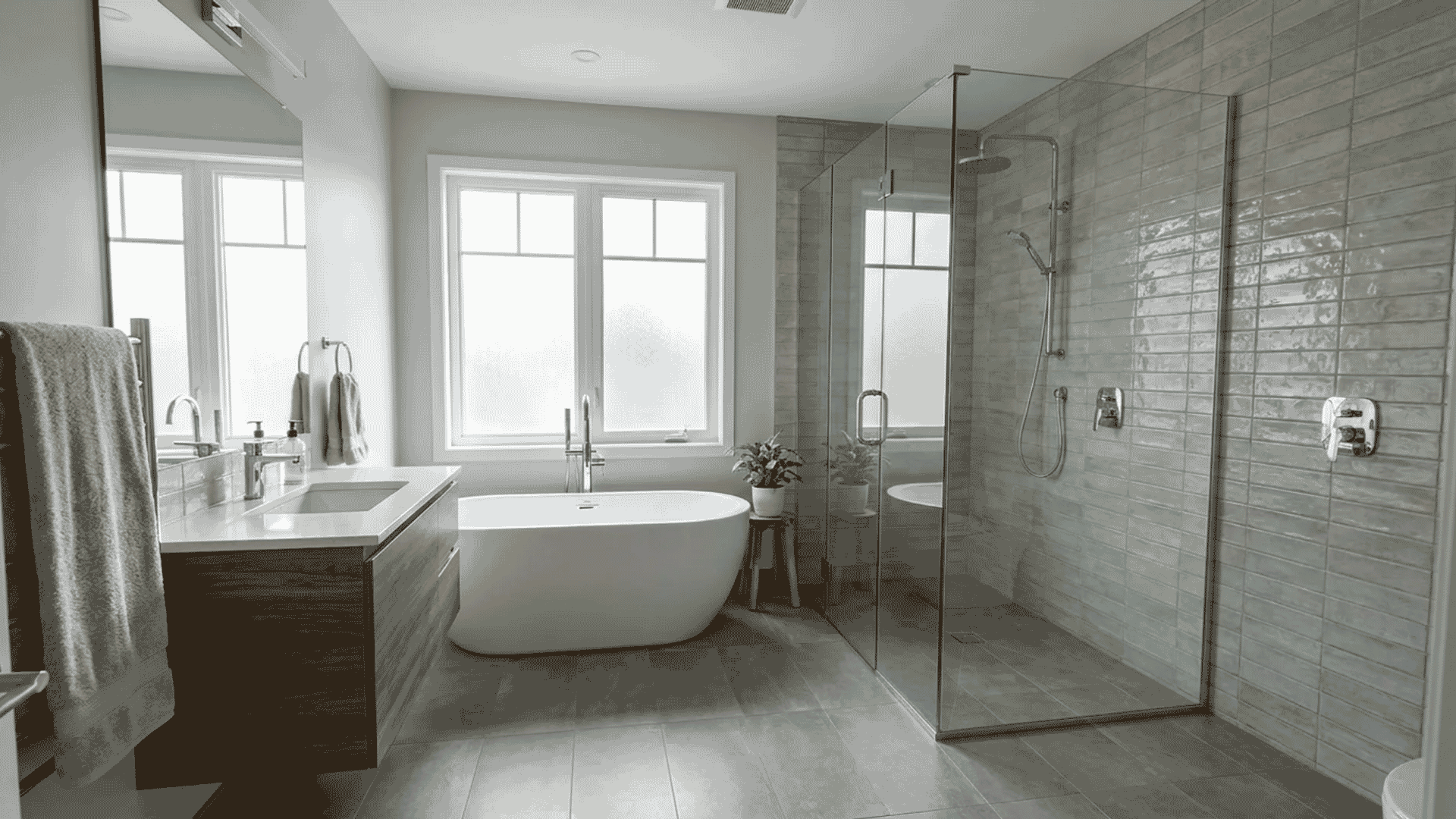
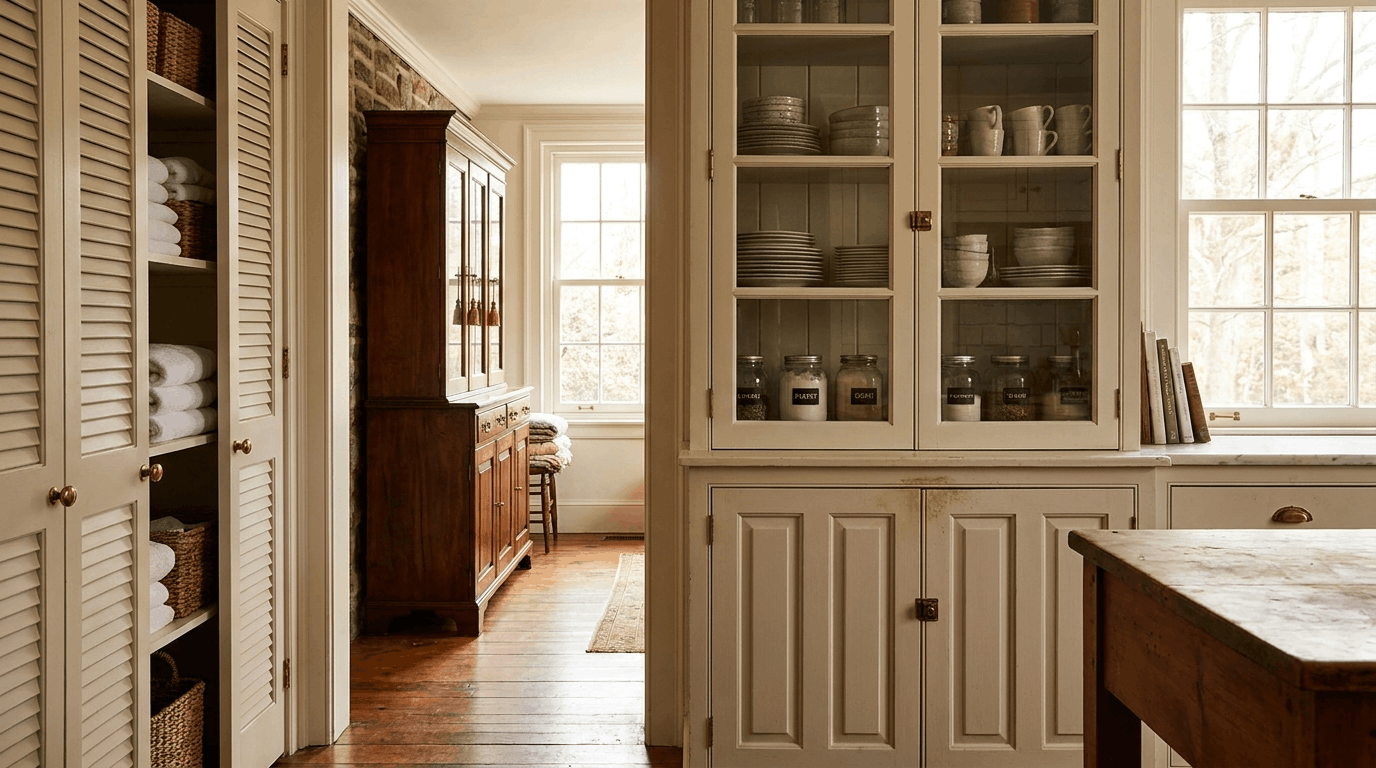
The word “cupboard” is older and stranger than it looks.
The original cupboard was not enclosed at all. No doors, no shelves inside. Just a board you put cups on. The name stuck for centuries, even as the object changed completely into what we recognize today.
Most definitions just say “a storage unit with doors and shelves,” which is technically correct and tells you almost nothing useful.
The word means different things in different countries, refers to different furniture in different rooms, and is so often confused with “closet” and “cabinet” that even contractors and designers sometimes talk past each other.
This post covers what a cupboard actually is, where the word came from, the main types you will encounter, what they are made of, and how a cupboard differs from a closet.
A Clear Definition of Cupboard Before Anything Else
A cupboard is a piece of furniture with one or more doors, usually with shelves inside, used for storing household items.
The Cambridge Dictionary defines it as “a piece of furniture or a small part of a room with a door behind which there is space for storing things, usually on shelves.”
In British English, “cupboard” covers almost all enclosed storage furniture in the home. What an American calls a kitchen cabinet, a linen closet, or a hall closet, a British person calls a cupboard. The word is broad and general.
In American English, “cupboard” is used more narrowly. It usually refers specifically to kitchen or pantry storage. Built-in kitchen storage is more commonly called a “cabinet,” and larger built-in spaces are “closets.”
Worth knowing if you are reading UK design content or shopping from UK suppliers: they are almost always describing what Americans call cabinets.
The furniture is the same. The word is different.
Where the Word Cupboard Comes From?
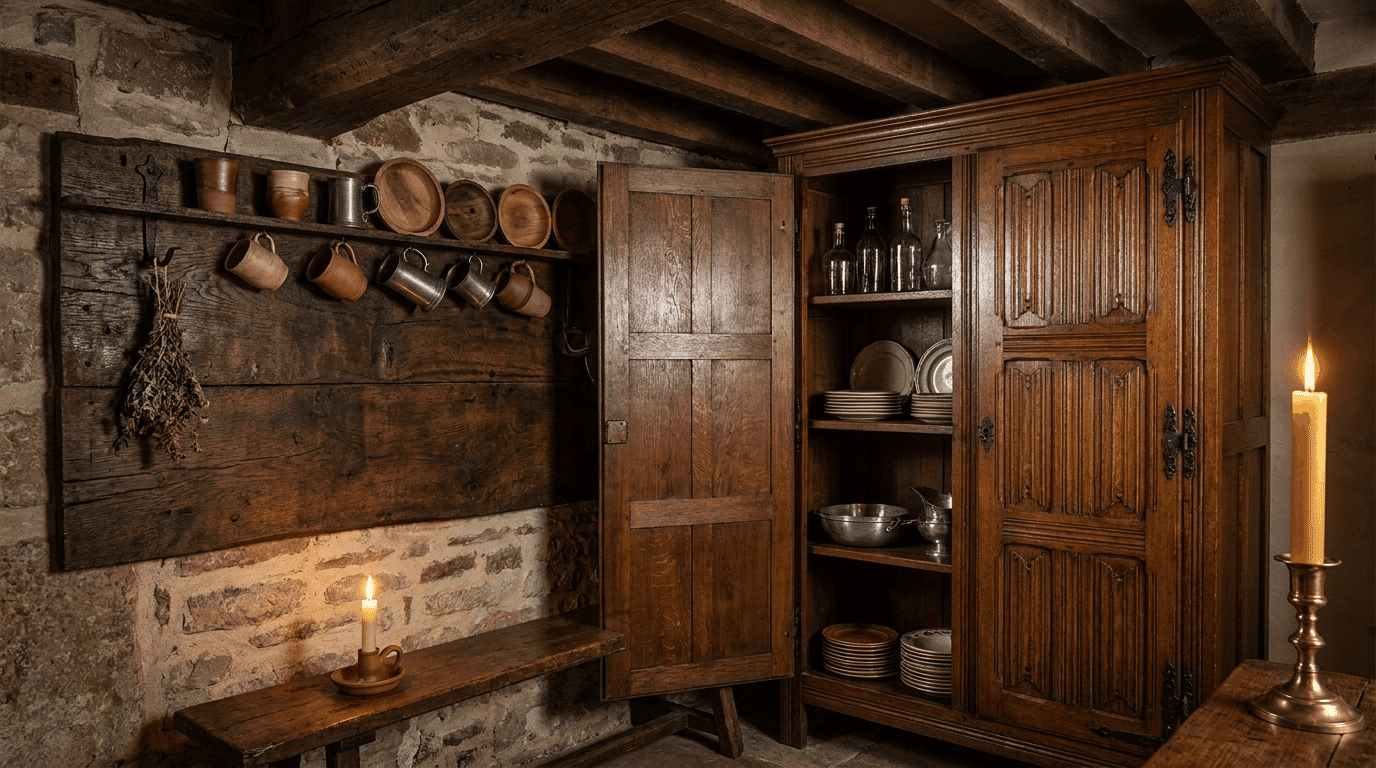
“Cupboard” is exactly what it looks like: cup + board.
In the 14th century, it referred to a board or table on which cups and plates were displayed, open shelving, not enclosed storage.
By the early 16th century, the meaning had shifted to an enclosed cabinet used for food and dishware. The shape changed completely, but the name stayed.
By the 17th century, the cupboard had replaced the chest as the primary piece of storage furniture in European homes. Decoration became more elaborate: carved panels, intarsia woodwork, heavy cornices.
The Dutch version, called a kast, became particularly influential, featuring raised panels and twisted columns supporting a heavy top.
The word itself has not changed since. The object it describes has been changing for seven hundred years.
What Are Cupboards Made Of?
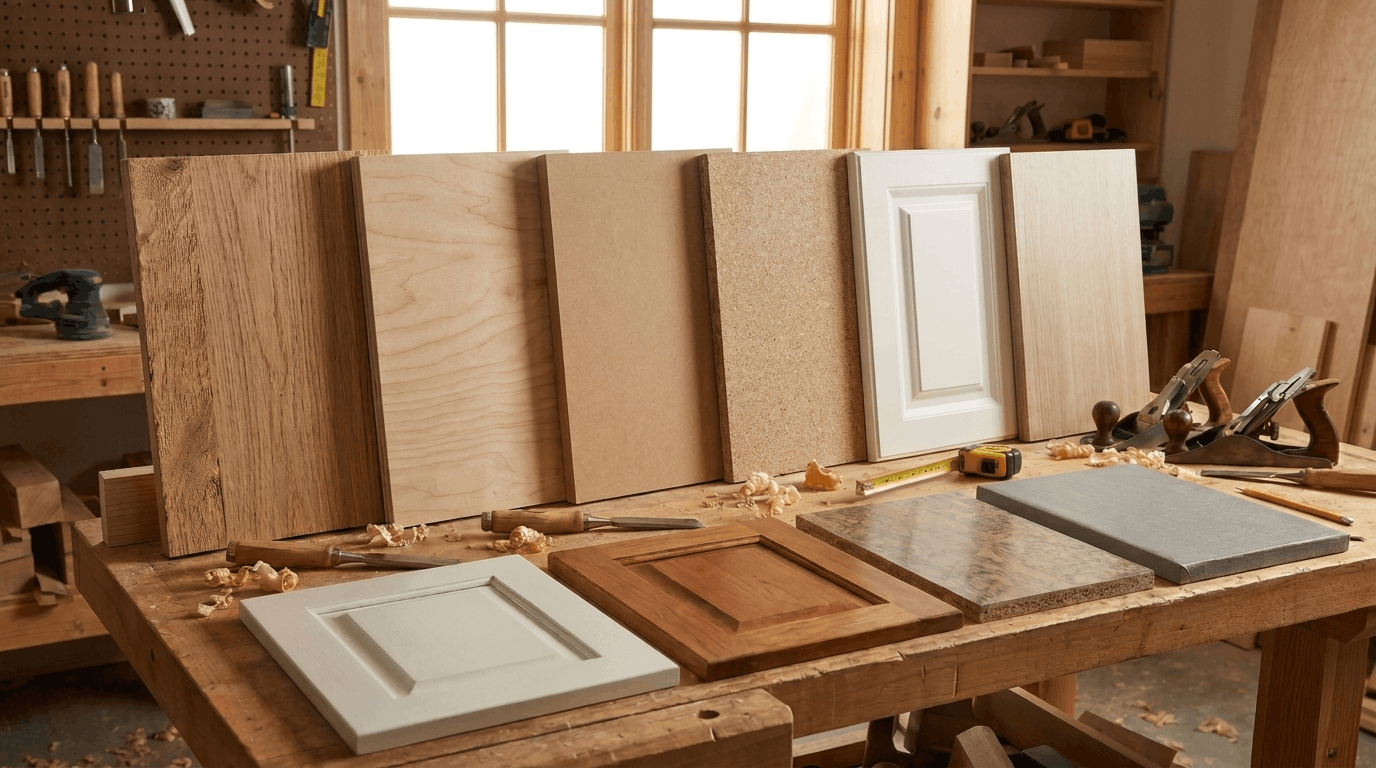
Not all cupboard materials hold up the same way. The one you choose affects how long the cupboard lasts, how well it handles moisture, and what happens to it in a kitchen or bathroom five years from now.
Here is what each material actually means in practice.
- Solid Wood: The most durable option. Oak, maple, cherry, and walnut are common wood choices. Takes paint and stain well. Best for cupboards near water, such as kitchens, bathrooms, and utility rooms.
- Plywood: Strong and moisture-resistant. Stays stable even as humidity changes, making it a standard in high-quality kitchen cabinets. A reliable choice for most cupboard applications at a lower cost than solid wood.
- MDF (Medium-Density Fibreboard): Smooth surface that holds paint well and costs less. Avoid it near sinks or bathrooms. Moisture causes MDF edges to swell and degrade. Best kept for dry bedroom or hallway storage.
- Particleboard: The most affordable and least durable option. Common in flat-pack furniture. Edges swell and split easily in moist conditions. Fine for dry, low-use storage where budget is the main concern.
- Thermofoil and Laminate Finishes: A vinyl or laminate layer over MDF or particleboard. Easy to clean with a wide color range. Cannot be repainted or refinished if the surface wears, peels, or chips over time.
The practical rule: spend more on solid wood or plywood for any cupboard near water. For a bedroom linen cupboard or a dry hallway storage unit, well-sealed MDF does the job at a lower cost.
Types of Cupboards and What Each One Is Used For
Cupboards come in more forms than most people realize. The same word covers everything from a kitchen storage unit to a purpose-built heating cupboard in a British hallway.
Here is what each type actually is and where you are likely to find one.
1. Airing Cupboard
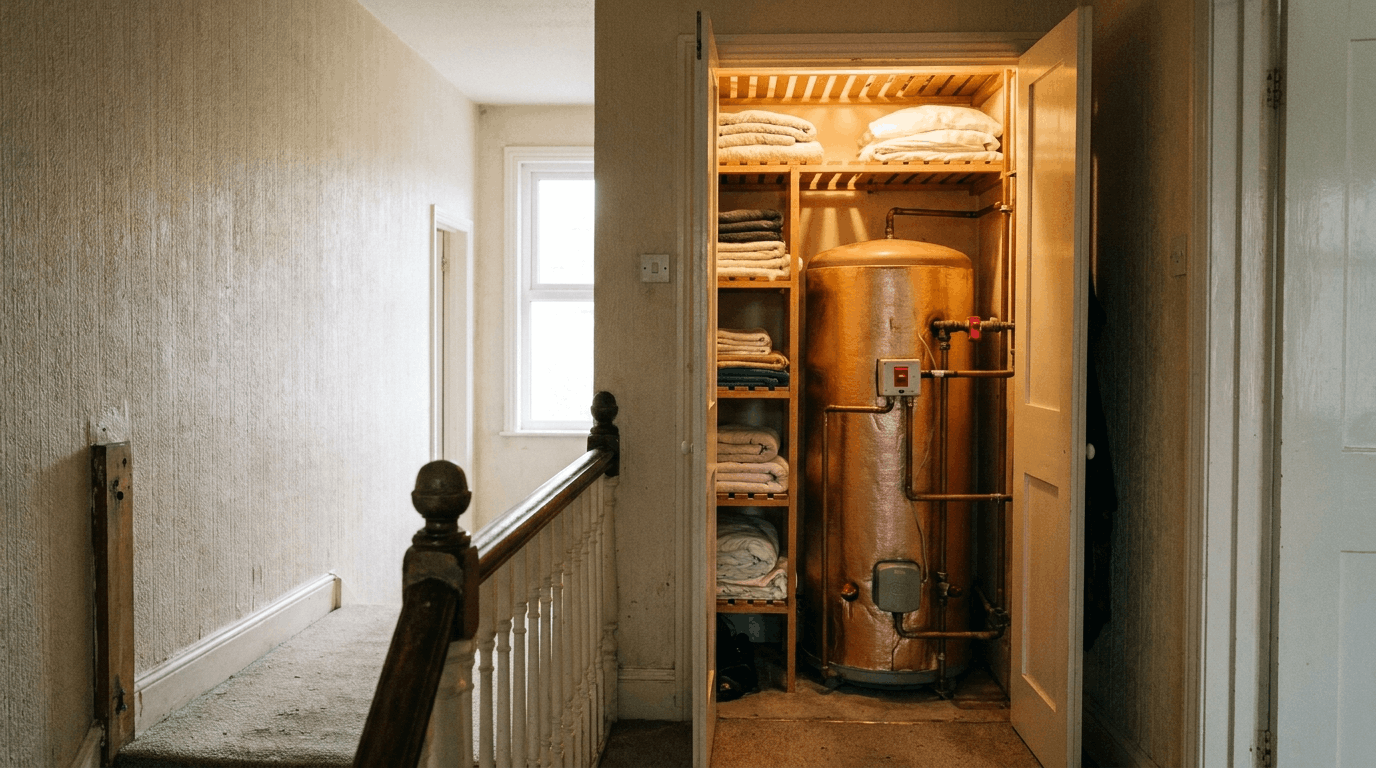
A uniquely British feature. An airing cupboard is a built-in, enclosed space that houses the hot water cylinder or boiler, with slatted shelves that allow warm air the circulate freely.
Towels and sheets stored here stay dry and properly aired rather than picking up damp.
Common in older UK homes, rare in modern builds where the boiler has been relocated to a kitchen or utility room.
2. Linen Cupboard
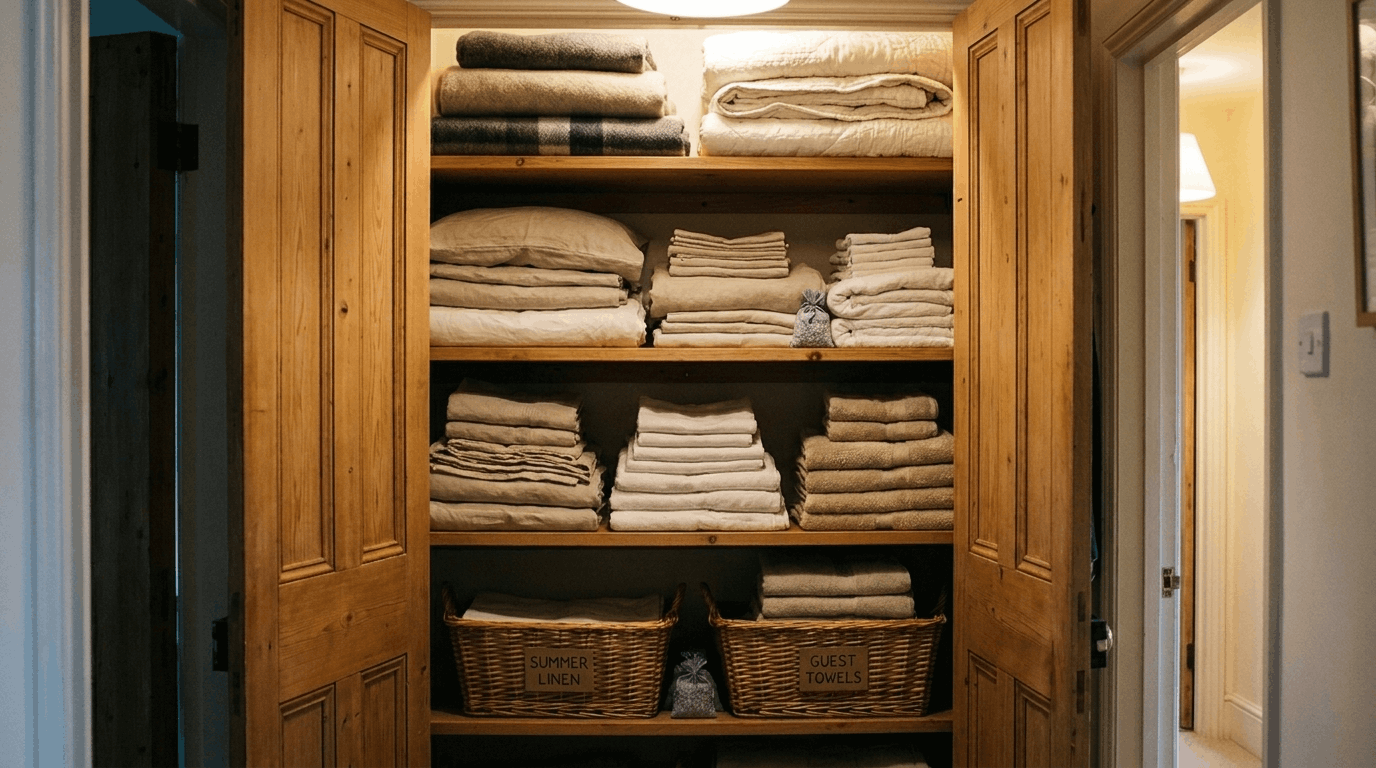
An enclosed storage space built specifically for household linen: sheets, towels, duvet covers, and tablecloths.
Usually located in a hallway, landing, or bedroom, either as a purpose-built alcove fitted with shelves or a freestanding unit.
The shelves are typically deep and wide enough to take folded bedding without compression.
3. Built-in Cupboard
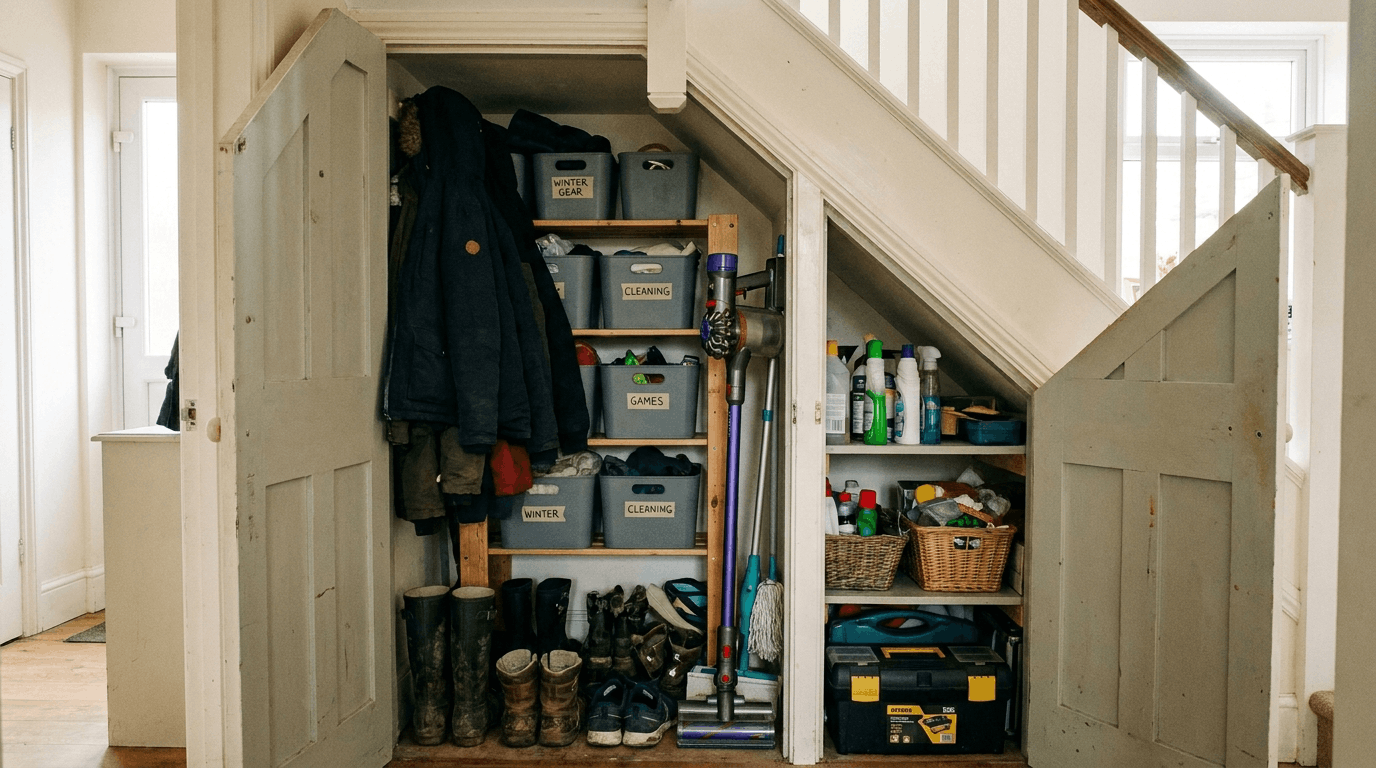
A storage space that forms part of the room’s permanent structure.
Built into a wall, an alcove, or under a staircase, it cannot be moved without physical alteration to the room.
In the UK, under-stairs built-in cupboards are extremely common and do a lot of practical work: coats, shoes, cleaning equipment, the hoover, and general household overflow.
4. Kitchen Cupboard
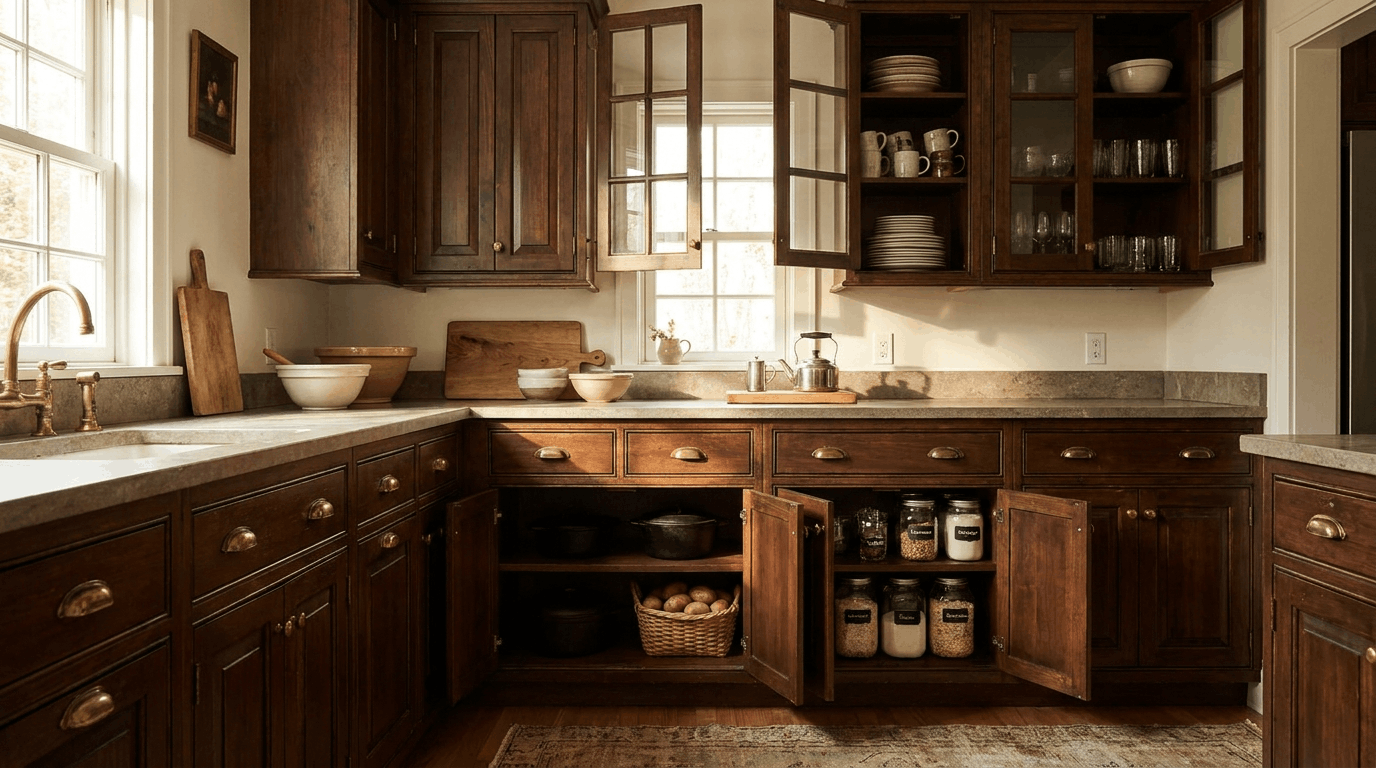
In British English, this is simply a kitchen cabinet, the overhead and base units of a fitted kitchen.
In American English, the term is used more specifically for the overhead wall units where food and dishware are stored.
The most used type in daily life, regardless of which tradition you follow.
5. Freestanding Cupboard
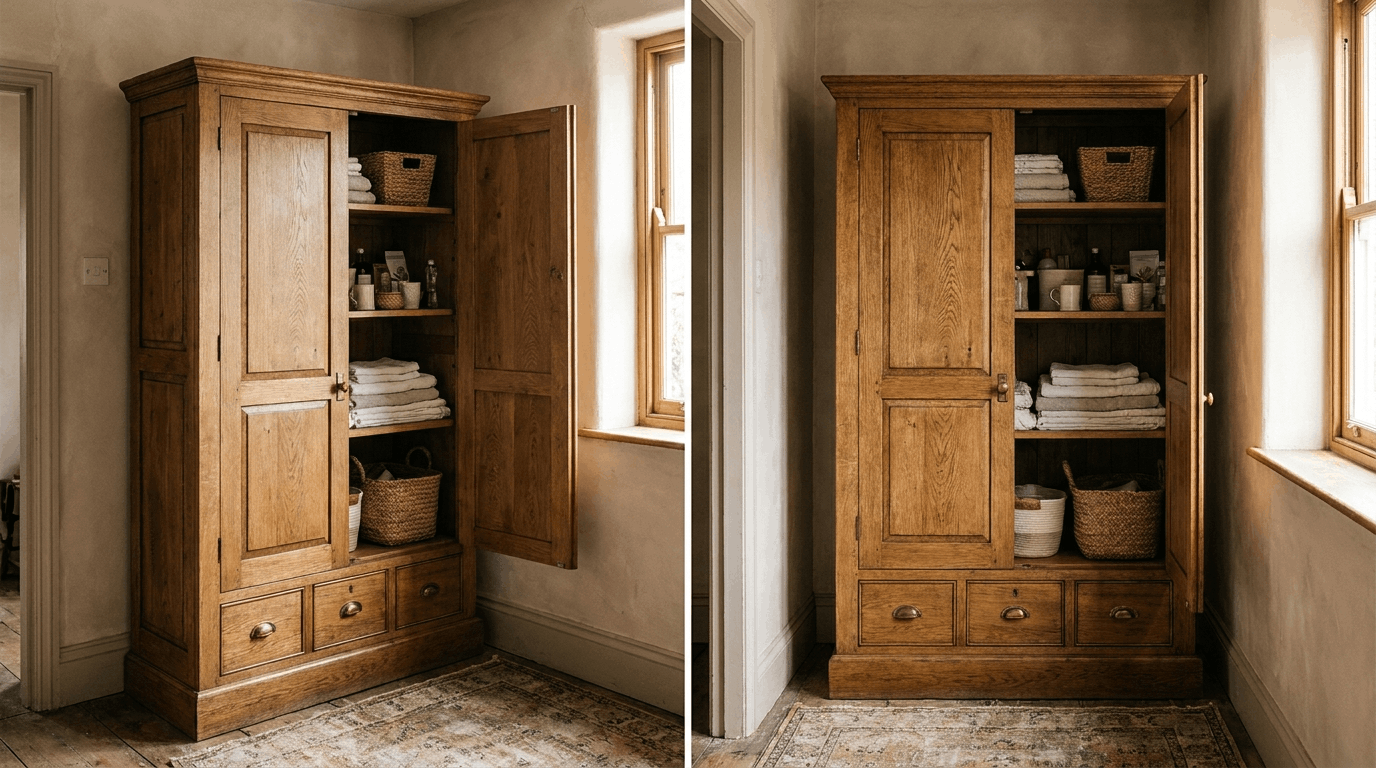
A self-contained unit that stands independently and can be moved from room to room.
Used in kitchens as larder or pantry cupboards, in bedrooms for linen or general storage, and in hallways for coats and shoes.
Typically has one or two doors, fixed or adjustable shelves inside, and sometimes drawers at the base.
What Is the Difference Between a Cupboard and A Closet
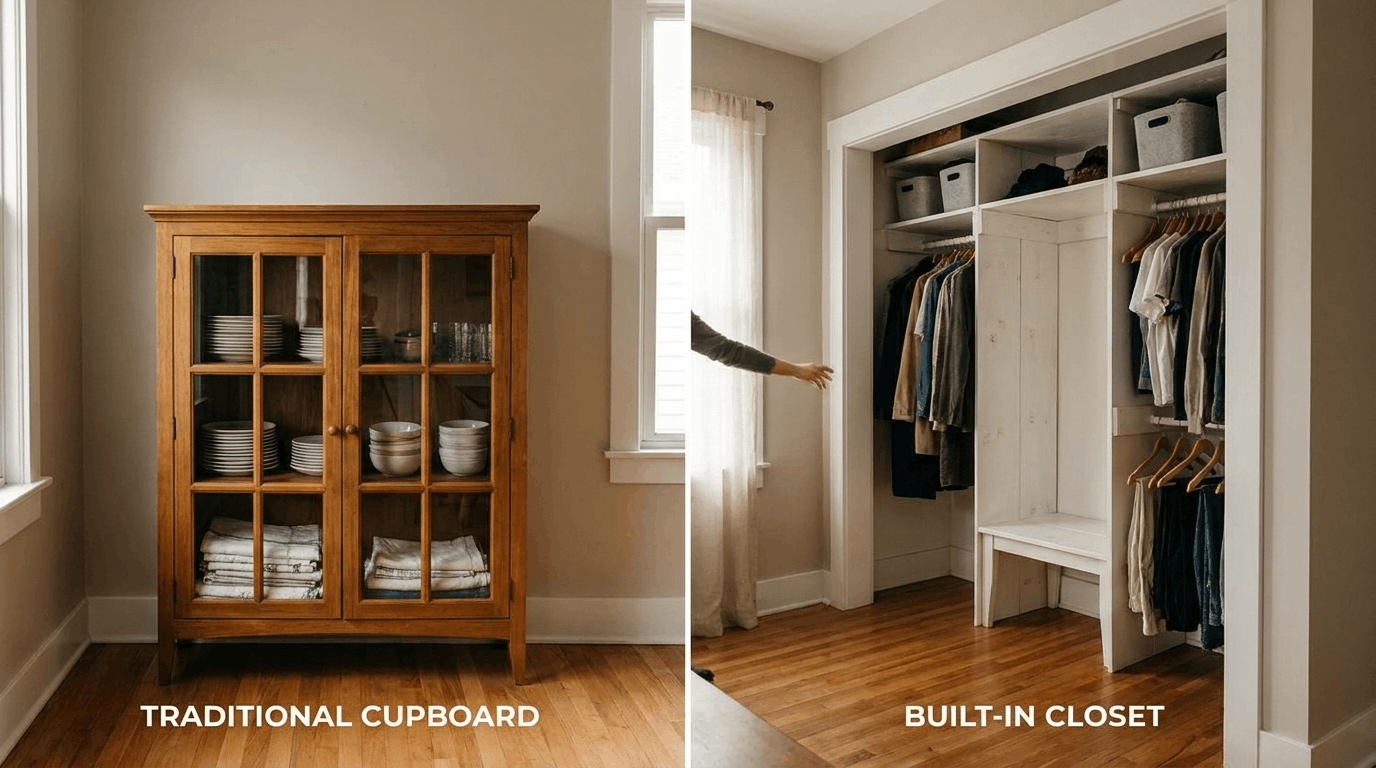
In American English, a closet is a built-in room or large alcove: a walk-in wardrobe, a hallway coat closet, a bedroom reach-in closet.
It is defined by being part of the room’s architecture and by being large enough to step into or reach into directly from the doorway.
A cupboard in American English is smaller. It is either a piece of furniture or a small built-in space, not a full room or large alcove.
In British English, the line between the two sits differently.
“Cupboard” covers what Americans would call both closets and cabinets in most everyday contexts. An under-stairs cupboard is functionally identical to what an American calls a hall closet.
Collins Dictionary notes: “A cupboard is a very small room used to store things, especially one without windows. In British English, in American English, use closet.”
So the same physical space, a built-in storage area off a hallway with a door and shelves, is a cupboard in British English and a closet in American English. Neither is wrong.
They are describing the same thing with different words.
Also read: Cupboard vs Cabinet: Choosing the Right Fit
Summing Up
A cupboard is a storage unit with doors and shelves, freestanding or built-in, small or large, in the kitchen, hallway, or the bedroom.
The word is seven hundred years old and has changed meaning several times along the way. Today, it means different things depending on where you are.
In the UK, a cupboard is any enclosed storage space in the home. If you are in the US, it is usually the kitchen overhead units or a pantry, and the bigger built-in spaces are closets.
The furniture is often identical. The word is not.
Got a specific type of cupboard you are looking at or trying to figure out? Drop a question in the comments.